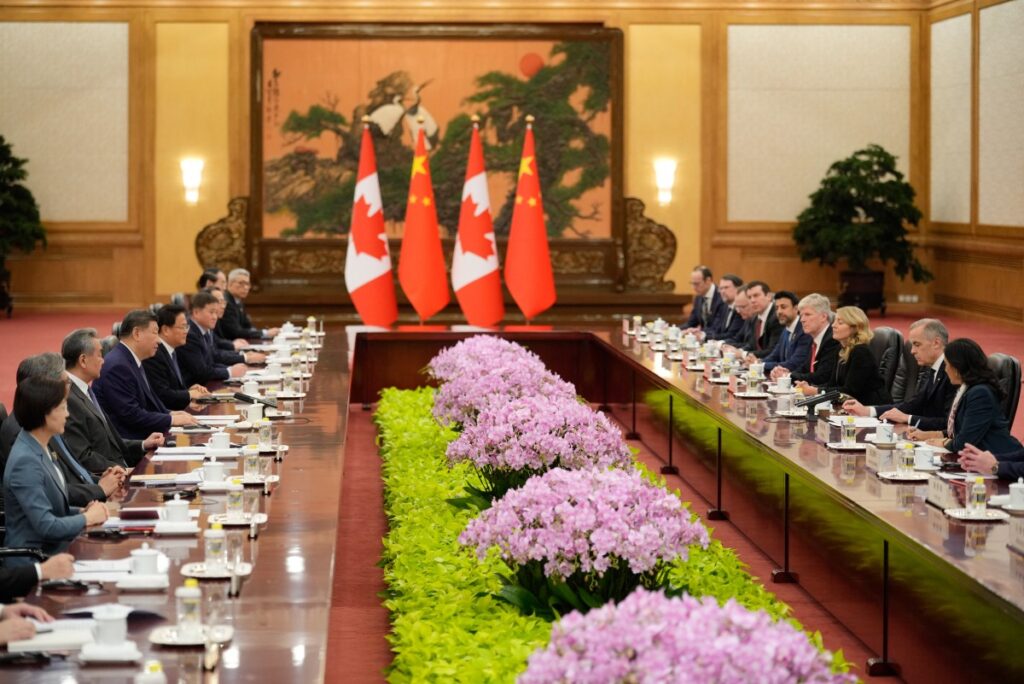
BEIJING — In a historic diplomatic breakthrough, Canadian Prime Minister Mark Carney and Chinese President Xi Jinping announced a comprehensive bilateral agreement on Friday, marking the first top-level meeting between the nations in eight years. The accord signals a definitive thaw in relations following years of retaliatory measures and trade disputes.
The leaders unveiled what Prime Minister Carney characterized as a ‘landmark deal’ establishing a ‘new strategic partnership’ between Canada and China. This framework encompasses significant trade concessions and tourism facilitation measures designed to rebuild economic bridges between the two countries.
Central to the agreement is China’s commitment to dramatically reduce tariffs on Canadian canola products, slashing rates from the current 84% to approximately 15% by March 1. This reversal is particularly significant as China was previously Canada’s largest market for canola seed before recent trade frictions.
In a major tourism development, China will implement visa-free entry for Canadian visitors, while Canada will import 49,000 Chinese electric vehicles under preferential tariff rates of 6.1%. Prime Minister Carney noted this brings EV tariffs ‘back to levels that existed prior to recent trade frictions.’
President Xi, welcoming his counterpart in the Great Hall of the People, emphasized that bilateral relations had reached a critical turning point during their October meeting on the sidelines of the APEC summit. ‘Our meeting last year opened a new chapter in turning China-Canada relations toward improvement,’ Xi stated, adding that stable bilateral development ‘serves the common interests of our two countries.’
The diplomatic reconciliation follows a particularly strained period beginning in 2018, when Canada arrested Huawei executive Meng Wanzhou on a U.S. warrant, prompting China’s retaliatory detention of two Canadian citizens on espionage charges. Subsequent years saw both nations impose reciprocal tariffs on exports, with additional allegations of Chinese election interference in Canada.
Prime Minister Carney’s outreach forms part of a broader strategy to diversify Canada’s economic partnerships amid turbulent relations with the United States. Former President Donald Trump’s aggressive tariff policies on Canadian steel, aluminum, vehicles, and lumber have compelled Ottawa to seek alternative markets. While the U.S. remains Canada’s dominant trading partner—purchasing approximately 75% of Canadian exports in 2024—China currently accounts for less than 4% of Canadian exports, though Ottawa emphasizes it remains Canada’s second-largest market.
During his Beijing visit, which included meetings with Premier Li Qiang and scheduled discussions with business leaders, Carney continues to advance his stated goal of doubling Canada’s non-U.S. exports by 2035.