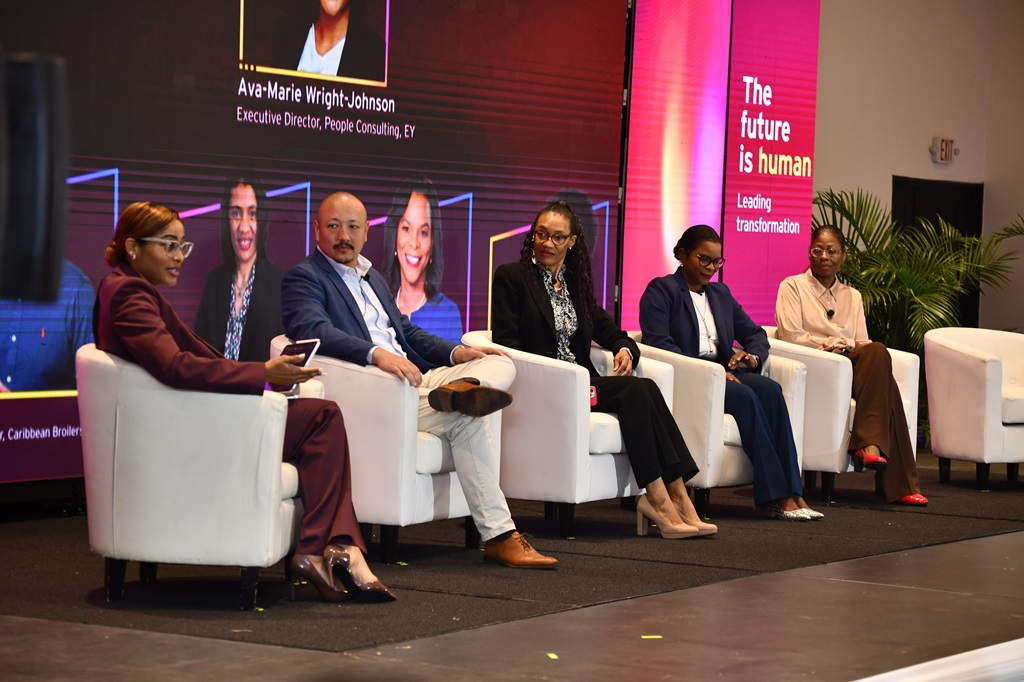
At a pivotal forum hosted by EY Caribbean at the Jamaica Pegasus hotel, regional business leaders and government officials convened to address a critical challenge in the age of artificial intelligence: ensuring human ingenuity remains central to technological progress. The event, titled ‘The Future is Human: Leading Transformation with Confidence’, served as a platform for experts to examine the symbiotic relationship between human creativity and AI implementation.
Agida Biervliet, Senior Manager of People Consulting at EY Suriname, set the tone by acknowledging technology’s accelerating pace while posing a fundamental question: “How do we design technology to amplify and protect our potential rather than diminish it?” This inquiry framed the day’s discussions as participants explored balancing technological adoption with human values.
Jamaica’s Minister of Efficiency, Innovation and Digital Transformation, Ambassador Audrey Marks, emphasized that digital transformation has transitioned from optional to essential for national development. “AI is no longer a thing of the future but the present,” Marks stated, highlighting the government’s focus on responsible and inclusive AI implementation aligned with ethical principles and public trust.
The forum identified several implementation barriers including resistance to change, skill deficiencies, and cybersecurity concerns. Christopher Reckord, Chairman of the National Artificial Intelligence Task Force, offered a compelling perspective: “AI dominates probability, but humans dominate possibility.” He illustrated this concept by referencing the Wright brothers’ aviation breakthrough despite data suggesting human flight was impossible, warning that excluding employees from transformation processes guarantees resistance.
EY’s CHARO 2030 Project Lead Anjelique Parnell presented compelling global data revealing that only 28% of companies successfully integrate AI with strong human teams, creating what she termed a “Talent Advantage.” These organizations outperform peers by 17 times with eightfold productivity increases, while those implementing AI on fragile talent structures experience up to 40% productivity declines.
A cross-industry panel assessing regional AI readiness revealed varying stages of preparation. While CB Group’s CEO Matthew Lyn candidly assessed Jamaica as “not ready,” he described ongoing manufacturing applications including poultry grading and sterilization maintenance. Scotiabank’s VP of Human Resources Sheila Segree-White reported her organization was “getting ready” through enhanced global connectivity, while GraceKennedy’s CIO Deidre Cousins credited pandemic-driven adaptations for their “ready” status.
Maria Thompson Walters, Executive Director of the Transformation Implementation Unit, acknowledged the public sector’s slower pace but emphasized systematic infrastructure development to enable successful transformation across government entities.
The consensus emerged clearly: successful digital transformation requires technological investment grounded in human-centered leadership, ethical frameworks, and comprehensive workforce inclusion to avoid implementation failures that stem from organizational rather than technological deficiencies.