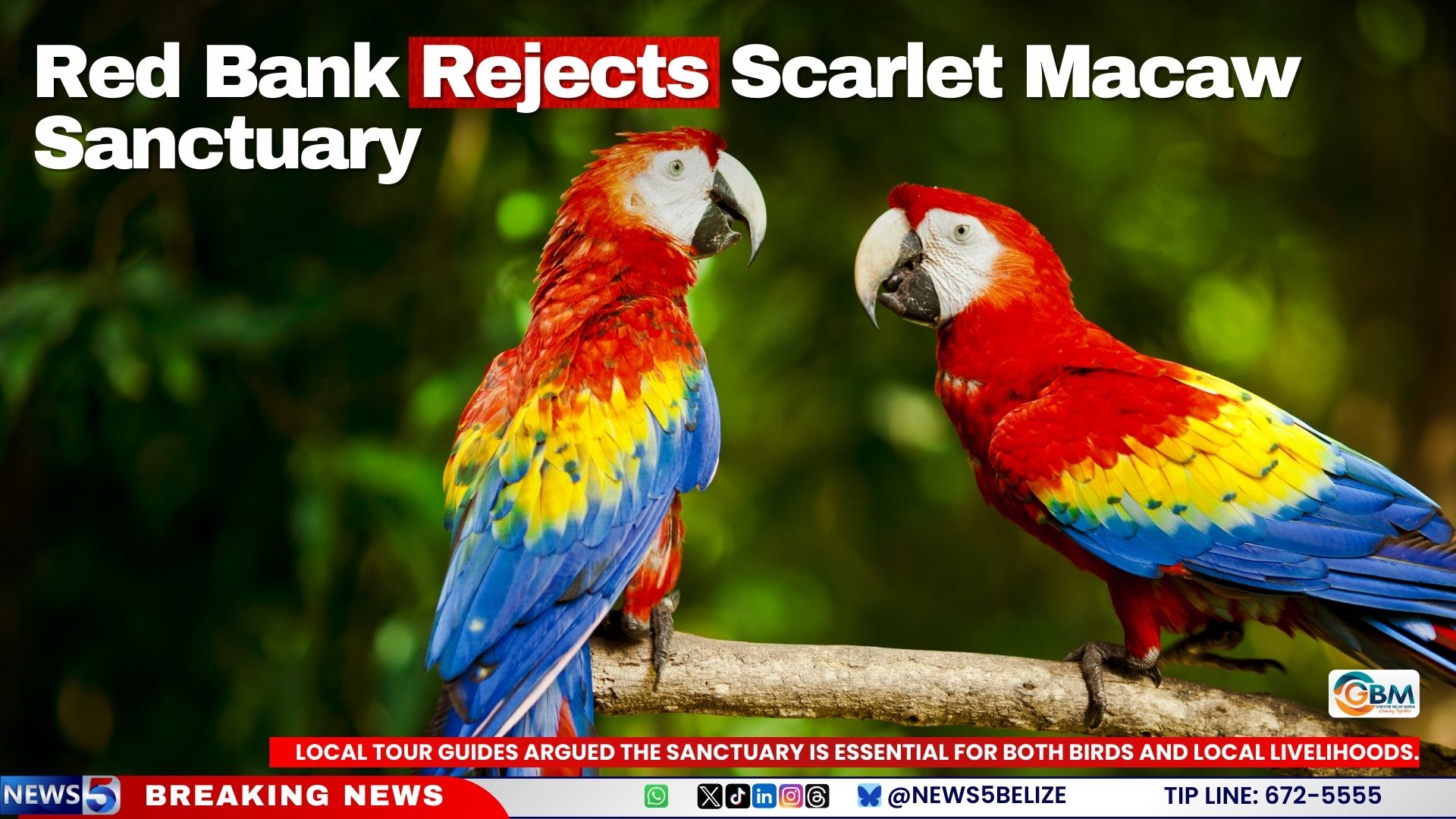
In a decisive community vote, residents of Red Bank Village have formally rejected a government initiative to establish a scarlet macaw sanctuary within the Maya Mountains. The proposed conservation area, intended to safeguard critical feeding grounds for hundreds of these vibrant birds while boosting local ecotourism, faced overwhelming opposition during a packed public consultation on Tuesday evening.
The meeting, attended by nearly 200 villagers, revealed deep-seated frustrations regarding perceived exclusion from preliminary discussions. Area Representative Rodwell Ferguson confirmed the consensus: “The conversation tonight was really on target to say, ‘We don’t want it.’ As an elected representative, I told them we are going to back off.”
Central to residents’ concerns were potential restrictions on hill access essential for daily subsistence and unverified rumors about farmer relocations. Ferguson addressed land survey concerns, stating, “I know the land has been surveyed but not issued and signed by the Minister of Natural Resources,” while pledging to prevent any land sales that might limit community access.
Tour guides presented contrasting perspectives, emphasizing the sanctuary’s ecological and economic necessity. Guide Basilio Mes warned, “It would be very bad for us as we will not be able to come and work in our area anymore,” advocating for a compromise sanctuary model permitting sustainable access. Mes cited observable scarlet macaw population declines and recent environmental threats including illegal logging and unauthorized zipline construction as urgent justification for protection measures.
Community member Lorencio Sho criticized the government’s engagement approach: “You’re going based off of three persons’ opinions, not the entire community.” Sho referenced Minister Orlando Habet’s recent media comments suggesting the proposal was nearing approval as particularly concerning given the lack of community consultation.
Despite the current rejection, Ferguson left open the possibility of future reconsideration, stating he would support the initiative should community sentiment evolve. The outcome highlights ongoing tensions between conservation objectives and community sovereignty in natural resource management.