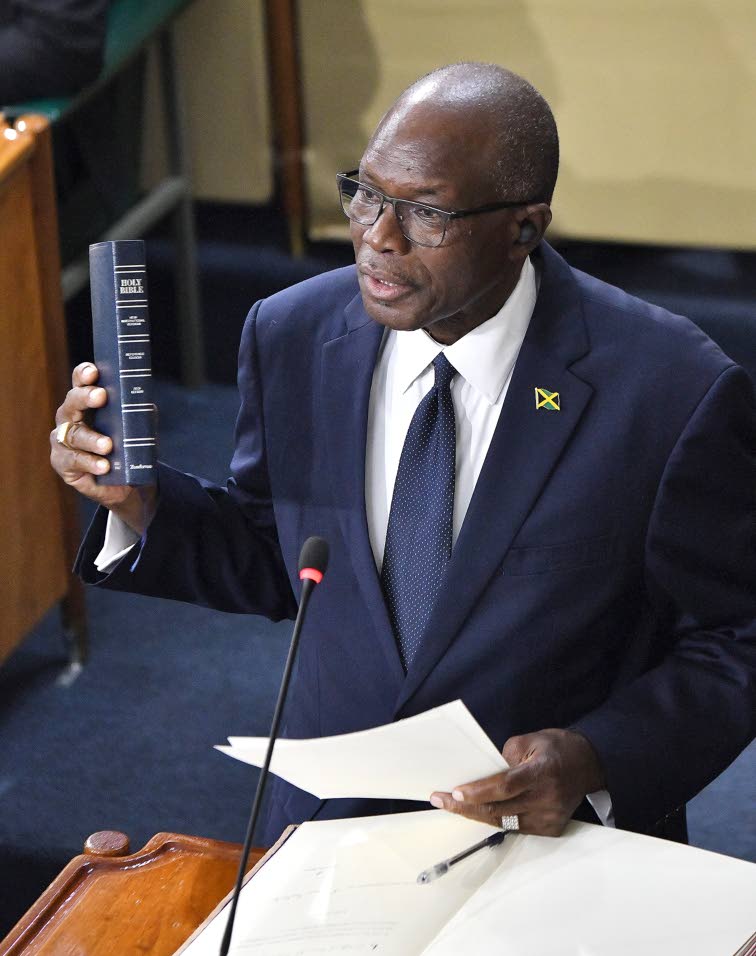
A contentious debate erupted in Jamaica’s Public Administration and Appropriations Committee (PAAC) this week as Everald Warmington, Member of Parliament for St Catherine South Western, launched fresh criticism against government-supported reconstruction loans for churches damaged by Hurricane Melissa.
The confrontation emerged during Wednesday’s parliamentary session as officials from the Office of the Prime Minister and Ministry of Labour and Social Security presented updates on hurricane recovery progress. Warmington specifically challenged the National Housing Trust’s (NHT) policy of extending concessional loans to religious institutions that don’t contribute to the national housing scheme.
“The fundamental question remains: if churches aren’t contributors, and NHT exists specifically to assist contributors, how do they qualify for these financial benefits?” Warmington demanded during the exchange. He pressed NHT Managing Director Martin Miller to provide evidence of church contributions, questioning what tax registration numbers churches could possibly use to participate in the scheme.
Miller defended the policy by explaining the NHT’s long-standing institutional loan program, which allows non-individual entities to borrow upon meeting specific financial requirements. He emphasized that special concessions were implemented under the hurricane relief framework, including relaxed contribution requirements for individuals affected by the disaster.
“Any NHT contributor qualifies for a loan—the variable factor is the amount,” Miller clarified. “Under the Melissa relief provisions, we relaxed certain conditions to ensure broader access to recovery assistance.”
The NHT director further justified church assistance by highlighting their social significance, particularly in rural communities: “Churches represent a vital component of Jamaican social infrastructure. Restoring these institutions helps return normalcy to communities devastated by the hurricane.”
Warmington acknowledged churches’ social role but maintained that financially robust religious institutions should bear reconstruction costs themselves rather than drawing from public funds. He distinguished between established denominations and newer churches with elaborate facilities, suggesting that congregations with substantial resources should support recovery efforts for their members and local businesses.
“This is the moment for churches to reciprocate generations of community support,” Warmington argued. “Instead of accessing government funds, they should lead hurricane recovery by assisting vulnerable members and small business owners rebuild their livelihoods.”
The debate highlights ongoing tensions between social welfare priorities and fiscal responsibility in post-disaster recovery, raising fundamental questions about the appropriate allocation of public resources in national emergency response.