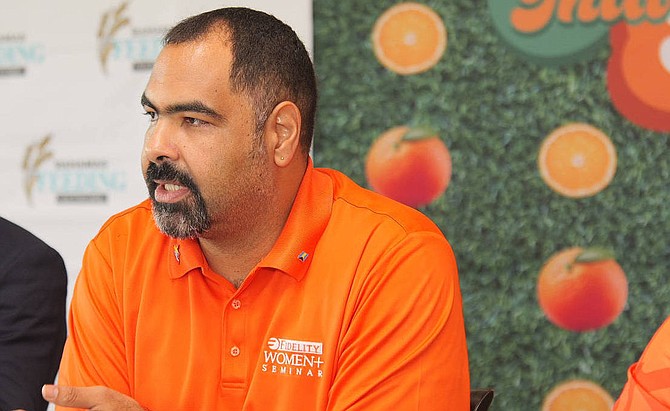
A leading Bahamian banking executive has launched a scathing critique of the government’s recent decision to eliminate Value-Added Tax (VAT) on unprepared grocery items, characterizing the policy shift as a politically motivated maneuver that jeopardizes fiscal stability. Gowon Bowe, Chairman of the Clearing Banks Association and CEO of Fidelity Bank, denounced the move as “an uninformed and understudied exercise” that prioritizes popular appeal over economic responsibility.
Bowe challenged the policy’s fundamental design, highlighting its failure to target relief toward lower-income households. He noted that high-income earners would receive identical tax benefits as those most severely impacted by rising living costs, describing the approach as a crude “hacksaw” solution rather than a precision “scalpel.” The banking executive questioned the policy’s consistency with the Davis administration’s previous criticisms of VAT exemptions under the prior government, which international financial institutions had found to reduce revenue collection efficiency while increasing administrative burdens.
The financial expert raised concerns about inevitable revenue shortfalls, warning that the government would eventually need to recover lost funds through alternative tax measures. He characterized taxation as a “zero-sum game” where exemptions in one sector necessitate increases elsewhere. Bowe particularly criticized the timing alongside the reintroduction of the RISE program, which effectively increases Social Security contributions through tax collection rebalancing.
Regarding practical impact, Bowe calculated that a $100 grocery bill would only yield a $10 saving from VAT removal—a marginal benefit that fails to offset escalating costs in fuel, utilities, and other essential services. He argued that true economic relief requires targeted measures rather than broad-based tax cuts that provide negligible assistance to those experiencing severe financial strain.
The banking chairman concluded that the decision exemplified a pattern of policy-making through “popular vote rather than studied analysis,” undermining The Bahamas’ post-COVID economic recovery and long-term growth prospects. He urged policymakers to focus on consolidating economic gains rather than distributing them prematurely through fiscally irresponsible measures.