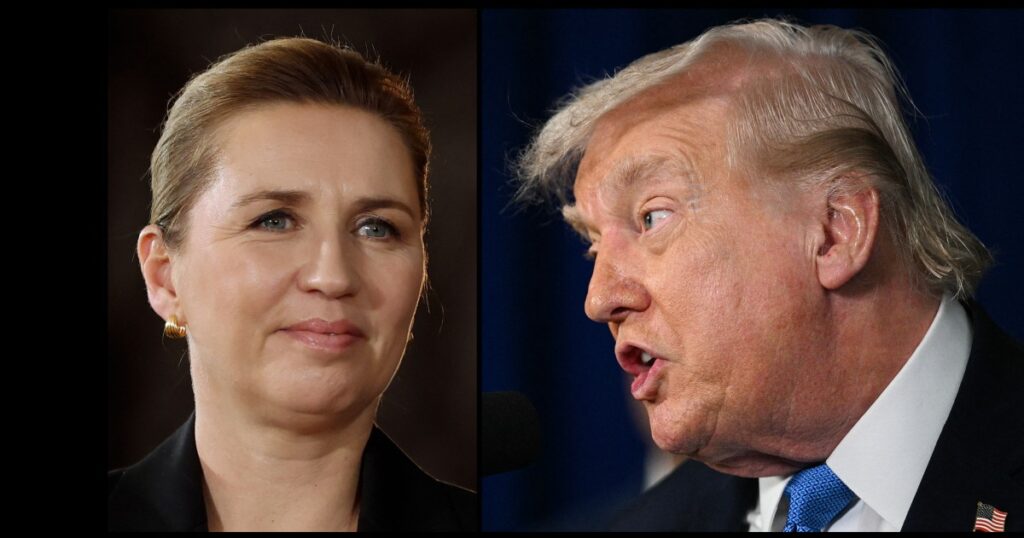
COPENHAGEN, Denmark – Greenland’s leadership has unequivocally rejected potential US acquisition or annexation of the autonomous territory, declaring its preference to maintain its current relationship with Denmark. The statement from Prime Minister Jens-Frederik Nielsen comes ahead of critical White House discussions regarding the strategic Arctic island’s future.
“We are currently navigating a geopolitical crisis,” Nielsen stated during a joint press conference with Danish Prime Minister Mette Frederiksen. “If compelled to choose between the United States and Denmark at this moment, we unequivocally choose Denmark. Greenland has no desire to be owned, governed, or incorporated by the United States.”
The diplomatic tension follows years of expressed interest from former President Donald Trump regarding US acquisition of Greenland, with recent comments suggesting the territory might be taken “one way or the other.” Danish leader Frederiksen characterized the American pressure as “completely unacceptable,” particularly coming from one of Denmark’s closest allies.
High-level negotiations are scheduled for Wednesday between Danish Foreign Minister Lars Lokke Rasmussen, Greenlandic Foreign Minister Vivian Motzfeldt, US Vice President JD Vance, and Secretary of State Marco Rubio. The meeting, hosted at the White House at Vance’s invitation, aims to address what both Nordic governments describe as “misunderstandings” regarding Greenland’s status and Arctic security.
The tensions were exacerbated by Vance’s uninvited visit to Greenland in March, during which he criticized Denmark’s commitment to Arctic security and labeled the country a “bad ally” – comments that provoked outrage in Copenhagen given Denmark’s longstanding trans-Atlantic partnership and military cooperation.
Geopolitical analysts note that Greenland’s strategic significance stems from its position along the shortest missile trajectory between Russia and the United States, making it crucial to US missile defense systems. Washington has expressed concerns about growing Russian and Chinese influence in the Arctic, though experts suggest Beijing’s presence remains limited.
Denmark has countered US criticisms by highlighting its substantial investment of nearly 90 billion kroner ($14 billion) to strengthen military capabilities in the Arctic region. Prime Minister Frederiksen has called for enhanced cooperation with both the US and NATO to improve regional security, including potential NATO protection for Greenland.
The ongoing discussions about Greenland’s future relationship with Denmark have sometimes been misinterpreted, according to Greenland specialist Mikaela Engell. “To uninformed American listeners, independence talks might be construed as imminent secession,” Engell noted, emphasizing that these discussions have been ongoing for years without indicating immediate separation.
Further high-level meetings are planned, with Greenland’s foreign minister and Danish Defense Minister Troels Lund Poulsen scheduled to meet NATO Secretary General Mark Rutte on January 19th to discuss increased military presence in Greenland involving both Danish forces and international partners.