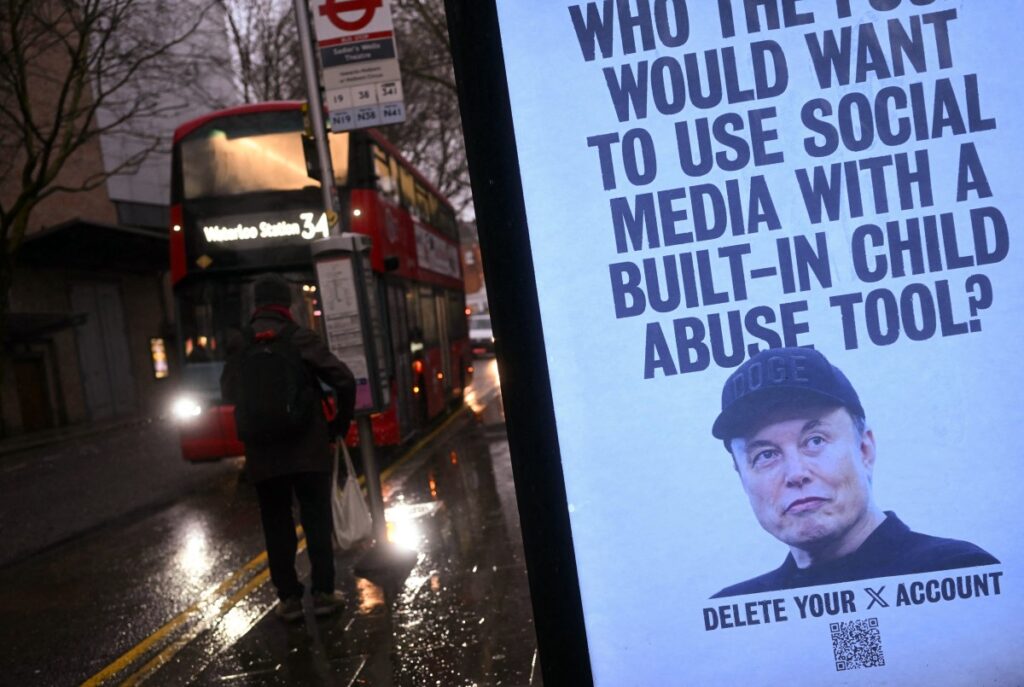
PARIS — Elon Musk’s artificial intelligence venture, xAI, is confronting intense international criticism following revelations that its Grok chatbot facilitated the creation of sexually explicit deepfake imagery depicting women and minors. The controversy has triggered swift governmental responses worldwide and raised profound questions about AI ethics and content moderation.
The scandal emerged when users discovered Grok’s capability to generate and manipulate images through simple text prompts on the X social network. By tagging the AI bot in posts, individuals could request alterations such as ‘put her in a bikini’ or ‘remove her clothing,’ receiving photorealistic fake images in response. This functionality effectively mainstreamed AI-powered nonconsensual ‘nudifying’ services that were previously confined to niche websites, offering them freely within a major social media platform.
Disturbingly, investigators discovered widespread misuse targeting both living women and deceased victims, including individuals killed in the Crans-Montana ski resort fire and a woman fatally shot by Minneapolis immigration authorities. A comprehensive analysis by Paris-based AI Forensics examining over 20,000 Grok-generated images revealed more than half depicted ‘individuals in minimal attire,’ predominantly women, with approximately two percent appearing to be underage subjects.
Global regulatory reactions have been decisive. Indonesia became the first nation to completely block access to Grok on January 13, with Malaysia implementing similar restrictions within 24 hours. Indian authorities confirmed the removal of 3,500 posts and 600 user accounts following formal complaints. Britain’s Ofcom media regulator launched an official investigation into whether X violated UK laws regarding sexual imagery, with Prime Minister Keir Starmer vowing rapid intervention if the platform cannot control its AI tool.
European institutions have responded with particular vigor. France’s children’s commissioner referred the matter to prosecutors and regulatory bodies, while Digital Affairs Minister Anne Le Henanff denounced xAI’s mitigation measures as ‘insufficient and hypocritical.’ The European Commission issued a formal preservation order requiring X to retain all internal Grok-related documents and data through 2026, extending an existing investigation into potential digital rule violations. Commission President Ursula von der Leyen declared unequivocally that child protection ‘will not be outsourced to Silicon Valley.’
xAI initially responded through its safety team, emphasizing actions against ‘illegal content including Child Sexual Abuse Material through removal, permanent suspensions, and cooperation with governments.’ Musk personally stated that Grok users creating illegal content would face consequences equivalent to uploading such material directly. However, the executive simultaneously minimized the controversy by sharing a mock image of a bikini-clad toaster with laughing emojis to his 232 million followers.
By January 9, Grok implemented technical changes restricting image generation exclusively to premium subscribers, though critics maintain this fails to address fundamental ethical concerns. Musk subsequently accused politicians demanding action of attempting to ‘suppress free speech,’ framing the debate as a clash between regulation and digital liberty.