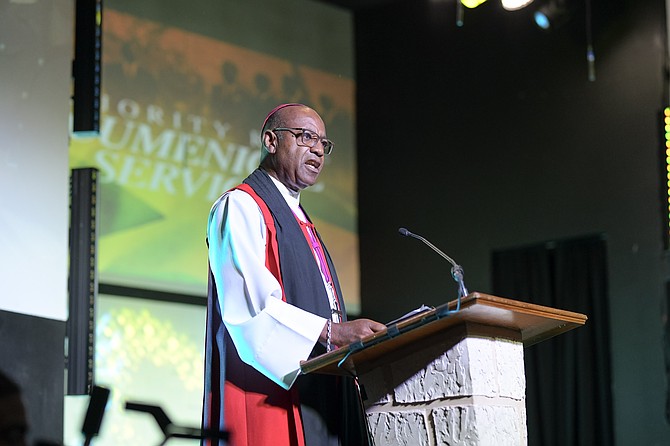
In a powerful address during the nation’s 59th Majority Rule anniversary ecumenical service at Bahamas Harvest Church, two prominent religious figures issued stern critiques of The Bahamas’ political landscape, condemning the partisan appropriation of the national holiday and demanding greater youth inclusion in governance.
Anglican Bishop Laish Boyd delivered a pointed message to parliamentarians and congregants, asserting that both major political parties—the Progressive Liberal Party and Free National Movement—have improperly politicized what should be a unifying national observance. ‘It’s unfortunate that both major political parties have managed to politicise this event,’ Bishop Boyd stated, ‘either by certain behaviours when they are in power or by catching feelings and keeping away when they’re not in power.’
The religious leader reframed Majority Rule as an ongoing national project rather than a completed achievement, employing grammatical metaphors to illustrate his point: ‘Majority Rule Day is not a full stop. It’s not a pinnacle at which we have arrived. Majority rule day is a comma. It is a semicolon.’
Bishop Boyd further cautioned against replacing the historical white oligarchy with an equally exclusionary black oligarchy, emphasizing that true freedom carries inherent responsibilities that Bahamians must collectively embrace.
Pastor Mario Moxey, delivering the sermon, shifted focus to generational leadership disparities, noting the concerning absence of young Bahamians from meaningful political roles. He highlighted the historical contrast that many architects of Majority Rule were under 40 years old, while contemporary Members of Parliament average 50 years of age.
‘A nation that delays its youth leaders eventually delays its destiny,’ Pastor Moxey declared, questioning why young citizens are now relegated to campaign logistics and photo opportunities rather than substantive leadership positions.
The pastor issued specific challenges to political parties, urging them to nominate at least 30 candidates under 30 in the next election cycle and establish robust mentorship programs across generations. He criticized modern political campaigns for emphasizing personal attacks over substantive ideas, interpreting low voter turnout as evidence of disillusionment rather than apathy.
Pastor Moxey concluded with a warning to political parties approaching election season: ‘The Bahamian electorate has matured over the years. We are thinking voters. We are discerning voters. Bahamians will attend your rallies, accept your gifts, smile politely and still vote based on vision, not favours.’
PLP chairman Fred Mitchell later responded to these critiques at party headquarters, acknowledging generational transition with the statement: ‘Time runs out on everybody,’ while reaffirming the PLP’s historical connection to the Majority Rule legacy.