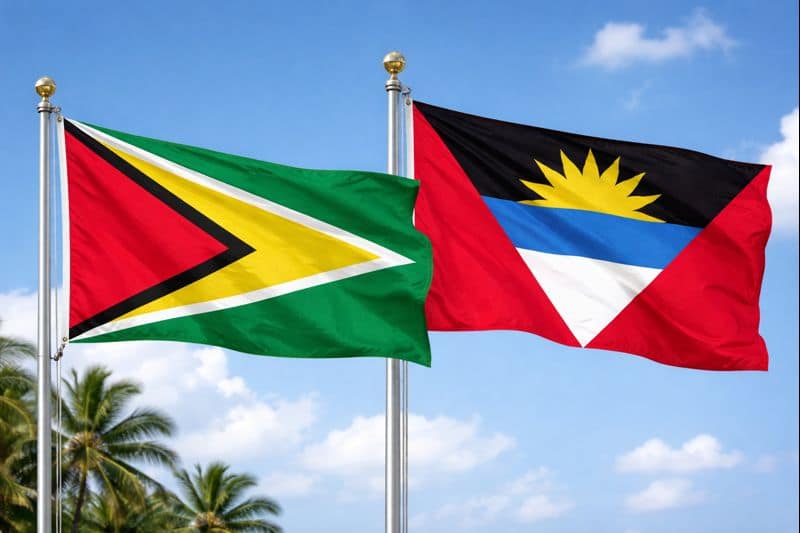
A comprehensive analysis of migration patterns across the Caribbean Community (CARICOM) reveals a complex tapestry of movement driven by economic opportunity, regional instability, and historical ties. According to the International Organization for Migration’s 2024 report utilizing UNDESA mid-year estimates, migration trends vary dramatically depending on geographical and political contexts within the region.
The data demonstrates that intra-Caribbean migration continues to be a significant phenomenon, with Guyanese nationals emerging as the predominant migrant group in five CARICOM member states: Antigua and Barbuda, Barbados, St. Lucia, Suriname, and St. Kitts and Nevis. Similarly, Trinidadians constitute the largest migrant community in Grenada and St. Vincent and the Grenadines. These patterns highlight how economic prospects and familial connections drive movement within the Caribbean basin.
Conversely, several nations experience migration flows profoundly influenced by neighboring crises. Guyana reports that 75% of its migrant population originates from Venezuela, illustrating years of cross-border movement fueled by Venezuela’s ongoing political and economic turmoil. Trinidad and Tobago mirrors this trend with Venezuelans accounting for 30% of its migrant demographic. The Bahamas records Haitians as comprising 26% of migrants, while Dominica shows 31% of migrants coming from Haiti.
Diverging from these regional patterns, Belize’s migration profile reflects Central American influences, with Guatemalans (43%), Salvadorans (16%), and Hondurans (16%) forming the majority. Jamaica presents yet another distinct pattern, with the United States (13%) and the United Kingdom as primary countries of origin, suggesting significant return migration and diaspora connections rather than regional movement.
The report concludes that Caribbean migration is shaped by multiple intersecting factors including established free movement frameworks, geographical proximity, economic attractiveness, and displacement from adjacent crises, creating a uniquely complex migration landscape within the region.