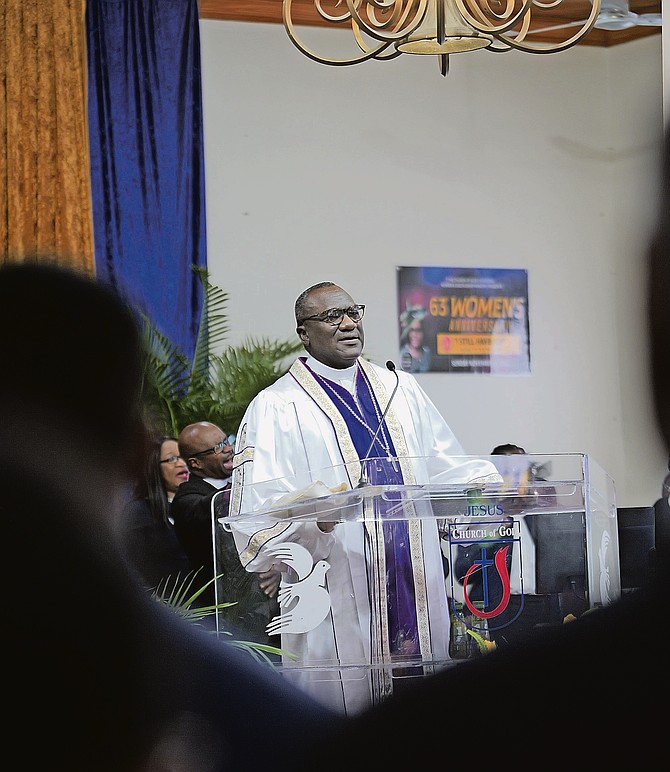
In a powerful address marking the commencement of the legislative year, Bishop Delton Fernander delivered a stirring challenge to Bahamian lawmakers during the annual Parliamentary Church Service at the Church of God on East Street. The ceremony, attended by Prime Minister Philip Davis, cabinet members, parliamentarians, and opposition figures, traditionally sets the tone for the upcoming parliamentary session.
Bishop Fernander issued a direct ultimatum to elected officials, stating that those incapable of envisioning an improved Bahamas should reconsider their positions. ‘If you cannot see a better Bahamas, maybe this should be your last run,’ he declared before the assembled leadership. The clergyman emphasized that public office demands clear vision and accountability, reminding attendees that they operate within a parliamentary tradition spanning nearly three centuries with profound moral responsibilities.
Reflecting on historical leadership, the Bishop contrasted distinguished predecessors with those who faded into obscurity despite holding similar positions of power. He described the nation’s forefathers as architects of change who demonstrated courage, strategy, character, and purpose in transforming the Bahamas from a fishing community to a premier tourism destination. ‘What will we do with our time?’ he challenged current leaders.
Amid global uncertainties, economic pressures, and conflicts, Bishop Fernander stressed that citizens rely on their representatives to prioritize national interests over personal gain. ‘The Bahamian people are counting on you to have their best interest at heart and not your own,’ he emphasized, calling for decisions that benefit all citizens and create opportunities for future generations.
Addressing the approaching election cycle, the religious leader cautioned against treating this period as the ‘silly season,’ insisting instead on its seriousness. He urged the nation to attract its best talent, noting that many skilled Bahamians abroad contribute to other countries’ development due to feeling unwelcomed at home.
The Bishop also delivered a remarkable apology on behalf of religious institutions for their historical silence driven by desires for political contracts and board appointments. ‘I want to apologise for the silence,’ he stated, encouraging faith leaders to speak truth even at personal cost. He concluded by reminding lawmakers of their roots in faith and sacrifice, emphasizing that ultimate guidance comes from divine rather than human sources.