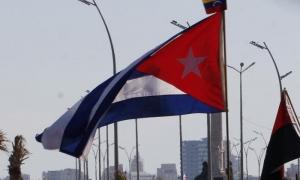
Havana witnessed massive demonstrations over the weekend as Cuban leadership and citizens united in vehement condemnation of what they termed “fascist” military aggression against Venezuela. The attack, which reportedly resulted in civilian casualties, has sparked international concern and drawn parallels to historical imperial interventions.
President Miguel Díaz-Canel Bermúdez joined citizens at the Anti-Imperialist Tribune to protest both the assault on Venezuelan sovereignty and the alleged kidnapping of President Nicolás Maduro and First Combatant Cilia Flores. The gathering represented a significant show of solidarity between the two nations, with participants echoing the historic slogan “Cuba and Venezuela, one flag.”
Gerardo Hernández Nordelo, national coordinator of Cuba’s Committees for the Defense of the Revolution, delivered a stark warning about the consequences of imperial aggression. “Humanity must raise its voice and tell the empire that we are in the 21st century,” he declared, criticizing unilateral actions that violate international norms. He emphasized that the bombs striking Venezuelan cities “did not ask who was a Chavista and who was not when they exploded,” highlighting the indiscriminate nature of the attacks.
Cultural and political leaders framed the conflict as a fundamental struggle between opposing forces. Abel Prieto Jiménez, president of Casa de las Américas, characterized it as a battle between “the forces of hatred, war, and death and the forces of sovereignty, dignity, and life.” He invoked Fidel Castro’s famous statement on Vietnam—”We are willing to give even our own blood”—applying it to the current Venezuelan crisis.
Fernando González Llort of the Cuban Institute of Friendship with the Peoples described the operation as a “cowardly and vile attack” that constitutes “a heinous assault on the aspiration to build a zone of peace.” He warned that the aggression transcends Venezuela’s borders and represents a direct challenge to international law.
The scientific community joined the condemnation, with prominent researcher Belinda Sánchez Ramírez contrasting Cuba’s medical missions with what she called “specialists who cause death and pain.” She warned that today’s target might be Venezuela, but tomorrow it could be “Cuba, Nicaragua, Mexico, or any country with natural resources or independence.”
Medical worker Agnerys Cruz Rodríguez, who spent a decade serving in Venezuela, questioned the international community’s silence: “Where is the United Nations? Where are those who define themselves as defenders of peace?”
Young activists highlighted patterns of imperial strategy, with Adriana Amore Moreno noting a “familiar sequence” of economic sanctions, media warfare, financial blockade, and finally direct aggression. She affirmed that “Venezuela is not alone, because its cause is our cause,” emphasizing that Venezuelan sovereignty remains inseparable from broader Latin American struggles.