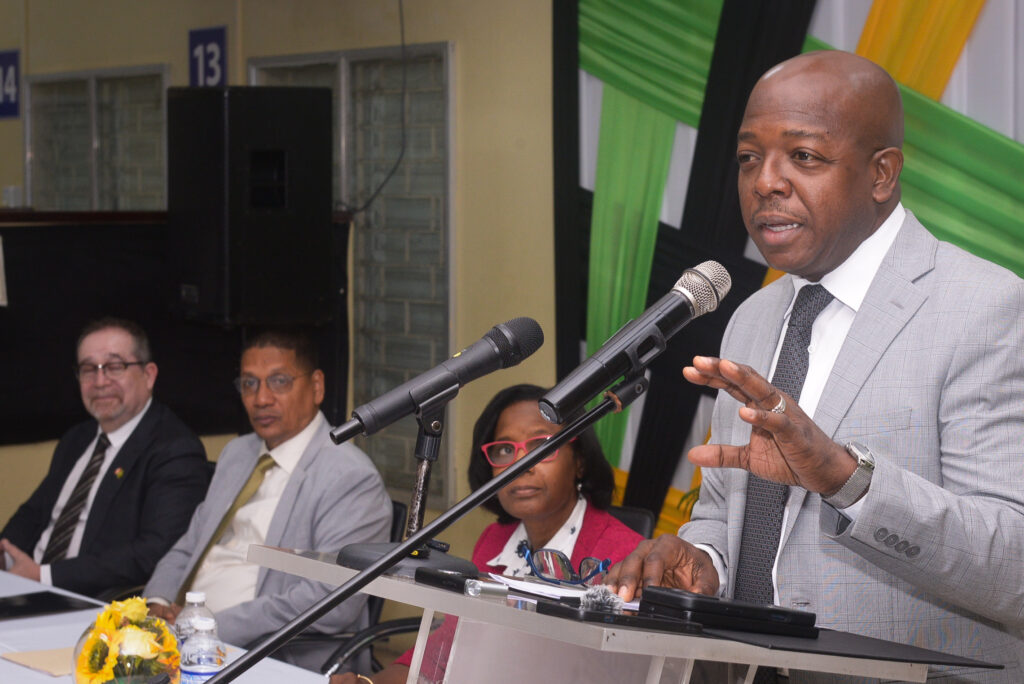
KINGSTON, Jamaica — The Jamaican government has declared a zero-tolerance stance against fraudulent activities targeting its Overseas Employment Programme, with Minister of Labour and Social Security Pearnel Charles Jr. vowing to prosecute offenders. The Minister’s stern warning came during a send-off ceremony for seasonal agricultural workers departing for Canada, held at the Ministry’s Overseas Employment Centre on January 6.
Minister Charles revealed he had received anonymous WhatsApp messages and TikTok videos falsely portraying him as offering unauthorized access to the farmwork programme. He characterized these attempts as direct attacks on the programme’s integrity and announced immediate coordination with relevant authorities to pursue legal action against perpetrators. “Consider this a final warning… you will find yourself behind bars,” Charles stated emphatically.
The Minister emphasized the programme’s critical importance, particularly following Hurricane Melissa’s devastating impact on western Jamaican parishes. He highlighted how overseas employment provides essential livelihood support through “gainful, lawful employment” that enables workers to sustain their families and communities.
This year marks the 60th anniversary of the Jamaica-Canada seasonal agricultural partnership, which has enabled thousands of workers to fund their children’s tertiary education. Charles encouraged both new and experienced participants to remain focused despite potential distractions, while urging veterans to guide newcomers.
Recent statistics demonstrate the programme’s growing impact: since January 1, 2025, a total of 15,156 workers have secured employment in Canada and the United States—representing an increase of 687 compared to 2024. The breakdown shows 59% participated in the Seasonal Agricultural Workers Programme, 3% in the Low-Skilled Programme, and 38% in the United States Programme.
Charles concluded by reframing these statistics as representations of “livelihoods, children that have been supported, and communities that have been strengthened,” underscoring the human impact behind the numbers.