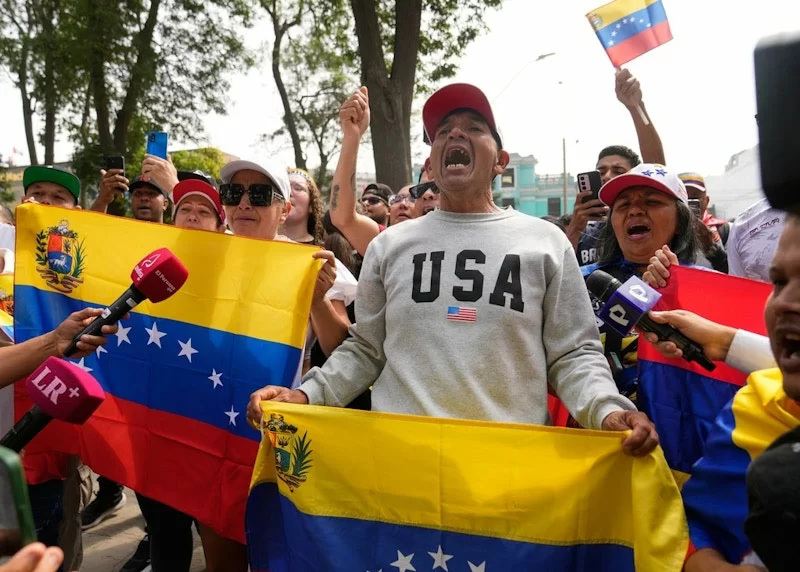
A dramatic US military operation resulting in the capture of Venezuelan President Nicolás Maduro has triggered polarized international responses, raising complex questions about sovereignty, interventionism, and regional stability. The operation represents Washington’s most direct military engagement in Latin America since the 1989 invasion of Panama.
Venezuelan opposition leader María Corina Machado, a Nobel Peace Prize laureate who has been living underground since Maduro’s controversial July 2024 reelection, hailed the development as “the hour of freedom.” Through social media channels, she urgently called for immediate transfer of power to opposition candidate Edmundo González Urrutia, whom the opposition considers the legitimate winner of the presidential elections.
European allies offered measured support. Italian Prime Minister Giorgia Meloni, a prominent ally of President Donald Trump, defended the operation as a legitimate defensive action targeting organized crime and drug trafficking networks. However, she notably emphasized that foreign military interventions should not become the standard method for ending dictatorships, reflecting the delicate balance between supporting regime change and respecting international law.
Israel expressed unequivocal support, with Foreign Minister Gideon Sa’ar praising the United States as “leader of the free world” and expressing solidarity with the Venezuelan people who he said suffered under Maduro’s “illegal tyranny.” Israel anticipates restored democratic processes and friendly bilateral relations.
The operation occurred amid mounting pressure on Maduro’s government, which faces allegations of corruption, political repression, and involvement in international drug trafficking. Venezuela has experienced years of severe economic crisis, massive refugee outflows, and intense political polarization.
Neighboring countries Brazil and Colombia are closely monitoring developments due to potential impacts on regional stability and refugee movements. The Venezuela-Brazil border was temporarily closed during the initial escalation but has since reopened, with Brazilian authorities maintaining heightened surveillance. The region already hosts significant numbers of Venezuelan refugees, creating substantial humanitarian pressures.
Legal and procedural questions emerge as the operation was conducted without prior congressional approval in the United States, raising concerns about its legal basis and legitimacy. Reports indicate the operation was originally planned for the Christmas period but was delayed due to other military priorities.
The international community remains divided between supporting nations that view the action as necessary for democracy and those warning against escalation while emphasizing diplomatic solutions and respect for international law. The ultimate impact on Venezuela’s political future and broader regional stability remains uncertain.