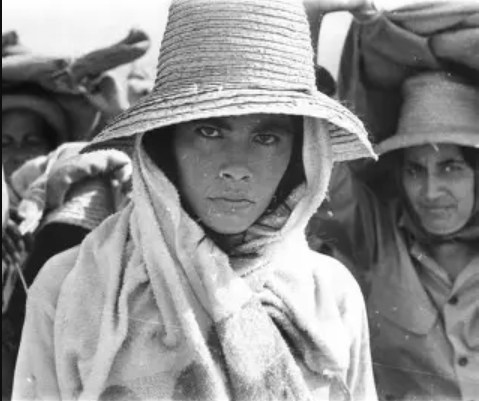
The Cuban film industry mourns the loss of one of its most distinguished actresses, Adelaida López Legra, who passed away in the early hours at a provincial hospital. The announcement was made by Alexis Triana, President of the Cuban Institute of Cinematographic Art and Industry (ICAIC), confirming the demise of the beloved screen legend known professionally as Adela Legra.
Born in 1939 in Guantánamo, Legra’s extraordinary talent was first recognized by acclaimed filmmaker Humberto Solás, who catapulted her to stardom with her debut lead role in the medium-length film ‘Manuela’ (1965). This groundbreaking performance marked the beginning of an illustrious career that would span over four decades, establishing her as a foundational figure in Cuban cinema.
Her artistic partnership with Solás yielded some of Cuba’s most significant cinematic works, including the landmark historical trilogy ‘Lucía’ (1968), which remains a masterpiece of Latin American cinema, followed later by ‘Miel para Oshún’ (2001) and ‘Barrio Cuba’ (2005). Beyond these collaborations, Legra’s versatile acting graced numerous other productions including Sergio Giral’s ‘Rancheador’ (1976), Octavio Cortázar’s ‘El Brigadista’ (1977), Enrique Pineda’s ‘Aquella noche larga’ (1979), Luis Felipe Bernaza’s ‘Vals de la Habana Vieja’ (1988), and Juan Carlos Cremata’s ‘Nada’ (2001).
Legra’s contributions to the arts were recognized with numerous honors, including the prestigious Heredia Plaque, tributes at the Havana Film Festival New York (2002), and recognition at the inaugural Gibara International Low-budget Film Festival (2003). Her legacy was further immortalized through two documentary films: ‘Adela un nombre de mujer’ (1999) and ‘Quien me quita lo bailao’ (2000), both dedicated to celebrating her life and career.
The cultural community will pay final respects to the revered actress at El Calvario funeral home in Santiago de Cuba, where memorial services will be held in the coming hours, allowing colleagues, admirers, and the nation to bid farewell to an icon whose work became an integral part of Cuba’s cultural identity.