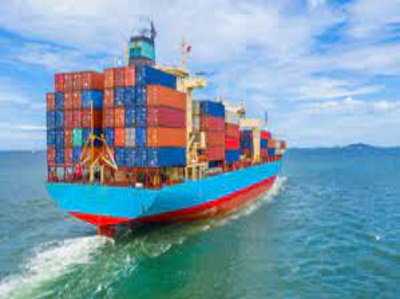
GEORGETOWN, Guyana – In a significant stride toward economic transformation, Guyanese President Irfaan Ali has announced the finalization of a landmark export agreement, with two containers of locally produced agro-processed goods now destined for Caribbean markets. This initiative, presented during a comprehensive year-end dialogue with students, marks a tangible move to convert agricultural output into sustainable export revenue for local households and communities.
President Ali articulated a cohesive economic and social framework designed to alleviate poverty, amplify household wealth, and construct a resilient, diversified economy accessible to all citizens. He emphasized that the upcoming shipment is not merely symbolic but a direct outcome of strategic policies positioning families, farmers, youth, and small enterprises at the core of national development.
This agro-processing milestone results from deliberate government efforts to incentivize agriculture, empower small-scale producers—especially women—and connect village-level production with regional and international supply chains. With Guyana rapidly emerging as a crucial food supplier in the Caribbean, high-level discussions are underway to establish a commercial division within the Guyana Defence Force (GDF), aimed at integrating national food production with the CARICOM market.
Citing a recent dialogue with Antigua and Barbuda Prime Minister Gaston Browne, President Ali highlighted growing regional interest, noting that young entrepreneurs from Antigua are investing in transportation infrastructure and viewing Guyana as a primary food source.
To further institutionalize this progress, the Guyana Development Bank will introduce entrepreneurship education in schools, equipping students with skills to form consortia and develop viable business concepts from an early age. “Wealth creation is not accidental,” Ali stated. “It is planned at the national level through policies and programs and felt at the community level.”
On food security, Ali acknowledged that regional targets have been hampered by hurricanes, climate disruptions, and post-pandemic demand surges. However, Guyana has achieved substantial expansion in poultry, livestock, egg production, aquaculture, corn, and soya. Exports to the broader Caribbean are anticipated within two years, with international investors actively exploring opportunities in large-scale livestock, swine production, sugar refining, ethanol, mega-farms, and hydroponics—a testament to growing confidence in Guyana’s policy landscape.
In parallel, President Ali revealed plans for a full assessment of the gold mining sector on January 5, as part of a government crackdown on illegal activities. The evaluation will enforce stricter accountability, linking mercury purchases to production declarations. Mining lands with registered dredges but no declared output will be repossessed to prevent environmental degradation without economic benefit.
Addressing challenges in national infrastructure, Ali recognized ongoing difficulties at Guyana Power and Light (GPL), which has struggled with blackouts due to surging demand from new housing and business development, compounded by an aging distribution network. His administration is committed to reinvesting in and modernizing the power grid, particularly the Demerara-Berbice Interconnected System, which suffered from underinvestment between 2015 and 2020.