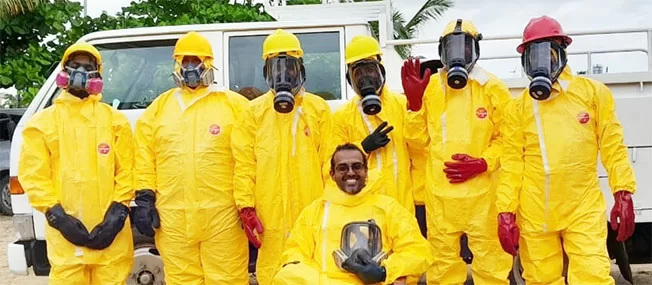
Suriname has marked a significant milestone in industrial safety with the completion of an intensive chemical security training program, the first of its kind in the nation meeting international standards. The three-week program, concluded Monday at Bux Engineering facilities, equipped specialists with advanced techniques to handle hazardous materials and counter CBRN threats—Chemical, Biological, Radiological, and Nuclear hazards.
Anwar Alibux, CEO of Bux Engineering, emphasized the program’s critical importance given Suriname’s regular importation of radioactive sources for medical applications and oil/gas sector operations. The training utilized specialized equipment and methodologies previously unavailable in the country, addressing significant gaps in handling explosives, laboratory chemicals, industrial cleaning agents, and mining raw materials.
The curriculum extensively covered transport and storage protocols for dangerous substances—areas where Suriname has historically underperformed. Participants received instruction on identifying chemicals potentially misused for manufacturing chemical/biological weapons or illegal narcotics. Additional modules included oil spill cleanup procedures and emergency response techniques.
This initiative became possible after Surinamese specialists successfully completed the international Associate Program of the Organisation for the Prohibition of Chemical Weapons (OPCW) in October. The OPCW, a United Nations-affiliated independent body based in The Hague, oversees the global chemical weapons ban.
Twelve specialists from four private companies—Muhaarib Security NV, Yamuna NV, Suriname Drones Services NV, and Bux Engineering—participated in this inaugural session. The program will expand in 2026 to include more private enterprises and government agencies, offering modular training ranging from three days to six weeks depending on specialization.
Alibux highlighted the urgent need for such investment: ‘Dozens of annual chemical incidents in Suriname go unreported, while improper chemical handling causes chronic health issues among laboratory and industrial workers. The critical missing element is a 24/7 HAZMAT response capability for inspections and emergencies. Currently, adequate response to chemical incidents or disasters often takes days.’