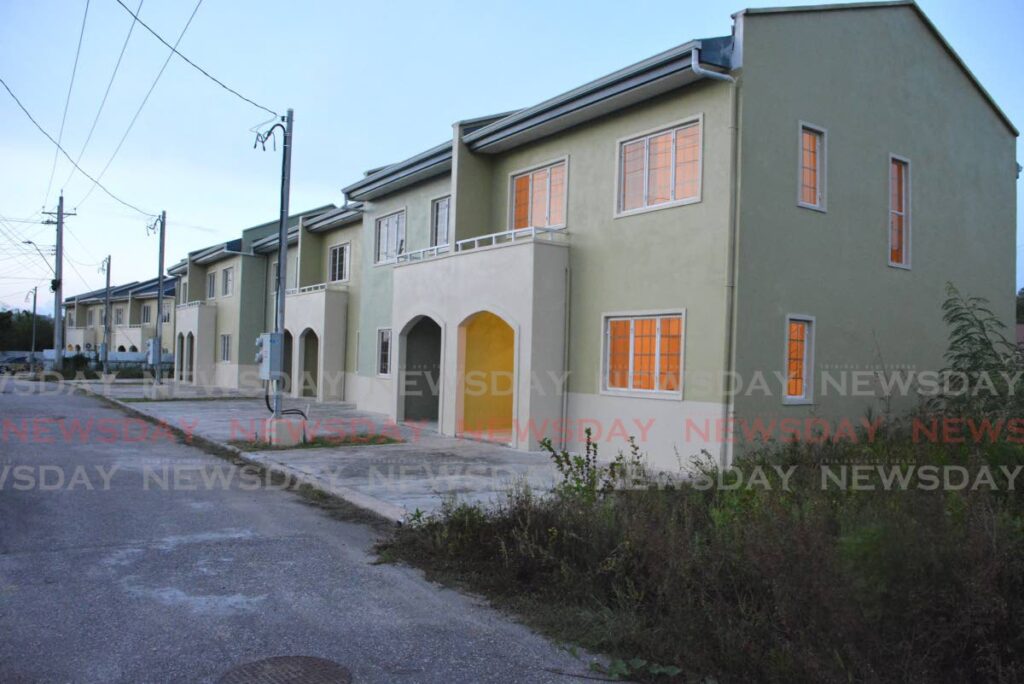
A Trinidadian family’s four-year wait for their government-subsidized home culminated in a shocking discovery on December 29 when they found strangers decorating and preparing to occupy their Housing Development Corporation (HDC) property in Riverside South, Corinth. The couple, who requested anonymity, immediately contacted law enforcement after being alerted by concerned neighbors about unauthorized activity at their townhouse unit.
Upon arrival with police, the family discovered their allocated home had been altered with installed curtains and wall modifications. Officers encountered three women occupying not only their unit but two adjacent properties as well. Law enforcement directed the unauthorized occupants to vacate immediately and secured the premises, though official charges remain unconfirmed.
This incident occurred amidst controversial public statements from HDC Chairman Feeroz Khan regarding potential regularization of squatters in vacant state housing. Housing Minister David Lee subsequently distanced himself from these remarks, claiming no knowledge of such initiatives.
The affected family had initially paid their down payment in November 2020, enduring a protracted administrative process that required repeated document submissions and valuation updates. During this period, their unit’s cost escalated from $600,000 to $750,000 TT dollars. Their perseverance included significant personal sacrifice, including the loss of their vehicle during flood conditions while attending a mandatory HDC meeting.
Following the break-in, the family urgently visited HDC offices with police documentation. After tense negotiations, officials provided keys under a rent-to-own arrangement despite outstanding paperwork. The unit transferred with existing utility debts totaling approximately $595 TT dollars, which the family accepted to secure immediate occupancy.
The emotional toll was profound, with the husband experiencing uncharacteristic rage and the wife describing overwhelming heartbreak. They emphasize their decision to publicize this ordeal aims to highlight vulnerabilities faced by legally allocated homeowners amid ambiguous housing policies. The family now occupies the property continuously as a preventive measure against further occupation attempts.