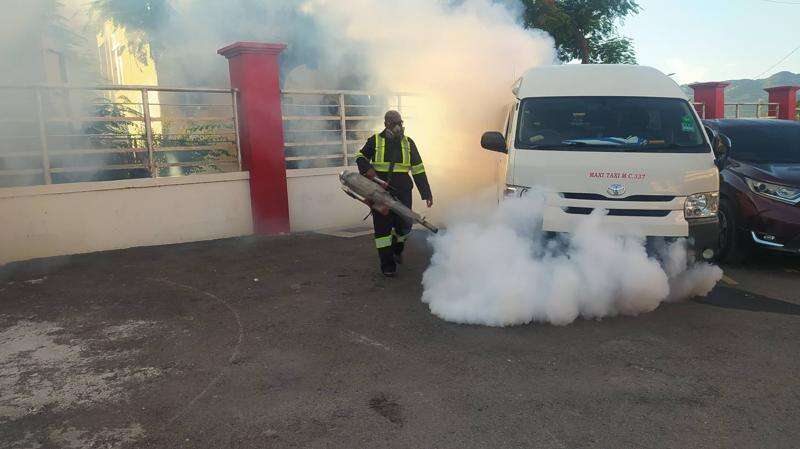
KINGSTON, Jamaica — Health authorities in Jamaica have issued firm reassurances regarding the safety of chemical fogging operations being conducted across multiple communities to combat surging mosquito populations following Hurricane Melissa.
Portfolio Minister Dr. Christopher Tufton characterized the fogging methodology as a fundamentally secure approach for eliminating mosquitoes capable of transmitting dengue and other viruses. In statements to JIS News, Dr. Tufton emphasized that contemporary insecticides have undergone substantial advancements, resulting in formulations that are significantly more environmentally considerate. “These chemicals will not cause fatalities or harm to individuals,” he stated, “while effectively mitigating the nuisance and health hazards posed by mosquitoes.”
The Minister advised minimal exposure for persons with known allergies, suggesting the temporary use of a damp cloth over the nose until the dispersed mist settles. He strongly encouraged public cooperation to allow fogging teams to perform their essential duties without obstruction.
Echoing these sentiments, Sherine Huntley Jones, Medical Entomologist and National Programme Manager for Vector Control, confirmed that all chemicals deployed are certified and endorsed by the World Health Organization (WHO). Their application strictly follows manufacturer guidelines, negating any legitimate concerns about adverse health effects, she assured.
In response to post-hurricane conditions, the Ministry of Health and Wellness has heightened its alert status for mosquito-borne disease transmission and intensified its control initiatives. This includes an expanded schedule for both fogging and larvicidal treatments. Ms. Huntley Jones indicated these operations would gradually scale down once the threat of an outbreak is deemed sufficiently contained.
The public is urged to report any issues related to fogging to their local parish health department. Concurrently, officials are calling for citizen participation in source reduction efforts—promptly identifying and eliminating containers that collect water and facilitate mosquito breeding around homes. This collaborative approach between the government and communities is presented as the most effective strategy for reducing mosquito populations and curtailing disease risk.
Supporting the ministry’s position, the WHO notes that the insecticide concentrations used in fogging are minimal and calibrated to target only small insects like mosquitoes. Occasional exposure at these levels is not anticipated to produce negative health outcomes in humans. The global health body advocates for an Integrated Vector Management (IVM) strategy, which combines fogging with other proven measures such as Insecticide-Treated Nets (ITNs), Indoor Residual Spraying (IRS), EPA-registered repellents, and environmental management to prevent breeding sites.