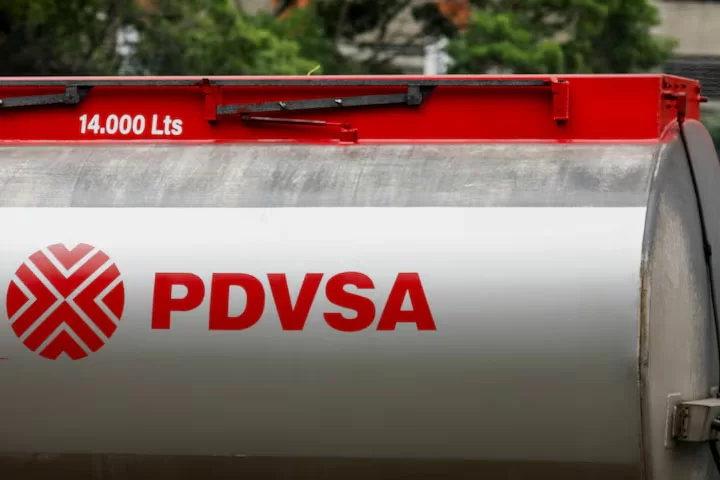
Venezuela’s state-owned oil company PDVSA has initiated an emergency strategy of using tankers as floating storage units in its territorial waters following a series of crude oil seizures by United States authorities. According to internal company documents and shipping data, this unprecedented measure comes as direct response to US Coast Guard interceptions of Venezuelan oil shipments in the Caribbean Sea.
This month witnessed the seizure of two fully-loaded crude carriers, the Skipper and Centuries, with a third empty vessel currently being monitored approaching Venezuelan waters. These developments are part of Washington’s intensified enforcement actions against what it terms a ‘shadow fleet’ transporting sanctioned oil. Former President Donald Trump’s administration had announced a comprehensive blockade against all vessels falling under US sanctions, creating significant deterrence among shipowners and leaving more than a dozen oil tankers stranded within Venezuelan maritime boundaries.
With PDVSA maintaining daily production of approximately 1.1 million barrels, storage facilities on land are rapidly approaching capacity—particularly at the Jose terminal which handles heavy crude from the Orinoco belt, Venezuela’s primary oil-producing region. To avoid production cuts, the company began emergency transfer operations over the weekend, pumping surplus oil onto vessels now serving as temporary storage solutions.
Interestingly, Chevron—PDVSA’s joint venture partner—has maintained uninterrupted export operations despite the escalating situation. The US oil major continues to produce roughly one quarter of Orinoco basin output, while PDVSA handles the remaining three quarters, primarily destined for Chinese markets. China has emerged as the destination for approximately 80% of Venezuela’s oil exports this year.
Storage levels at the Jose terminal had previously declined from a peak of 14 million barrels earlier this year to between 9-11 million barrels since September. Current figures show inventories have rebounded to 12.6 million barrels, bringing Venezuela’s total oil stockpile to 22 million barrels—the highest level since August.
PDVSA faces mounting challenges in convincing customers to continue accepting deliveries after this weekend’s additional US seizures. The floating storage solution has become necessary while the company negotiates price reductions and contract modifications with reluctant buyers, some of whom are considering returning shipments to Venezuelan terminals.
Last week, PDVSA contemplated declaring force majeure for certain exports but ultimately decided against the measure to avoid disrupting ongoing client negotiations. The legal concept of force majeure would allow the seller to be released from delivery obligations under extraordinary circumstances.
In a televised address, President Nicolás Maduro emphasized that oil exports to Chevron would continue ‘rain, thunder or lightning’ despite pressure from Washington. ‘We are serious and honest people who honor our contracts,’ Maduro declared. Chevron confirmed its Venezuelan operations continue unchanged and in compliance with applicable laws and regulations.
In a significant legislative development, Venezuela’s Maduro-controlled parliament passed a law imposing prison sentences of up to 20 years for anyone promoting or financing piracy or blockades of oil exports, signaling Caracas’s determination to counter US sanctions through legal means.