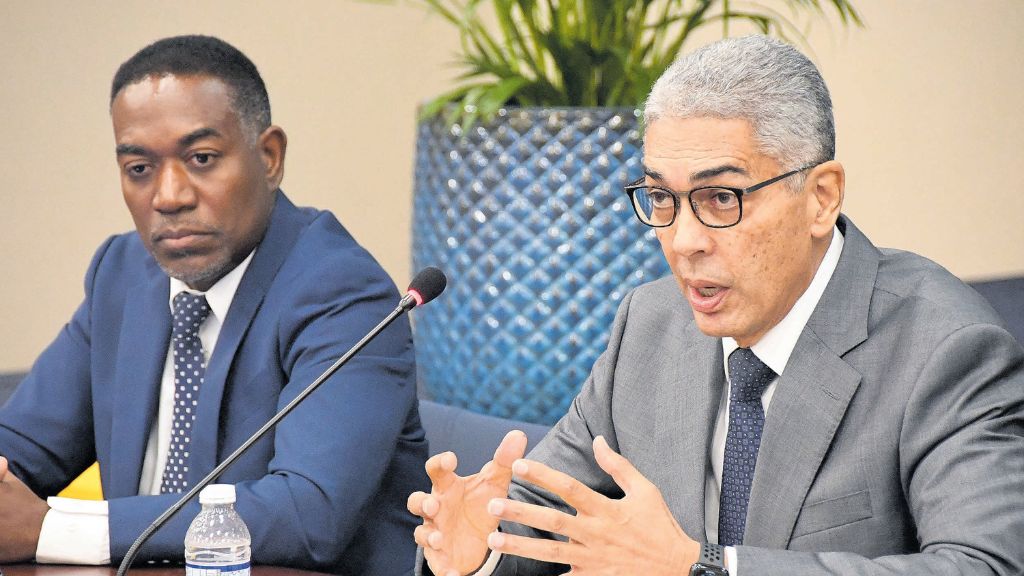
Jamaica’s economic recovery faces a critical challenge as the pace of post-hurricane reconstruction spending threatens to exacerbate inflationary pressures, according to the Bank of Jamaica (BOJ). Governor Richard Byles emphasized during Monday’s quarterly monetary policy conference that while substantial funding has been secured for rebuilding efforts, the nation’s historical inefficiencies in capital expenditure and procurement processes could significantly delay recovery.
The central bank revealed that approximately $1 billion in official donations and relief contributions have been mobilized, with additional multilateral funding and insurance settlements anticipated. However, Governor Byles cautioned that these funds remain largely in planning stages due to procedural complexities. “If all this money sits in Jamaica and is not spent, it means that the recovery will be much slower,” Byles stated, highlighting the urgent need for efficient fund deployment.
In response to these execution challenges, the Jamaican government established the National Reconstruction and Resilience Authority (NARA). This statutory body, reporting directly to Prime Minister Andrew Holness, possesses special powers to streamline planning approvals and procurement processes. NARA’s mandate focuses on developing climate-resilient infrastructure, constructing safer housing, and implementing improved land-use planning strategies, though specific operational details remain under development.
The economic implications of delayed spending are particularly concerning given the revised damage assessment of US$8.8 billion, equivalent to 40% of Jamaica’s GDP. The BOJ warns that reconstruction demands will inevitably strain construction services, materials, transport, and labor markets. In an import-dependent economy, supply constraints could trigger widespread price increases beyond the already evident spikes in food costs, home repairs, and personal services.
Governor Byles expressed concern about emerging second-round inflationary effects, noting that without careful management, these price increases could become entrenched. The central bank has consequently maintained its policy rate at 5.75%, prioritizing inflation containment over near-term economic stimulus. This monetary stance aims to anchor inflation expectations and prevent temporary cost increases from becoming permanent features of Jamaica’s economic landscape.
The BOJ remains committed to returning inflation to its 4-6% target range by early 2027, acknowledging that failure to control price stability would disproportionately affect Jamaica’s most vulnerable populations. The Monetary Policy Committee has pledged continuous monitoring of food price impacts on overall inflation and stands ready to adjust policy if recovery spending accelerates beyond current projections.