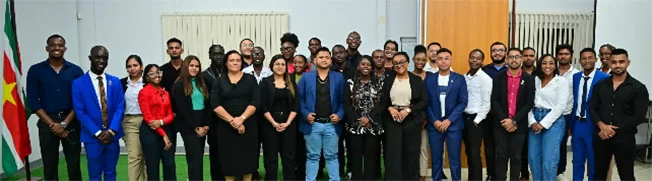
Suriname’s National Youth Council concluded its 2025 operational year with a comprehensive evaluation meeting on December 20th, setting strategic directions for 2026 with enhanced youth participation in policy and governance as its cornerstone. The meeting, attended by key stakeholders including youth ambassadors and institutional leaders, served as both a retrospective analysis and forward-looking planning session.
Operating under the National Youth Institute (NJI), the Youth Council presented a detailed overview of its annual achievements and challenges. NJI Director Dinesh Parag and Deputy Director Santoucha Redan joined SDG Ambassador Drusila Blinker and CARICOM Youth Ambassador Arantxa Swedo in delivering progress reports on ongoing initiatives and lessons learned throughout 2025.
Youth Development and Sports Minister Lalinie Gopal expressed strong appreciation for the Council’s efforts, particularly emphasizing the strategic rationale behind combining Youth and Sports within a single ministry portfolio. Minister Gopal highlighted sports’ critical role in youth development, noting its contributions to building discipline, collaborative skills, and mental resilience among young Surinamese.
The minister specifically commended youth involvement in community initiatives such as the Krin Kondre project and school backpack program, recognizing young people’s unique position to identify local needs through their district-level connections. Minister Gopal assured continued full ministerial support for the Youth Council throughout 2026.
NJI Director Parag stressed the importance of systematic evaluation and multi-year planning frameworks, stating that clear situational analysis is essential for targeted policy development. He cited the World AIDS Day school program, implemented through multi-stakeholder partnerships, as a successful example of effective youth engagement.
Youth Council Chairman Shemar Rier reflected positively on 2025 as a foundational year that established robust organizational structures. Looking ahead, the Council will prioritize expanding youth influence within policy processes and governance mechanisms, including targeted training and mentorship programs for youth aspiring to leadership positions.
The annual meeting concluded with a unified commitment from all participating organizations to sustain collaborative efforts and continue investing in sustainable youth development throughout Suriname.