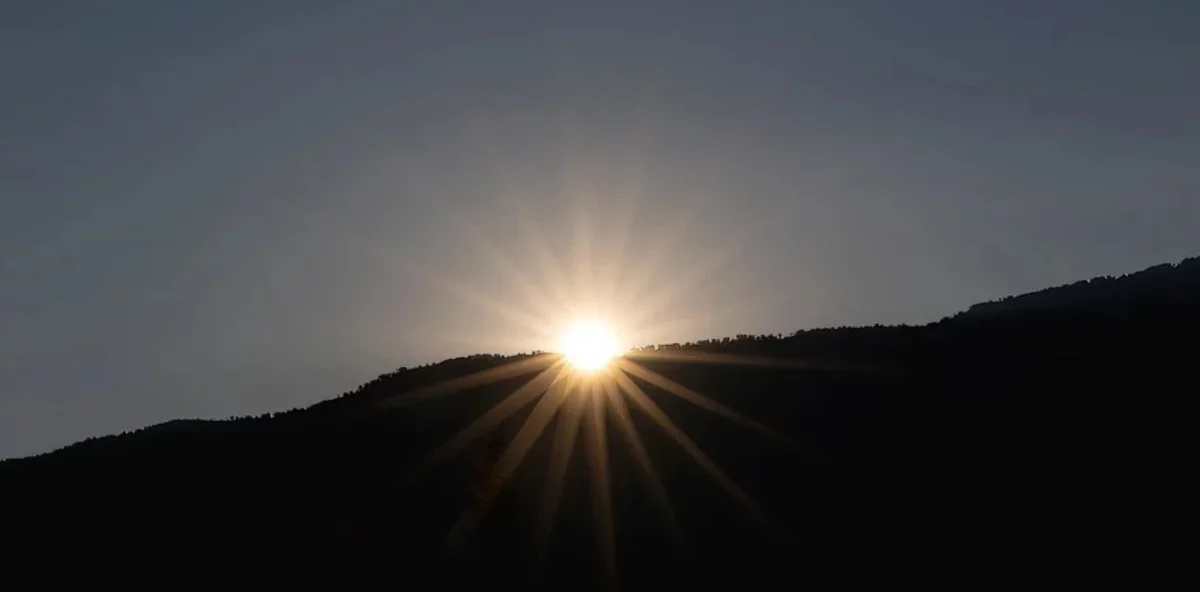
The Dominican Republic experiences a distinct atmospheric transformation each December, characterized by shortened daylight hours and extended nights accompanied by a noticeable Christmas breeze. This seasonal shift transcends mere perception, finding its scientific explanation in the astronomical event known as the winter solstice, which occurs annually around December 21st.
This celestial phenomenon represents the year’s shortest day and longest night in the Northern Hemisphere, occurring when the Sun reaches its southernmost position directly above the Tropic of Capricorn. Meteorologist Cristopher Florian of the Dominican Institute of Meteorology explains that during this period, solar rays strike the northern hemisphere at a more oblique angle, resulting in reduced solar radiation and the official commencement of winter conditions.
The solstice’s impact manifests through later sunrises and earlier sunsets across the Dominican Republic, creating prolonged nighttime hours and diminished daylight. This astronomical transition also facilitates a moderate decrease in temperatures, particularly during nocturnal and early morning hours. Florian notes that these effects intensify in valley and mountainous regions, especially in provinces adjacent to the Central Cordillera such as Santiago, Monseñor Nouel and La Vega, where morning fog frequently occurs.
Despite these atmospheric changes, the country’s tropical location near the Tropic of Cancer ensures that elevated temperatures persist throughout the winter period. Temperature peaks exceeding seasonal averages continue to affect northwestern regions including Santiago Rodríguez, Dajabón, and Montecristi.
Regarding precipitation patterns, Florian indicates that reduced rainfall characterizes this season due to predominant high-pressure systems that create less humid conditions. These anticyclonic systems promote stable weather patterns featuring predominantly sunny skies, minimal cloud coverage, and significantly diminished rainfall activity.