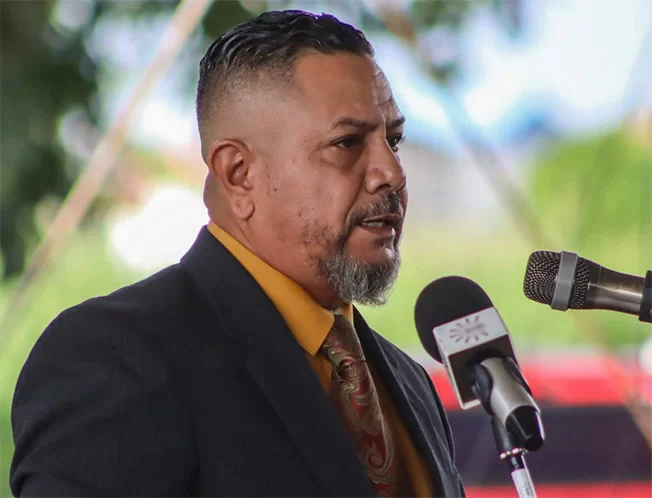
In a striking address during Friday’s police promotion ceremony, Suriname Police Union Chairman Chief Inspector Revelino Eijk delivered a powerful critique of the deteriorating working conditions and legal protections within the Suriname Police Force (KPS). While congratulating newly promoted officers, Eijk emphasized that structural deficiencies within the corps demand immediate attention rather than continued neglect.
Eijk articulated that promotions represent more than mere rank advancements—they signify recognition of dedication, discipline, professionalism, and loyalty to both the police force and Suriname. He stressed that promotions constitute earned rights under legal frameworks rather than organizational favors, bringing not only expanded authority but greater responsibilities, including exemplary conduct within the corps and toward society.
The union leader highlighted policing as a vocation rather than conventional employment, noting its inherent risks to personal safety and sacrifices in private life. Consequently, appreciation, fairness, and clear career trajectories become essential components for officer retention and morale. Transparent and equitable promotion processes, according to Eijk, fundamentally contribute to motivation, trust, and organizational cohesion.
Eijk expressed particular concern for officers who met service duration, performance, and evaluation criteria yet were overlooked for promotions. He asserted that a professional police corps can only function effectively when every member feels recognized and valued.
The Police Union chairman positioned his organization as a constructive partner in collaborations with KPS, the Ministry of Justice and Police, and other unions, though emphasizing this cooperation isn’t unconditional. Agreements must be honored, and decisions affecting officers’ legal status must adhere to proper governance principles. Eijk noted that trust is increasingly undermined by broken commitments and inadequate communication.
Eijk detailed critical operational shortcomings: inadequate training programs despite high policing standards, severe shortages of uniforms, equipment, patrol vehicles, computers, and other essential resources. Multiple police facilities operate in disrepair with substandard sanitation and unhygienic conditions.
Financial protections for officers raised additional concerns. Promotion-related financial resolutions frequently experience prolonged delays, deferring monetary recognition. When back payments eventually occur, significant portions are withheld through taxation, transforming promotions into financial burdens rather than rewards for some officers. Eijk revealed that some officers have retired without receiving their entitled financial benefits.
Eijk further criticized investigative procedures against officers accused of criminal offenses or duty violations, noting these processes often lack diligence and proper administrative principles in disciplinary actions. He referenced a recent judicial ruling that vindicated an officer dismissed in 2013 after twelve years, requiring full reinstatement with back pay.
All these issues, Eijk concluded, revolve around a central concept: trust. Trust in the organization, agreements, and leadership isn’t automatic but must be earned and maintained. The Police Union urges authorities to address these challenges as systemic problems requiring structural solutions rather than isolated incidents. Investing in personnel, resources, training, and proper legal status constitutes essential prerequisites for sustainable security and professional policing.