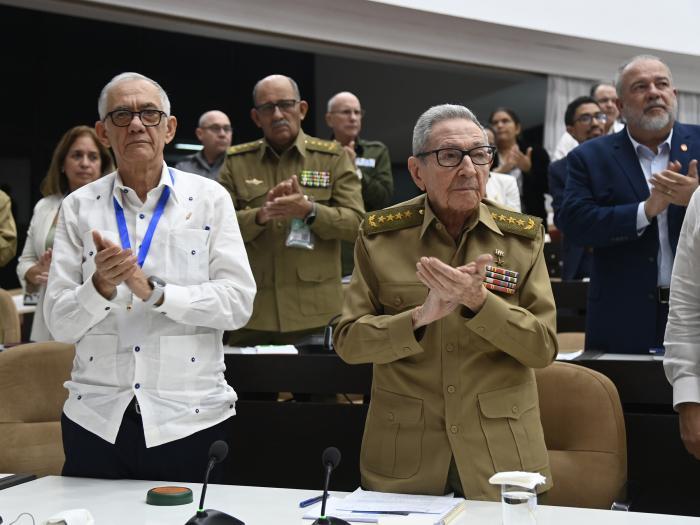
Cuba’s National Assembly has officially declared 2026 as the “Year of the Centennial of Commander-in-Chief Fidel Castro Ruz” during its fifth regular session, attended by Revolutionary leader Army General Raúl Castro Ruz. The designation, proposed by President Miguel Díaz-Canel Bermúdez, comes as the Caribbean nation confronts severe economic challenges while maintaining its revolutionary legacy.
President Díaz-Canel delivered a critical assessment of Cuba’s economic situation, describing it as “an accumulation of distortions, adversities, difficulties, and mistakes of our own, exacerbated by an extremely aggressive external blockade.” Despite these challenges, the President emphasized that resigned crisis management was unacceptable, calling instead for “greater creativity, greater discipline, greater control, and a relentless fight against bureaucracy, indolence, and corruption.”
The parliamentary session resulted in significant legislative advancements, including approval of the 2026 Economic Plan and State Budget Law. Díaz-Canel characterized the economic strategy as “a plan of offensive and readjustment” rather than mere technical adjustments, describing it as “a revolutionary necessity to perfect socialism under construction, to make it more prosperous, sustainable, and fair.”
A landmark achievement of the session was the passage of the General Law on Science, Technology, and Innovation. This comprehensive legislation introduces modern concepts to stimulate economic innovation through Technology-Based Companies (TBCs), High-Tech Companies (HTCs), science parks, and interface organizations. The law establishes tax incentives, financial benefits, and incubation systems for new enterprises, while creating a Science and Innovation Financial Fund supported by a 10% contribution from TBC profits.
The assembly also witnessed significant leadership changes, including the election of José Luis Toledo Santander as secretary of the National Assembly, the appointment of Rosabel Gamón Verde as Minister of Justice, and the selection of Oscar Manuel Silvera Martínez as president of the People’s Supreme Court. Eight new deputies joined the assembly, expanding popular representation in Cuba’s highest state authority.
President Díaz-Canel reiterated concerns about U.S. government hostility, highlighting “relentless economic aggression against Cuba” and similar pressures on Venezuela. He framed these actions as part of a broader regional doctrine seeking “to impose arbitrary will and domination through threats, coercion, and even direct aggression.”
The session demonstrated Cuba’s dual commitment to honoring its revolutionary heritage while implementing structural reforms to address contemporary economic challenges, setting the stage for a transformative period leading to Fidel Castro’s centennial celebrations.