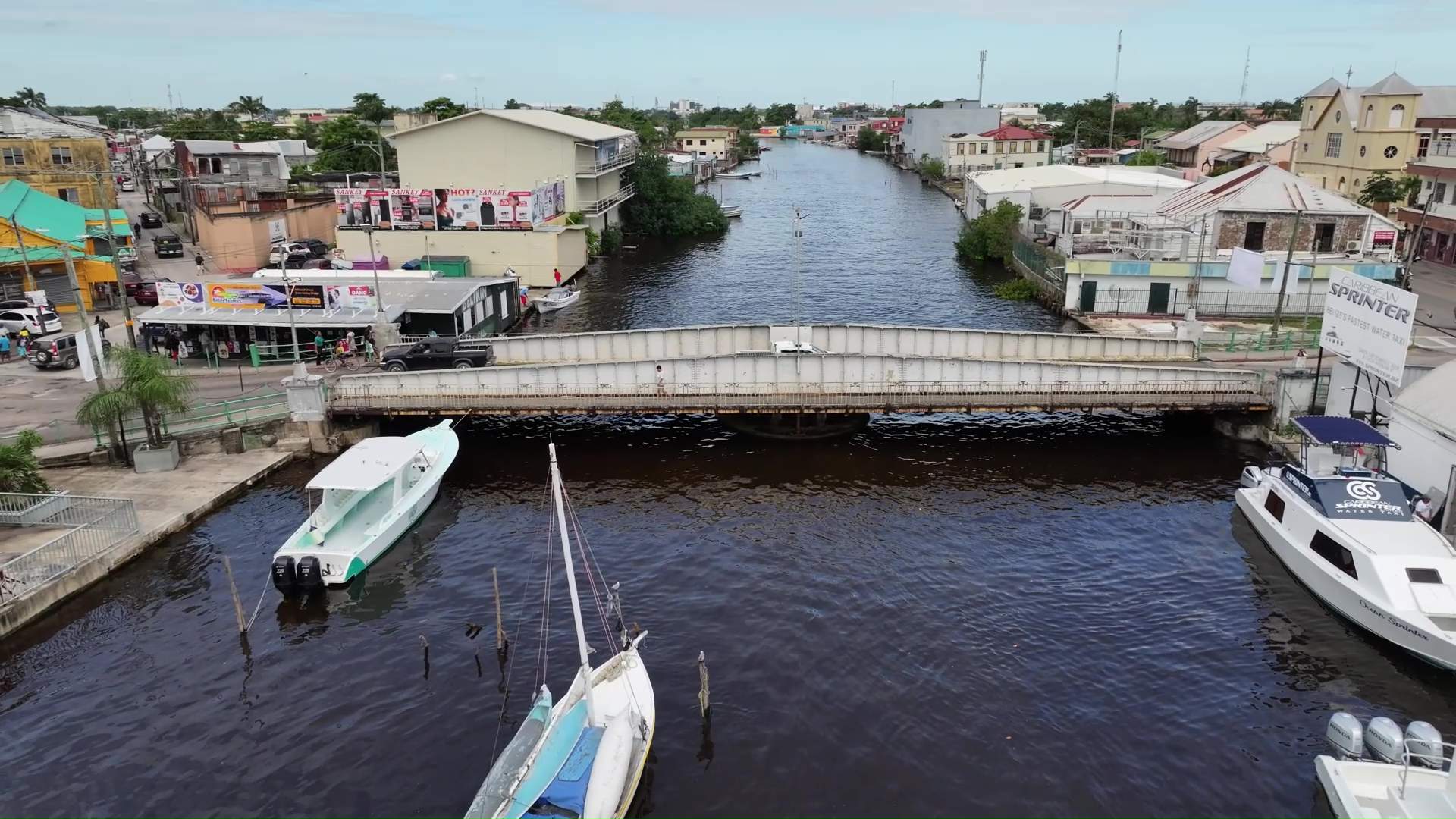
In a significant bilateral development, the Governments of Japan and Belize have formalized a $28 million Belize dollar agreement to reconstruct the iconic Belize City Swing Bridge—the last manually operated swing bridge in Central America. The funding, provided through Japan International Cooperation Agency (JICA), marks a major milestone in cultural preservation and climate-resilient infrastructure development.
The ceremonial signing occurred in Belize City with Japanese Ambassador H.E. Kenichiro Tanaka and Belize’s Foreign Minister Francis Fonseca exchanging notes, while Prime Minister John Briceño signed alongside JICA’s Chief Representative Hiromi Nai. The project represents one of the most substantial preservation investments in Belize’s recent history, targeting a structure originally installed in 1923 that has become both functional infrastructure and cultural artifact.
Prime Minister Briceño emphasized the project’s dual significance: “We are preserving a rich cultural relic while anticipating the harsh realities of construction in a flood-prone area. Although the new bridge won’t mechanically swing, its identity remains intact—connecting our past with future priorities of public safety, economic continuity, and climate resilience.”
Infrastructure Minister Julius Espat contextualized the bridge within the broader George Price Rehabilitation Project, noting that planning began immediately after the current administration took office in 2021. The Swing Bridge constitutes the fourth segment of this comprehensive infrastructure initiative.
JICA’s regional representative Hiromi Nai, operating from El Salvador, highlighted the project’s alignment with Japan’s development priorities: “This grant agreement commemorates JICA Belize’s 26th anniversary while advancing our focus on climate resilience. Our commitment extends beyond infrastructure to human resource development and agricultural industry promotion.”
Belize City Mayor Bernard Wagner celebrated the agreement as “the convergence of vision, partnership, and political will,” describing the bridge as “the beating heart of downtown Belize City” that connects both geographic communities and historical eras. During the anticipated two-year construction period, traffic will be rerouted via a temporary bridge at Hyde’s Lane and North Front Street.
The project represents a sophisticated balance between historical preservation and modern engineering, ensuring this symbol of national pride will continue serving Belizeans for generations while withstanding environmental challenges.