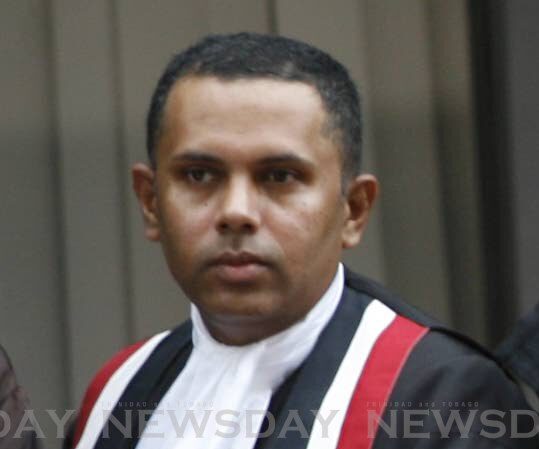
In a landmark judicial ruling, Trinidad and Tobago’s Court of Appeal has vacated professional misconduct findings against three attorneys, delivering a stern rebuke of the Law Association’s Disciplinary Committee for fundamental procedural violations. The consolidated judgment, authored by Chief Justice Ronnie Boodoosingh with unanimous support from Justices Nolan Bereaux and Maria Wilson, determined that attorneys Dinesh Rambally, Karina Singh, and Desiree Sankar were denied fundamental fairness during disciplinary proceedings.
The case originated from December 2020 complaints filed by Michael Dhanoosingh, who alleged professional misconduct regarding the attorneys’ representation in property litigation involving family-owned land in Aranguez. Notably, Dhanoosingh appeared without legal representation before the disciplinary committee and did not participate in the appeal process.
The appellate court identified multiple critical flaws in the disciplinary process chaired by committee vice chairman Ian Benjamin, SC. Justice Boodoosingh emphasized that the committee failed to adhere to the structured two-stage approach mandated by the Legal Profession (Disciplinary Proceedings) Rules, which requires preliminary assessment of prima facie evidence before proceeding to full hearing.
‘What occurred was a rolling discussion over six days that culminated in findings of misconduct without clear reasoning,’ Chief Justice Boodoosingh observed. The court noted the committee neglected to require particularization of allegations, failed to identify specific ethical breaches, and did not subject the complainant’s assertions to cross-examination.
Justice Bereaux delivered particularly sharp criticism, characterizing the committee’s approach as ‘a masterclass in how a disciplinary tribunal should not conduct itself.’ He noted the committee had effectively formulated new complaints mid-proceeding that were not originally raised by Dhanoosingh, leaving the attorneys unaware of the specific allegations they needed to address.
Justice Wilson concurred, emphasizing that while flexibility for unrepresented complainants is appropriate, it cannot justify abandoning fundamental safeguards. ‘This is a matter where the reputation of attorneys was at stake,’ she wrote, noting that disciplinary findings leave ‘a stubborn stain on his or her career, difficult to wipe away.’
The court additionally recommended systemic reforms, suggesting that legal aid services, volunteer attorneys, or law school clinics could assist unrepresented complainants in properly framing complaints without compromising procedural integrity.
Legal representatives for the appellants welcomed the decision. Kiel Taklalsingh, who represented Rambally, noted the ruling ‘is an important one for all professionals and in particular disciplinary bodies who may misuse their power of discipline.’
The judgment establishes significant precedent for professional disciplinary proceedings, reinforcing that procedural fairness must be maintained even when dealing with unrepresented complainants, and that self-regulating professions must balance disciplinary efficiency with fundamental justice.