In a landmark gathering in Brazil, Latin American and Caribbean nations unveiled groundbreaking strategies to revolutionize school feeding programs through sustainability, technology, and community engagement. The inaugural RAES exhibition of best practices in school nutrition, co-organized by the UN Food and Agriculture Organization (FAO), the Brazilian government, and the School Feeding Network, convened approximately 300 professionals from 20 nations across Latin America, the Caribbean, and Europe.
Eleven countries demonstrated concrete initiatives linking school meals to sustainable agri-food systems. Chile introduced the PAE App pilot project, enabling schools to photograph served meals and compare them against planned menus while facilitating parental feedback. Brazil showcased its Food and Nutrition Education Journeys program, reaching over 11,000 schools since 2017 to integrate nutritional education into core curricula.
Belize revealed how training school cooks alongside professional chefs transformed menus across 78 institutions serving 15,000 students. Paraguay’s Mbo’Eco project combined waste management with environmental education, while Suriname emphasized accelerated progress through international knowledge-sharing.
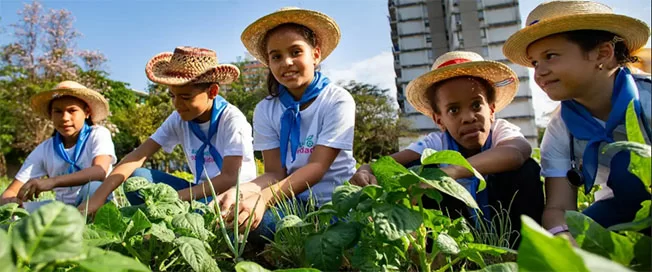
Notable innovations included the Dominican Republic’s Optiwaste tool for measuring and reducing food waste, and school garden initiatives from Cuba, Guatemala, and Saint Lucia that enhanced nutrition, entrepreneurship, and special needs education. Uruguay reported a striking 22% reduction in student absenteeism following hygiene and nutrition interventions, while Colombia advocated for culturally adapted meals respecting indigenous communities’ culinary traditions.
The RAES network—a collaboration of 18 countries implemented by Brazil’s Cooperation Agency (ABC), the National Fund for Education Development (FNDE), and FAO—demonstrated how regional cooperation is creating more transparent, inclusive, and environmentally conscious school nutrition systems.