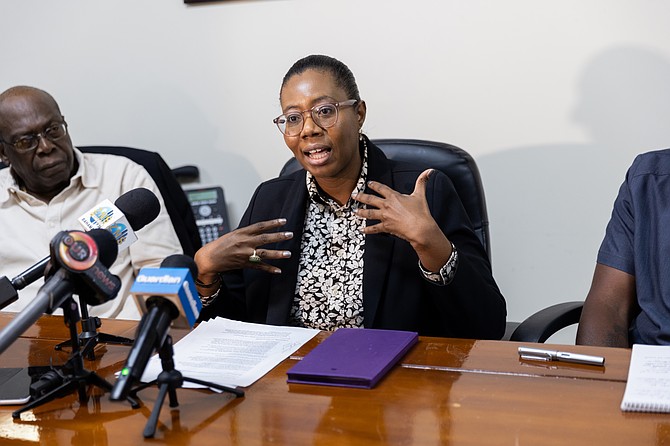
A deepening financial crisis within the Bahamas’ National Health Insurance (NHI) scheme is threatening the program’s stability, prompting healthcare providers to form a collective action group in response to systemic challenges. Medical professionals report severe payment delays extending over two months, with the most recent disbursement covering only partial claims from October, creating unsustainable cash flow constraints for practices.
The newly established National Health Insurance Providers Association (NHI PA) represents physicians facing what they describe as compounding operational pressures. Dr. Denotrah Archer-Cartwright, an association representative, highlighted the tangible impacts: ‘We have rent to pay, we have utilities to pay, all of these things have gone up. We’ve never received any additional funds in the past seven years, yet we continue despite not knowing when we will be paid or how much we will receive.’
This financial strain has already triggered significant practice modifications. Some providers have exited the program entirely, while others drain personal savings to maintain operations. Concurrently, patients experience reduced benefits despite government announcements of program expansion, creating uncomfortable conversations between doctors and those they serve.
The conflict intensifies as health officials pursue NHI expansion plans, including broader medication access, without identifying additional funding sources. Providers warn that enlarging the program without resolving payment failures risks catastrophic system failure.
Further complicating matters, proposed policy changes would impose monthly service fees of $250-$500 for using the mandatory electronic medical record system starting next year—a requirement doctors criticize as unprecedented in international health systems. Dr. Ian Kelly noted: ‘I’ve worked in a number of countries myself, and I have never seen the micromanagement that is here. In many countries, they promote and actually encourage with extra funds.’
Health and Wellness Minister Dr. Michael Darville acknowledged payment delays while confirming November reimbursements remain outstanding. He stated ministry efforts to regularize balances and characterized recent policy changes as necessary for long-term sustainability. Despite ministerial assurances of commitment to dialogue, providers report feeling unheard amid unilateral changes to payment schedules and patient assignments.