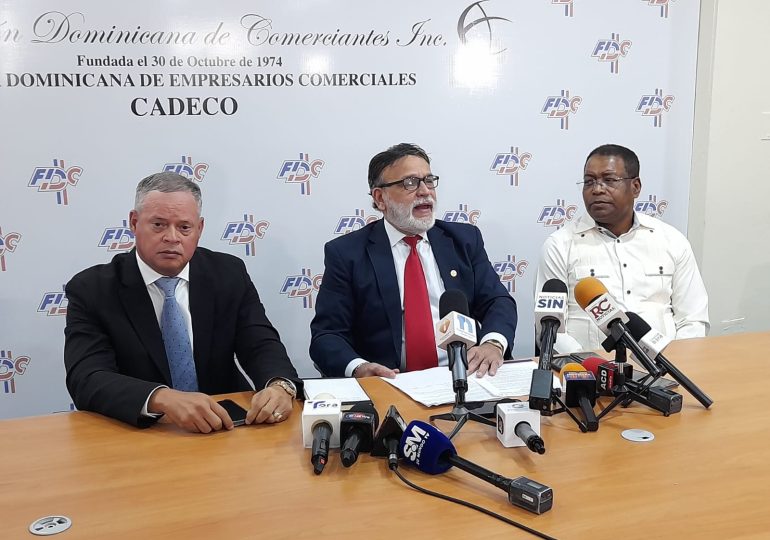
SANTO DOMINGO – A contentious new environmental law has sparked significant backlash from the Dominican Republic’s business community, with merchant federations warning of disproportionate economic impacts on smaller enterprises. Law No. 98-25, which modifies the country’s Comprehensive Management and Co-processing of Solid Waste framework, was unexpectedly promulgated by President Luis Abinader this week, immediately drawing criticism from commercial representatives.
Iván García, President of the Dominican Federation of Merchants (FDC), emerged as the foremost critic of the legislation, characterizing its implementation as abrupt and ill-considered. The core contention centers on the law’s uniform fee structure that imposes identical financial obligations on businesses regardless of scale or revenue. “This legislation creates an absurd scenario where a corporation declaring over RD$10 billion pays precisely the same as an enterprise selling RD$100 million,” García stated, emphasizing the regressive nature of the fee system.
The legislation, confirmed by Executive Branch legal advisor Antoliano Peralta Romero, represents the Dominican government’s ambitious attempt to modernize waste management protocols and advance environmental sustainability objectives. The updated legal framework significantly expands the regulatory purview of the Ministry of Environment and Natural Resources while introducing stricter controls on waste disposal operations and landfill management.
Key environmental provisions include progressive measures targeting pollution reduction, particularly through phased prohibitions on single-use plastics and foam containers commencing in 2026. Exemptions will apply only to products incorporating certified biodegradable additives, reflecting the government’s commitment to transitioning toward a circular economy model.
While acknowledging the environmental merits of the legislation, business advocates argue that the current formulation fails to account for fundamental economic realities. Merchant groups contend that without structural revisions incorporating graduated fees based on enterprise size and capacity, the law could inadvertently stifle commercial activity and place undue burdens on small and medium-sized businesses—the backbone of the Dominican economy.
The unfolding situation presents a complex policy challenge pitting environmental imperatives against economic equity concerns, with stakeholders urging dialogue to develop more nuanced implementation frameworks.