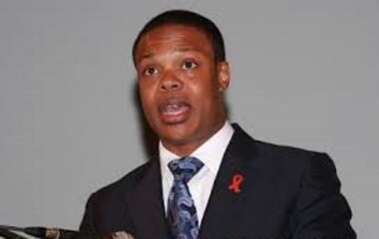
PORT OF SPAIN, Trinidad – A significant political dispute has erupted in Trinidad and Tobago following the government’s approval for United States military aircraft to utilize local airspace. The controversy emerged when former Caribbean Community (Caricom) and Foreign Affairs Minister Dr. Amery Browne characterized an official government statement as deliberately misleading.
The Ministry of Foreign and Caricom Affairs had announced Monday that approval was granted for U.S. military transit operations “in the coming weeks,” describing these movements as logistical support missions focused on supply replenishment and routine personnel relations. The statement emphasized Trinidad’s ongoing security partnership with the United States.
However, Browne presented a starkly different interpretation during a radio interview, asserting that “this was a very deceptive media release by the government.” The former minister contended that “never before has our country given blanket permission for unspecified foreign military aircraft to use the airports and airspace of Trinidad and Tobago in the build-up to a regime change war.”
Browne expressed particular concern about the timing and context, noting that Prime Minister Kamla Persad-Bissessar has consistently supported U.S. military operations in the Caribbean despite regional objections. This position contrasts sharply with other Caricom members who maintain the region should remain a “zone of peace” while acknowledging cooperation on narcotics interdiction.
The government, through Foreign Minister Sean Sobers, maintains that engagement with the U.S. Embassy remains constructive and focused on mutual security interests. Sobers reiterated the administration’s commitment to “cooperation and collaboration in the pursuit of safety and security for Trinidad and Tobago and the wider region.”
The Ministry highlighted tangible benefits from the security partnership, including joint military training exercises, enhanced surveillance capabilities through advanced radar systems, and successful narcotics interdiction efforts worth millions of dollars.
Browne concluded with a broader criticism, accusing the government of abandoning Trinidad’s traditional neutral foreign policy and diminishing the nation’s regional standing through its alignment with U.S. military objectives.