In a significant move within Jamaica’s energy sector, West Indies Petroleum Terminal Limited (WIP Terminal) has initiated proceedings to list on the Jamaica Stock Exchange (JSE). The company plans to introduce 11.18 billion existing shares at J$0.50 per share, establishing an approximate market capitalization of J$5.59 billion (US$36.1 million). This listing strategy, structured as an introduction rather than a capital-raising exercise, aims to enhance corporate visibility and create liquidity for existing shareholders.
The decision to go public follows a major corporate reorganization in May 2025 wherein WIP Energy Limited acquired a controlling 79.84 percent stake from ultimate parent West Indies Petroleum Limited. This restructuring was explicitly designed to maximize shareholder returns and facilitate capital markets accessibility. The current ownership structure shows WIP Energy Limited holding 79.84 percent and World Energy Solutions Limited maintaining 19.96 percent of shares.
Despite positioning itself as infrastructure critical to Jamaica’s energy security, WIP Terminal faces substantial financial headwinds. For the fiscal year ending December 2024, the company reported an 8.3 percent revenue increase to US$8.21 million, yet net profits plummeted by 51.9 percent to US$1.04 million. This profit compression stemmed from two primary factors: finance costs that more than tripled to US$1.08 million following corporate bond issuances, and a US$1.04 million impairment provision against a promissory note from World Energy Solutions Limited.
The company’s liquidity position presents immediate concerns. Cash reserves dwindled to just US$11,213 by year-end 2024, down dramatically from US$128,041 the previous year. This minimal cash buffer contrasts sharply with current liabilities of US$5.95 million, including US$4.35 million owed to related parent companies. Financial disclosures indicate that US$5.01 million of total liabilities fall due within the next three months, creating a significant liquidity challenge.
While the company maintains compliance with debt covenants—showing a conservative debt-to-equity ratio of 0.22 times and debt-to-EBITDA ratio of 1.19 times against a 4.5 times limit—these metrics rely on earnings and asset valuations rather than addressing the immediate cash shortfall. The 2024 financial statements include a restatement from 2023 following a trust deed amendment that corrected a ‘manifest error’ in debt covenant calculations, potentially raising investor scrutiny regarding the sustainability of covenant compliance.
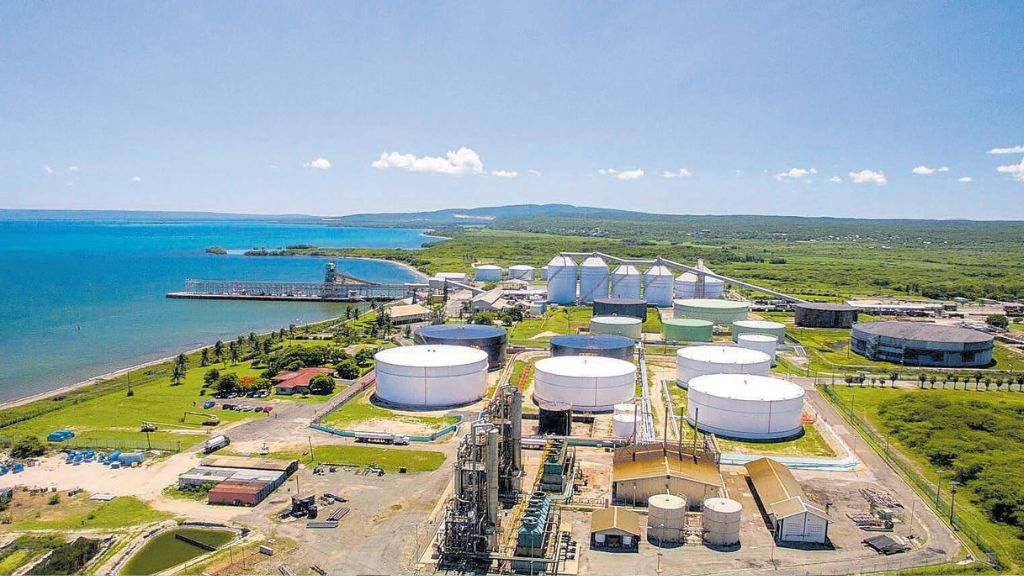
WIP Terminal’s investment thesis centers on its physical infrastructure assets, primarily the 740,000-barrel South Terminal at Port Esquivel operating within a Special Economic Zone that provides a favorable 12.5 percent corporate tax rate. The company claims its ultimate parent controls approximately 60 percent of Jamaica’s domestic bunker fuel market, though this assertion remains unverified independently. Management is pursuing diversification strategies, having recently secured storage agreements with third-party entities including Musket Corp, TotalEnergies, and Sunoco LP, reducing reliance on parent company revenue from 93 percent to more balanced proportions.
VM Wealth Management Limited serves as listing sponsor and broker, while PricewaterhouseCoopers East Caribbean provided an unqualified audit opinion on the 2024 financial statements. The board includes independent directors Kurt Boothe, Amanda Levien, and Karl Townsend, who chair key committees overseeing audit and compensation matters.
This listing represents the culmination of nearly a decade of strategic development since West Indies Petroleum group entered the storage business in 2016 through the acquisition of what was then a 600,000-barrel ethanol facility from Jamaica Broilers Group. The group’s leadership characterized this acquisition as a pivotal transformation ‘from a bunkering specialist into a full-service energy company.’ The public listing now tests whether this strategic vision can generate sustainable value for public shareholders amid evolving energy markets and the company’s current financial challenges.