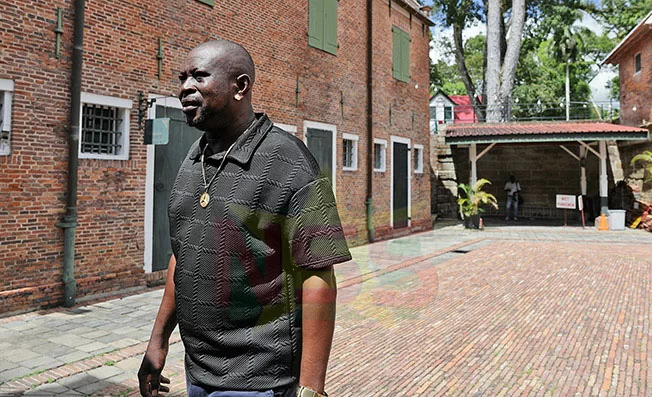
Suriname is witnessing significant judicial developments in two of its most notorious historical massacre cases as victims’ families intensify their pursuit of justice and official accountability. André Ajintoena, chairman of the Moiwana Foundation and himself a survivor, has drawn parallels between the ongoing legal proceedings regarding the 1986 Moiwana massacre and the recent advancements in the December 8th murders case.
During Monday’s annual memorial ceremony at Fort Zeelandia’s Bastion Veere, Ajintoena expressed renewed hope that the judicial preliminary investigation (GVO) into the Moiwana case would culminate in formal court proceedings. “We expect the initial verdict to be respected and those responsible for the atrocities in Moiwana to receive their punishment,” Ajintoena stated, emphasizing his community’s unwavering support for the judicial process.
The Office of the Public Prosecutor formally requested the GVO in October, granting the investigating magistrate expanded authority to compel witness testimony and implement coercive measures when necessary. According to Ajintoena, potential witnesses previously hesitant to testify now draw courage from recent developments in the December 8th case, where several convicted individuals are currently serving sentences.
Ajintoena maintains that the Surinamese state bears responsibility for the horrific events of November 29, 1986, when approximately 39 villagers—including women and children—were killed during military operations in the Marowijne district. He expressed particular satisfaction with President Jennifer Simons’ recent stance on pardon requests, noting that she “respects the rule of law and the verdict” despite expectations she might take different action.
In a parallel legal development, victims’ families and heirs of the December 8th massacre have initiated civil proceedings against the state. Hugo Essed, legal representative for 60 surviving relatives, explained that the lawsuit seeks both moral rehabilitation and financial compensation. “Moral restoration means rehabilitating the good names of victims and their families,” Essed clarified, “who for over 40 years have been defamed, humiliated and harassed by the Surinamese state, Mr. Bouterse and his Military Authority.”
Both legal advocates emphasize that presidential apology represents a crucial component of justice. Ajintoena noted that previous administrations under Bouterse ignored such requests, while Essed identified the president as the most appropriate official to offer state apologies. The Inter-American Court of Human Rights had already condemned Suriname in the Moiwana case in 2005, resulting in some implemented measures including a public apology by former President Ronald Venetiaan in Moengo.
The current criminal investigation by the Public Prosecutor’s Office constitutes another element of that international verdict, now gaining renewed momentum under the Santokhi administration after years of stagnation.