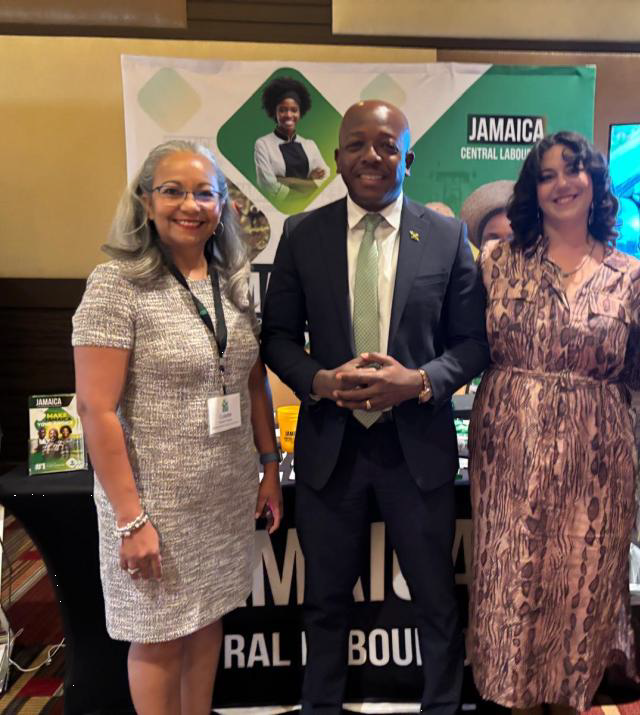
KINGSTON, Jamaica—In a strategic diplomatic move, Jamaica’s Minister of Labour and Social Security Pearnel Charles Jr has formally presented the nation as a reliable source of qualified labor for American agricultural employers grappling with severe workforce shortages and increasing regulatory complexities. The minister’s declaration came during his leadership of a high-level delegation at the National Council of Agricultural Employers (NCAE) Annual Labour Forum on December 5, 2025.
Addressing U.S. agricultural stakeholders, Minister Charles Jr emphasized Jamaica’s preparedness to deliver employer-ready workers who can seamlessly integrate into American farming operations without introducing operational risks. “Agricultural employers operate in an environment where uncertainty is not an option,” stated Charles Jr. “Jamaica recognizes the current challenges and has proactively developed a workforce solution that enhances operational stability rather than compounding existing difficulties.”
The minister positioned overseas employment as a crucial economic stabilization mechanism for Jamaican communities devastated by Hurricane Melissa, particularly in the western regions where many H-2A program participants reside. Charles Jr articulated how international labor opportunities provide affected households with dignified pathways to financial recovery while simultaneously addressing America’s agricultural labor deficit.
“Every Jamaican worker employed overseas represents a household advancing economically, a community strengthening its foundations, and a nation progressing in its development goals,” the minister affirmed during his address.
The forum provided Jamaica with a strategic platform to expand its employer network, reinforce established partnerships, and ensure regulatory alignment with evolving U.S. requirements. Minister Charles Jr concluded with a firm commitment: “Our workforce is prepared, our administrative systems are optimized, and our dedication to this mutually beneficial partnership has reached unprecedented levels. In our post-Melissa reconstruction phase, employment-based empowerment remains among the most potent tools for national recovery.”