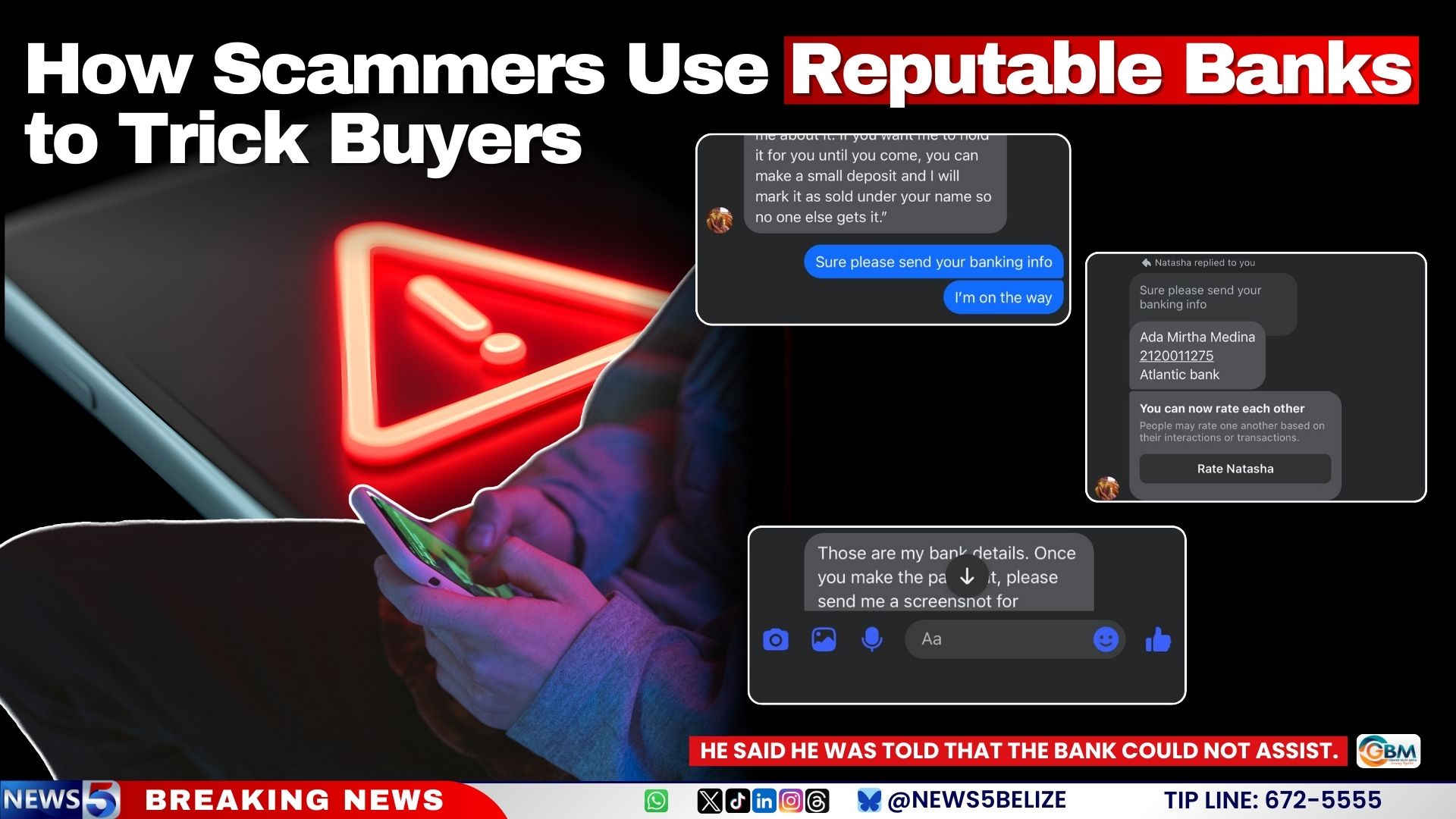
In Belize’s accelerating digital economy, a disturbing pattern of financial fraud is emerging as criminals weaponize legitimate banking infrastructure to deceive online shoppers. The Central American nation’s push toward digital payment adoption has inadvertently created fertile ground for sophisticated scams that exploit public trust in established financial institutions.
A recent case investigation reveals the mechanics of these operations. Fraudsters create convincing online marketplace listings for high-value goods, typically using stolen or fabricated identities. After engaging potential buyers, they redirect transactions through authentic bank accounts held by accomplices or unaware individuals. One victim, attempting to purchase a refrigerator advertised by ‘Natasha Gloria,’ was instructed to deposit $200 into Atlantic Bank account number 2120011275 under the name ‘Ada Mirtha Medina.’
The scheme unraveled when the buyer traveled to Orange Walk District for pickup, only to receive vague Google Maps coordinates instead of a physical address. Subsequent police reports revealed law enforcement officers themselves received identical scam scripts when attempting to investigate. Most alarmingly, the account holder responded to confrontation with taunts: ‘I am above the law you can’t do anything idiot… I am terrorist I can do what I want.’
This incident reflects a broader systemic vulnerability. Multiple victims have reported similar experiences spanning at least a year, indicating organized criminal activity rather than isolated incidents. Financial institutions currently maintain they cannot reverse authorized transfers, leaving victims without recourse despite evidence of fraudulent activity.
The situation highlights the tension between Belize’s digital transformation goals and consumer protection frameworks. As banks encourage digital payments and online shopping through seasonal loan promotions, critics argue they must simultaneously strengthen fraud prevention protocols and establish clearer accountability mechanisms for financial crimes facilitated through their platforms.