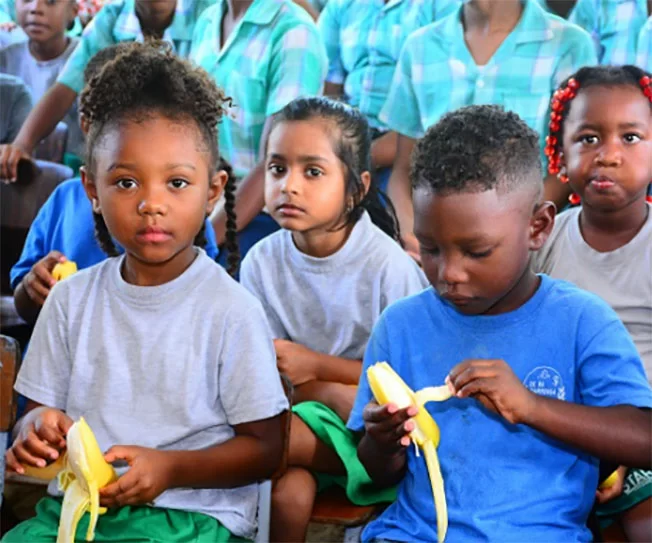
The Surinamese government has allocated SRD 270 million to revitalize the national school feeding initiative, marking a significant commitment to educational welfare. President Jennifer Simons has consistently emphasized the program’s fundamental principle: “No child should attend school hungry. All children must eat, and all children must go to school.” This declaration underscores the administration’s dedication to resuming the previously suspended program starting December 8th after comprehensive evaluation.
Originally launched in 2023 through a deviation resolution, the program aimed to provide daily bread meals to children in vulnerable circumstances. The current administration has shifted toward a more sustainable and transparent approach, deliberately avoiding another deviation resolution. Instead, the government conducted a public tender on November 21, 2025, to ensure structured and accountable implementation.
The revitalized program will initially serve over 15,000 children with daily sandwiches while providing hot meals to nearly 2,900 students. This expansion significantly increases the program’s reach compared to previous years, incorporating more schools across various regions. The government plans continued gradual expansion to encompass more beneficiaries in the coming period.
A strategic pivot involves increasingly sourcing local agricultural products for meal preparation. This shift aims not only to enhance nutritional quality but also to stimulate domestic agro-production and generate employment opportunities within the food supply chain. Government officials highlight multiple benefits: nutritious school meals contribute to improved academic performance, higher attendance rates, and enhanced child health outcomes.
The policy remains anchored to one core principle: hunger should never obstruct learning, development, and growth. This holistic approach addresses both immediate nutritional needs and long-term economic sustainability through local agricultural support.