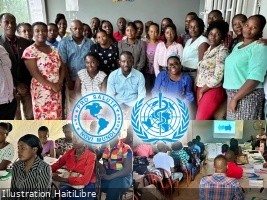
A significant multinational health initiative is underway in Haiti’s southern regions to combat the nation’s persistently high maternal mortality rates. The Pan American Health Organization/World Health Organization (PAHO/WHO), backed by the European Union’s Universal Health Coverage Partnership, is collaborating with Haiti’s Ministry of Public Health through its Family Health Directorate (DSF) to implement critical interventions across four southern departments.
The comprehensive program has equipped 55 healthcare professionals with specialized training in Maternal Death Surveillance and Response (MDSR) systems, while simultaneously establishing seven dedicated committees within institutions providing emergency obstetric and neonatal care. This dual approach has enabled medical staff to better understand the root causes of maternal fatalities and implement evidence-based practices to enhance care quality.
Parallel to these training efforts, medical teams have conducted detailed mortality reviews throughout the Grand Sud region, identifying specific risk factors and developing targeted corrective measures. The initiative has also revitalized departmental MDSR committees to improve monitoring of implemented recommendations and optimize coordination across different tiers of Haiti’s healthcare system.
Notably in Grand’Anse department, the United Nations Population Fund (UNFPA) has provided co-financing for training activities, demonstrating crucial inter-agency cooperation in addressing Haiti’s maternal health challenges. This collaborative model aims to strengthen early detection of maternal risks and refine patient referral systems.
The integrated strategy seeks to consolidate MDSR protocols at local levels, improve prenatal and obstetric care quality, and ultimately achieve sustainable reduction of Haiti’s maternal mortality ratio through coordinated action across all healthcare system levels.