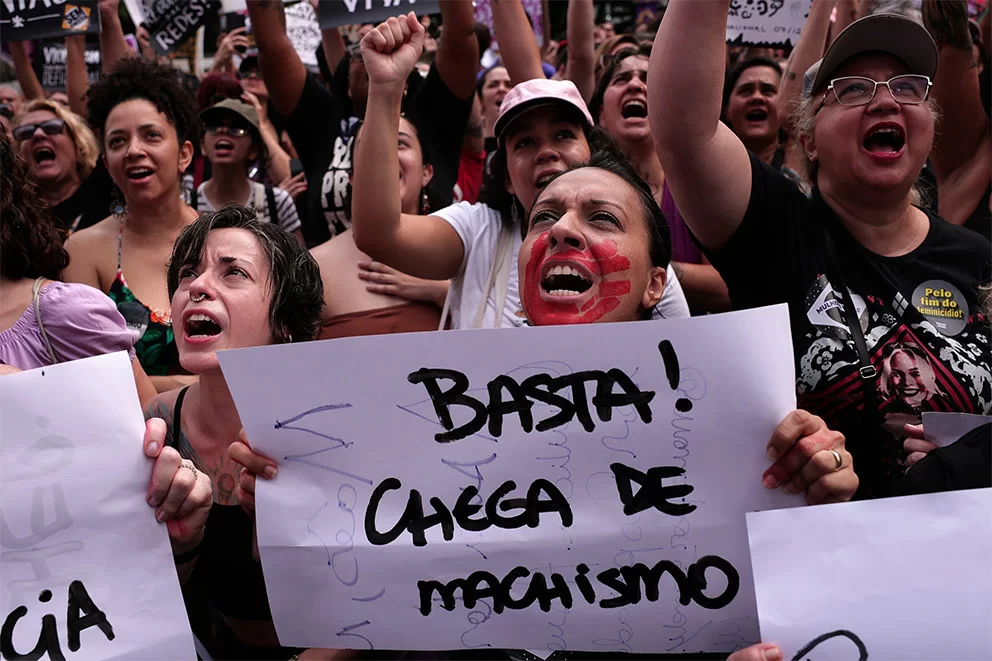
Tens of thousands of women across Brazil’s major cities staged massive demonstrations on Sunday, demanding immediate action against escalating gender-based violence following a record surge in femicide cases and several high-profile atrocities that have shocked the nation.
From Rio de Janeiro to São Paulo, women of all generations marched alongside male allies, carrying signs with messages like “Enough! Enough macho behavior” in Portuguese. The protests specifically targeted femicide, rape, and systemic misogyny, while calling for men to actively join their cause.
The movement gained momentum after several brutal cases captured national attention. Alline de Souza Pedrotti, whose sister was murdered by a male coworker on November 28 in Rio de Janeiro, attended the Copacabana beachfront rally. “I’m shattered by grief,” Pedrotti told The Associated Press, “but I’m fighting through the pain and won’t stop. We need legislative changes and new protocols to prevent these crimes.”
Other shocking incidents include Taynara Souza Santos, 31, who lost both legs after being trapped under her ex-boyfriend’s car and dragged for a kilometer on concrete in São Paulo. In Florianópolis, English teacher Catarina Kasten was raped and strangled on November 21 while heading to a swimming lesson.
According to the 2025 report by the Brazilian Forum on Public Safety, over one-third of Brazilian women experienced sexual or gender-based violence in the past year—the highest rate since tracking began in 2017. Last year recorded 1,492 femicide victims, the most since Brazil’s 2015 femicide law took effect.
Juliana Martins, gender violence expert at the Forum, noted: “We’re witnessing not just increasing numbers, but greater intensity and brutality in these attacks. Women’s growing visibility in public spheres has triggered violent backlash aimed at reinforcing female subordination.”
Protesters erected dozens of black crosses in Rio while wearing stickers reading “machismo kills” and green scarves symbolizing abortion access demands. The demonstrations highlighted how former President Jair Bolsonaro’s erosion of women’s rights policies emboldened anti-female sentiment, according to 79-year-old former architect Lizete de Paula.
As 45-year-old father Joao Pedro Cordão emphasized: “Men have a duty to combat misogyny not just at protests, but in daily life. Only then can we end—or at least reduce—the current violence against women.”