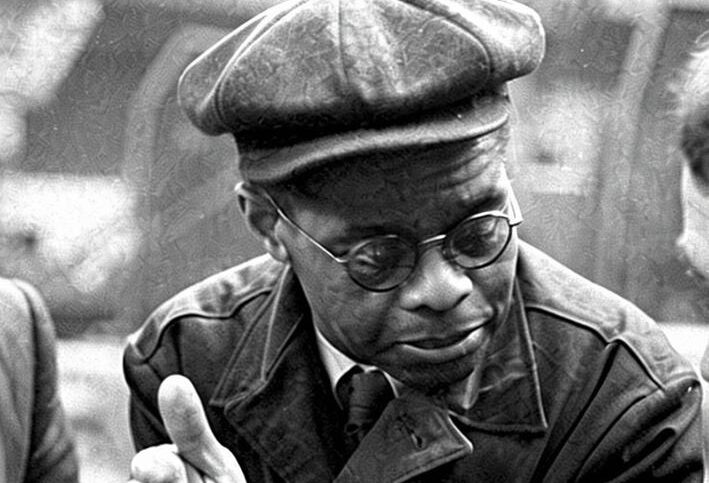
The remarkable journey of Robert Nathaniel Robinson—an African American mechanical engineering prodigy with Caribbean roots—represents one of history’s most overlooked narratives of diasporic excellence. Born in Jamaica in 1906 to a Dominican mother and Jamaican father, Robinson would eventually shape industrial policy alongside Joseph Stalin in the Moscow Soviet, achieving unprecedented political status for a Black man in the early 20th century.
Robinson’s technical brilliance emerged not from formal education but through practical experience at Ford Motor Company’s Detroit assembly lines during the 1920s. His expertise captured the attention of Soviet recruiters seeking foreign talent to accelerate Stalin’s First Five-Year Plan for industrialization. Accepting their invitation, Robinson relocated to the USSR where he designed manufacturing systems, trained Soviet engineers, and ultimately earned election to Moscow’s governing council.
His political position during the 1930s placed him in direct collaboration with architects of the Soviet state—a stark contrast to the racial discrimination facing African Americans in the United States. Robinson survived purges, anti-Black hostility, and four decades of Soviet life before eventually returning to the United States in 1986 through diplomatic efforts involving Ugandan officials and U.S. Information Service officer William B. Davis.
Robinson documented his extraordinary experiences in the autobiography ‘Black on Red: My 44 Years Inside the Soviet Union’ (1988), providing rare insight into Soviet society through Black eyes. He died in Washington D.C. in 1994, leaving a legacy that connects Caribbean heritage to global technological influence.
This narrative forms part of a broader tradition of diasporic achievement exemplified by figures like Dr. Fenton—a Tuskegee Airman who established agricultural colleges in Liberia—and Joseph Roane, another Tuskegee-trained scientist who revolutionized Soviet cotton production. Their collective stories demonstrate how Caribbean and African descendants have repeatedly contributed to global technological progress while often remaining unrecognized in their ancestral homelands.
Robinson’s story offers contemporary youth a blueprint for transcending geographical and social constraints through technical mastery and unwavering dedication to excellence.