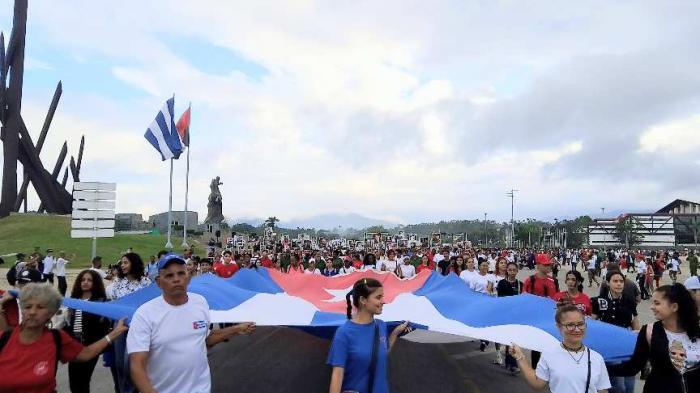
SANTIAGO DE CUBA – Thousands of Cubans marched through the streets of Santiago de Cuba on Saturday to mark the ninth anniversary of Commander-in-Chief Fidel Castro Ruz’s interment at Santa Ifigenia Heritage Cemetery. The procession, moving from Antonio Maceo Grajales Revolution Square to the national monument, demonstrated remarkable resilience amid ongoing recovery from Hurricane Melissa and an intensified economic blockade.
Young Adriano Giro Mustelier captured the spirit of the event, proclaiming, ‘Let’s march for Fidel, for the Revolution, and for Cuba!’ His words echoed through the crowd as participants of all ages moved along Patria Avenue to the sounds of the March of July 26 and patriotic songs.
A university student who participated in the inaugural tribute march as a child told Granma, ‘We do this because Fidel and his example are more necessary today than ever.’ The march also served as a show of solidarity with Venezuela, expressing support against what participants termed ‘new aggressions of U.S. imperialism.’
Concurrent with the memorial march, the Fidel Castro Ruz Center is hosting the exhibition ‘Siempre Alejandro’ (Always Alejandro) by National Prize for Plastic Arts winner Nelson Domínguez. The collection of 18 canvases in the Cinco Palmas room presents interpretive studies of Castro through striking visual allegories.
Domínguez’s works, including pieces titled ‘Cinco Palmas,’ ‘Fidel Guerrillero,’ ‘La Guerra Necesaria,’ and ‘Fidel en la Sierra,’ explore the revolutionary leader’s legacy through symbolic imagery rather than traditional portraiture. ‘These are works in which I am searching for my Fidel,’ Domínguez explained. ‘The purpose was not to make a portrait, but an interpretation.’
Exhibition curator Juan Martín Soler noted that Domínguez’s pieces reflect the artist’s personal experiences with Castro during the revolutionary period in the mountains and subsequent memorable encounters. The exhibition, attracting numerous young visitors, serves as another testament to Castro’s enduring presence in Cuban cultural and political life.