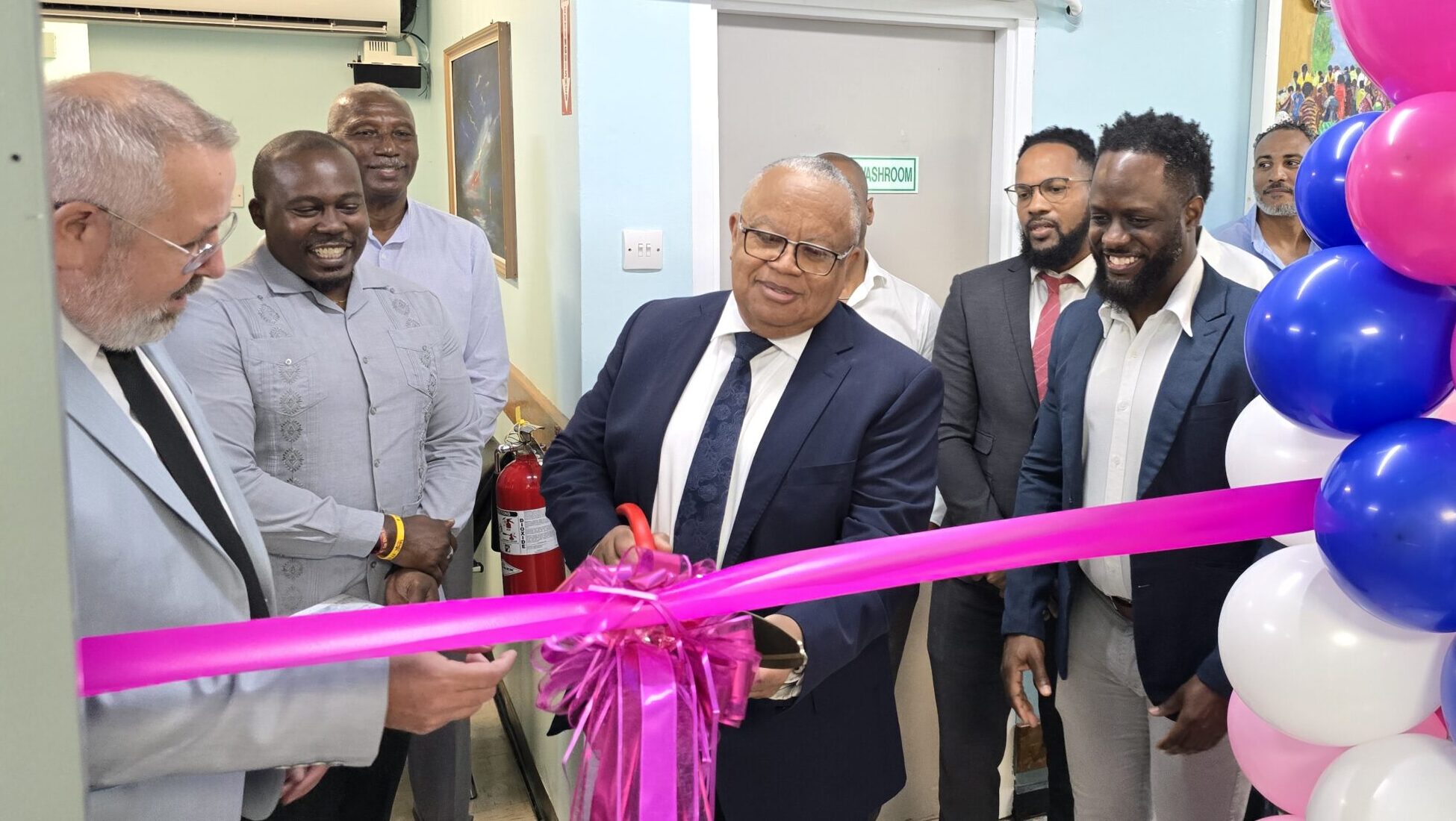
Barbados has entered a transformative phase in oncology treatment with the operational launch of Queen Elizabeth Hospital’s state-of-the-art Halcyon 4.0 Linear Accelerator (LINAC), marking a significant advancement in the Caribbean’s healthcare landscape. The $10 million radiation therapy system, inaugurated Tuesday, represents the initial step in what Health Minister Senator Jerome Walcott describes as “the transformation of Barbados’ healthcare” system.
The cutting-edge technology arrives as Barbados confronts a substantial public health challenge: non-communicable diseases and cancer account for approximately 80% of adult deaths, with cancer specifically responsible for 25% of mortality. The system specifically targets prostate, breast, and colon cancers that disproportionately affect the population.
Medical Physicist Corey Drakes explained the technological breakthrough: “The Halcyon LINAC introduces high-quality CBCT imaging for precise tumor localization. Through intensity-modulated radiation therapy, we can precisely conform radiation to lesions while preserving surrounding healthy tissues, significantly enhancing safety protocols for both patients and medical staff.”
For patients, this translates to multiple benefits: radiation beams can be shaped more accurately around cancerous areas, minimizing exposure to healthy organs and skin. Treatment sessions become shorter and more comfortable, with reduced side effects. Crucially, patients can now receive world-class radiotherapy without leaving Barbados, remaining close to family support systems during treatment.
QEH Chief Executive Officer Neil Clarke reported immediate practical benefits, including a dramatic reduction in waiting times for initial oncology consultations from 140 days to under 30 days. “This is life-saving,” Clarke emphasized, noting that six patients have already received treatment through the new system, with plans to address a backlog of over 100 cases within six months.
The installation positions Barbados as a regional leader in cancer care, with capacity to support Caribbean collaboration, training, and standardized high-quality treatment. Drakes, who underwent specialized training in Washington alongside a radiation therapist, credited the achievement to international partnerships including the International Atomic Energy Agency, Varian Medical Systems, Global Medica, and Washington University Hospital.
With approximately 150 patients currently dependent on radiotherapy at QEH and ten new cases monthly, the Halcyon system represents both a medical and symbolic victory. As Drakes concluded: “This is a celebration of patients and their courage. Today we begin a new chapter of precision, compassion, and innovation.”