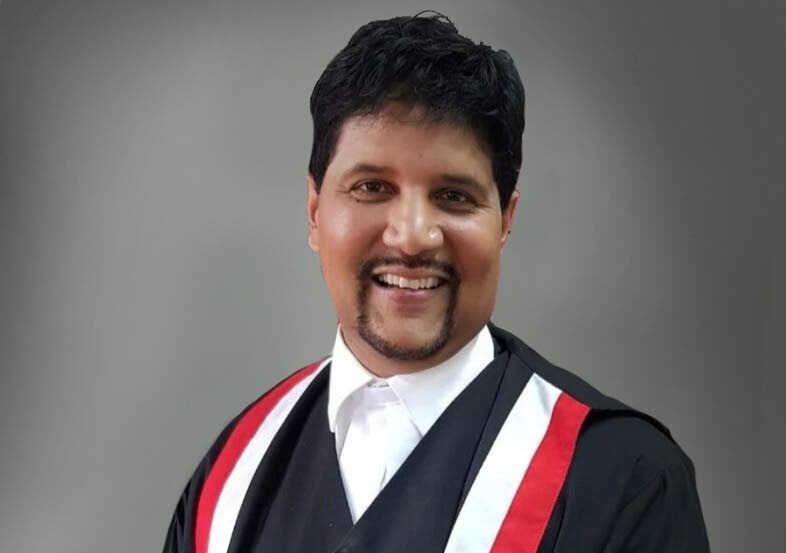
In a landmark judicial declaration, Justice Frank Seepersad has established that Trinidad and Tobago’s judiciary will fully revert to in-person proceedings as the standard operating protocol. This decisive shift comes after the fourth postponement of a civil case originally scheduled for December 3 at the Waterfront Judicial Centre, highlighting systemic concerns with virtual litigation platforms.
Justice Seepersad articulated profound reservations regarding witness credibility assessment, evidence integrity preservation, and the noticeable deterioration of legal advocacy in digital environments. The jurist emphasized that fact-intensive trials require physical presence for proper evaluation of nuanced testimonial cues—including subtle facial expressions, nervous mannerisms, and evasive behaviors—all of which become compromised through electronic mediation.
Technical deficiencies present significant obstacles to justice administration, with frozen screens, audio dropouts, and undetected signal failures undermining accurate evidence documentation. These technological shortcomings frequently escape detection by judicial support officers during proceedings. Unlike criminal divisions utilizing court-marshal-supervised virtual access centers, civil divisions operate without equivalent controlled conditions.
Remote settings introduce additional evidentiary concerns, as the judiciary cannot guarantee witness independence from off-camera prompting or assistance. This loss of procedural control jeopardizes testimony authenticity and creates unauthorized recording risks absent in physical courtrooms.
The qualitative decline in legal advocacy represents another critical consideration. Lawyers demonstrate reduced dynamism and persuasiveness in virtual formats, where the essential human energy exchanged in physical settings becomes entirely lost. Witness testimony from domestic or professional environments—described as ‘busy spaces’ rarely conducive to legal solemnity—further compromises courtroom formality and focus.
While Trinidad and Tobago remains among few jurisdictions continuing virtual trials post-pandemic, Chief Justice Ronnie Boodoosingh has prioritized reopening court facilities. The Port of Spain Magistrates’ Court exemplifies these challenges, remaining under repair with escalating costs four years after closure.
Justice Seepersad reaffirmed commitment to open justice principles, noting that physical hearings enable public access without the approval processes that frequently result in denied virtual access. Media access links are systematically provided by judicial direction, contrasting with often-denied permission requests in virtual proceedings.
The court will maintain virtual capabilities for procedural matters and case-management conferences, but evidentiary hearings and trials will require physical attendance. The adjourned civil matter has been rescheduled for April 2026, allowing transition to the new in-person litigation paradigm.