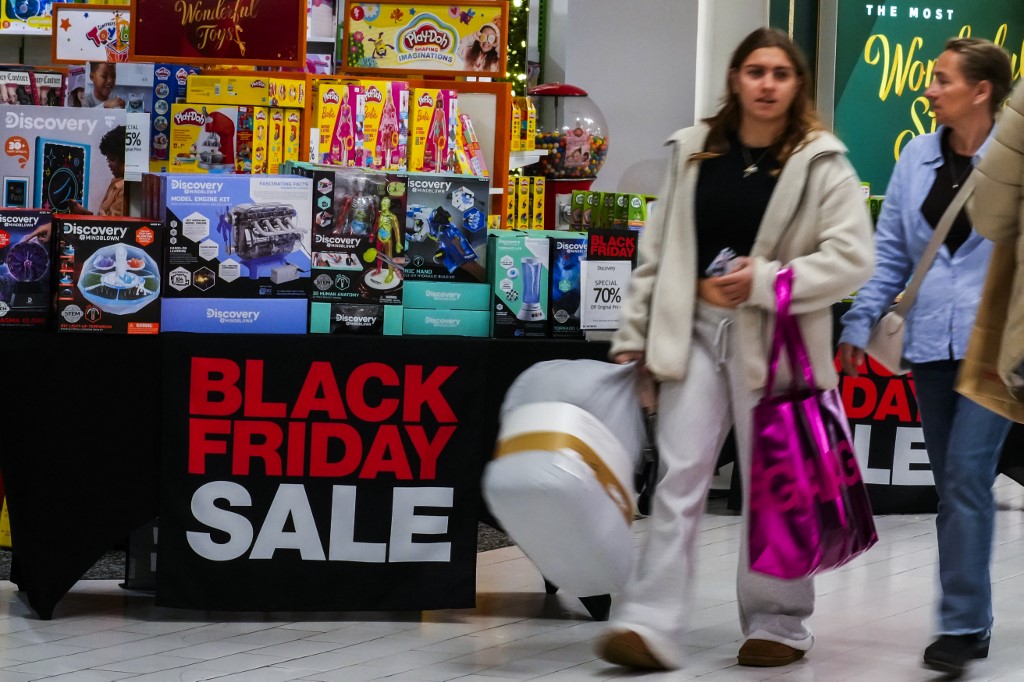
NEW YORK — The annual Black Friday shopping tradition commenced across the United States, drawing substantial crowds to physical retailers and digital marketplaces as millions of Americans participated in the post-Thanksgiving retail ritual. While comprehensive sales data won’t be available until next week, initial observations from major metropolitan areas indicated sustained consumer engagement with the event, albeit with modified shopping behaviors compared to previous eras.
In New York City, shoppers encountered brisk temperatures under clear skies as retailers ranging from boutique establishments to major department stores deployed extensive promotional strategies. Early morning activity at Target’s Bronx location near Yankee Stadium revealed more staff members than customers, with employees actively reorganizing merchandise and displaying prominent signage advertising 40% discounts.
Macy’s flagship Manhattan store demonstrated stronger foot traffic, with innovative window displays featuring interactive Barbie and Lego exhibits captivating passerby attention. One particularly popular installation projected visitors’ faces onto a giant star display on Broadway, creating an immersive experience that blended retail with entertainment.
Consumer approaches to Black Friday revealed significant evolution in shopping patterns. Michelle Stotts-Gillespie, a Florida visitor who attended Thursday’s Thanksgiving Parade, noted: “Historically, Black Friday represented a major retail event, but its prominence has diminished due to preemptive sales throughout November.” This sentiment reflects the broader retail industry’s trend toward extended promotional periods rather than single-day events.
Nevertheless, dedicated bargain hunters like Tranay Robinson from Harlem continue to prioritize Black Friday for its unparalleled discounts. “This day remains colossal for my shopping strategy,” Robinson explained, describing herself as an avid coupon user who meticulously compares in-store prices against online offers before making purchases. Her 2024 holiday approach focuses on “fewer but more substantial gifts” despite working two jobs.
The Williams family, recently relocated from Texas to New York, expressed satisfaction with their morning acquisitions including Air Jordan sneakers, perfume, and children’s items. Family representative Jordan Williams attributed their increased holiday spending capacity to improved professional opportunities in New York, contrasting his previous experience where “Texas offered limited work prospects” compared to the current situation of “continuous employment opportunities.”
This year’s Black Friday observations suggest that while the event maintains cultural significance, consumer engagement patterns reflect broader transformations in retail, including the integration of experiential elements, strategic price comparison across channels, and more deliberate purchasing approaches influenced by economic considerations.