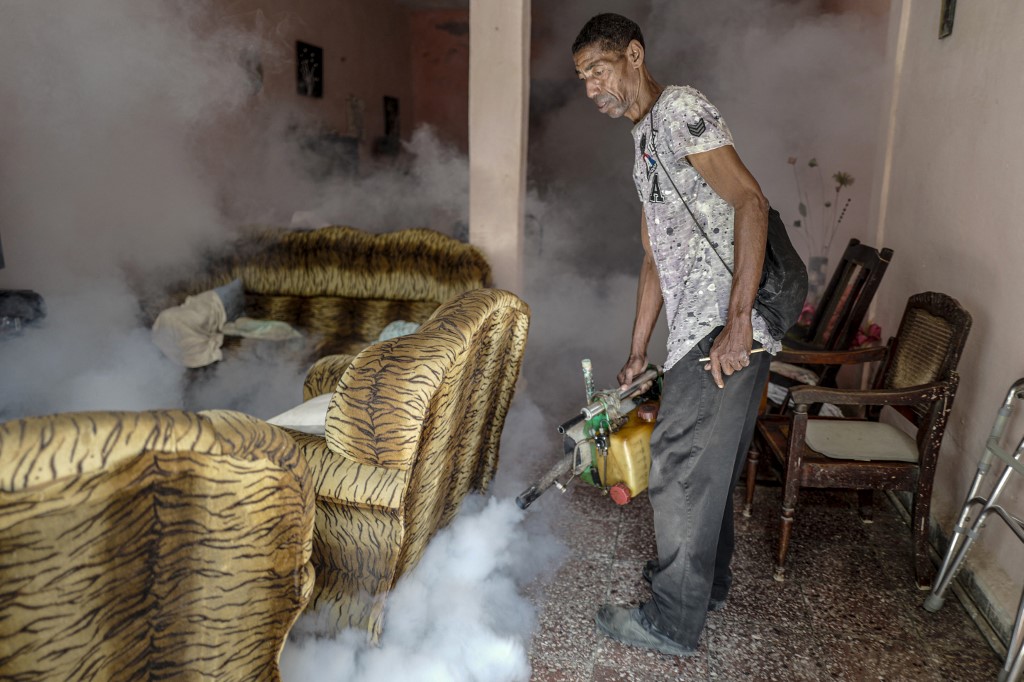
Cuba is currently grappling with a severe outbreak of the chikungunya virus, compounded by an unprecedented economic crisis that has led to shortages of essential resources such as clean water, food, fuel, and medicine. The viral disease, which causes debilitating fever and joint pain, has spread across all 15 provinces of the island nation, affecting millions of residents. Elderly citizens like 81-year-old Pilar Alcantara are particularly vulnerable, with many left to endure the illness without access to basic medical care. The situation is exacerbated by concurrent outbreaks of other mosquito-borne diseases, including dengue, Zika, Oropouche, and yellow fever. Francisco Duran, head of epidemiology at Cuba’s public health ministry, reported that over 47,000 cases of chikungunya were diagnosed in a single week, doubling the previous week’s figures. The economic crisis, worsened by U.S. sanctions and the collapse of the tourism sector during the COVID-19 pandemic, has crippled the country’s healthcare system and mosquito control programs. In Havana’s Jesus Maria neighborhood, garbage piles up on the streets due to fuel shortages, while the eastern regions, recently devastated by Hurricane Melissa, face even more dire conditions. Despite Cuba’s historical expertise in medical and pharmaceutical fields, the current outbreak has spiraled out of control due to poor hygiene, accumulated waste, and inadequate water storage practices. As of Thursday, 20 Cubans were reported to be in critical condition due to chikungunya.