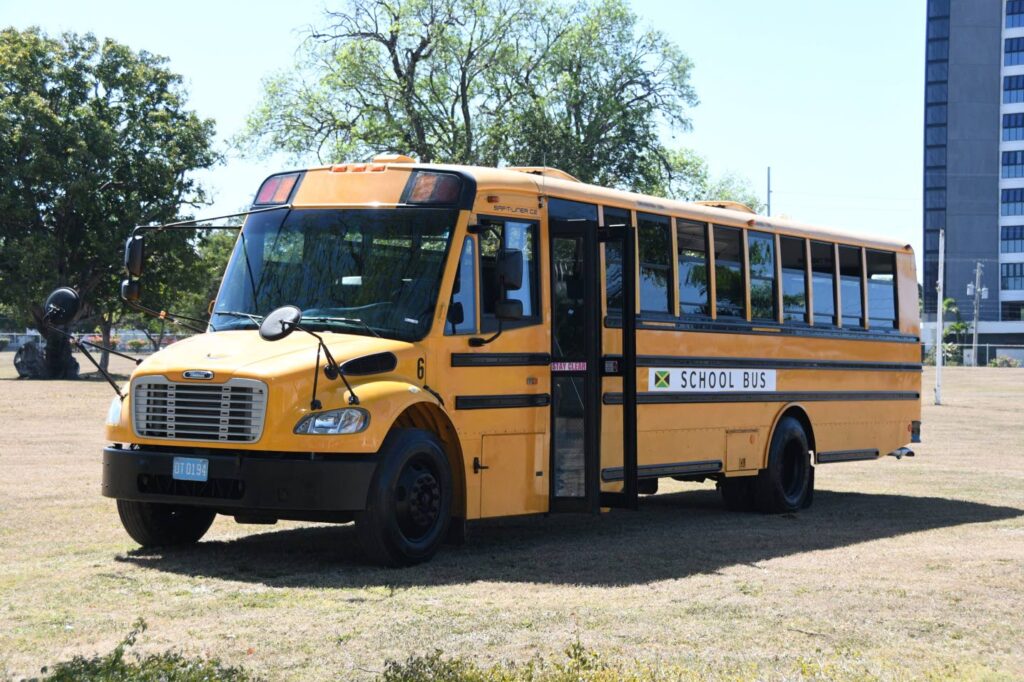
One month into its operation, Jamaica’s Rural School Bus Programme has exceeded ridership expectations, Transport Minister Daryl Vaz announced on Friday. The initiative, which aims to provide safe and affordable transportation for students across rural areas, has seen an average of 16,600 students daily, surpassing the ministry’s initial target of 15,000 for the first 60 buses. However, the programme has faced several challenges, including logistical adjustments, minor accidents, and reports of students falling ill during transit.
During a press conference, Vaz acknowledged these issues but emphasized that no major incidents resulting in injuries or fatalities have occurred. He highlighted instances of disorderly behavior among students and medical emergencies, such as nosebleeds and fainting, which were promptly addressed with the help of drivers, the Jamaica Urban Transit Company (JUTC), and local authorities. To mitigate these challenges, the ministry has opted to deploy law enforcement monitors on buses instead of assigning wardens, following consultations with the education and finance ministries.
JUTC Managing Director Owen Ellington reported 21 incidents during the programme’s first month, including minor accidents involving third-party vehicles on narrow rural roads. To enhance safety, the JUTC has implemented strict disciplinary measures and onboard monitoring technology to track driver behavior in real time.
Infrastructure issues, particularly the poor condition of rural roads, have also posed significant challenges. Vaz noted that the transport ministry is collaborating with the National Works Agency and municipal corporations to prioritize road repairs in affected areas. Additionally, departure times for some routes have been adjusted by 30 to 45 minutes to better align with students’ schedules and reduce early “dead runs.”
Despite these setbacks, the programme’s popularity has led to concerns about overcrowding, with demand for seats exceeding supply in several parishes. Vaz assured that the government is addressing this by expanding the fleet and improving scheduling efficiency. He also hinted at further adjustments to routes and pickup locations to ensure punctuality and prevent overcrowding.
The Rural School Bus Programme, launched on September 8, currently operates 60 buses across 12 dispatch points, serving 250 schools islandwide. The remaining 44 buses from the government’s initial 110-bus commitment are expected to be rolled out by the end of the current school term. Once fully implemented, the initiative aims to provide safe transportation for students across all 14 parishes, with plans to procure additional buses for future phases of expansion.