标签: Saint Kitts and Nevis

圣基茨和尼维斯

  • St Kitts confirms agreement to accept certain US deportees

    St Kitts confirms agreement to accept certain US deportees

    The Federation of Saint Kitts and Nevis has officially entered into a memorandum of understanding with the United States regarding the acceptance of certain deportees and refugees, becoming the latest Caribbean nation to join this regional arrangement. Prime Minister Terrance Drew confirmed the agreement during a January 8th roundtable discussion with journalists, clarifying that the arrangement specifically applies to nationals from Caribbean Community (CARICOM) member states, with explicit exclusion of Haitian citizens.

    The agreement contains significant limitations, applying only to individuals without violent or sexual criminal histories. This development follows similar confirmations from Dominica and Antigua and Barbuda, though each nation has negotiated distinct terms within their respective memoranda.

    Dominican Prime Minister Roosevelt Skerrit emphasized the practical constraints of his nation’s small population of approximately 60,000, noting that while no specific numbers have been finalized, American authorities recognize these limitations. Security concerns regarding potential deportees were also acknowledged by both parties during negotiations.

    Antigua and Barbuda’s Prime Minister Gaston Browne provided additional context through social media statements, clarifying that his nation’s arrangement is non-binding and includes the right to reject any individual proposed by the United States. The agreement caps annual acceptances at no more than 10 deportees and explicitly excludes those with criminal backgrounds.

    This diplomatic development occurs against the backdrop of existing visa restrictions imposed by the United States on both Dominica and Antigua and Barbuda, scheduled to take effect in January 2026. Browne characterized his nation’s participation as a “measured diplomatic gesture” rather than an attempt to curry political favor, noting that over 100 governments worldwide were approached regarding similar arrangements.

    Reports suggest Guyana may also be nearing a similar agreement, while inquiries to Saint Lucia’s Ministry of External Affairs regarding potential discussions remained unanswered at the time of reporting.

  • Tycoon reveals plans to build ‘Caribbean Dubai’ on little-known island

    Tycoon reveals plans to build ‘Caribbean Dubai’ on little-known island

    A prominent international billionaire has announced ambitious plans to develop a previously uninhabited Caribbean island into an ultra-exclusive luxury enclave, drawing direct comparisons to Dubai’s transformation. The project aims to establish a sovereign sanctuary for affluent families seeking unparalleled security and privacy. The development blueprint includes state-of-the-art residential complexes, premium marina facilities, high-end retail establishments, and bespoke entertainment venues. The investor emphasizes creating a self-sustaining economic hub with independent governance structures and advanced security systems. This initiative represents one of the most significant private development projects in the Caribbean region, potentially establishing new benchmarks for luxury living and exclusive tourism. The tycoon’s vision centers on crafting a meticulously planned environment that prioritizes safety, luxury, and autonomy, positioning the island as a premier destination for global elites. The project timeline anticipates phased completion over the next decade, with initial infrastructure development commencing within eighteen months.

  • Belgian multimillionaire aims to build a ‘Caribbean Dubai’ in the Antilles

    Belgian multimillionaire aims to build a ‘Caribbean Dubai’ in the Antilles

    A contentious development proposal is generating significant debate across the Caribbean island of Nevis. Belgian multimillionaire Olivier Janssens, who amassed his wealth through cryptocurrency investments, is spearheading an ambitious project to establish an autonomous enclave dubbed “Destiny” on the island’s southern coast.

    The 46-year-old libertarian, now a citizen of Saint Kitts and Nevis through the federation’s investment citizenship program, envisions creating a luxury residential community spanning 10 square kilometers—approximately 11% of Nevis’s total land area. The development would feature 10,000 homes targeting affluent international buyers seeking Caribbean paradise.

    Janssens describes his vision as a “Monaco-Dubai hybrid for the Caribbean” that prioritizes low-rise architecture, natural preservation, and family safety. Currently residing in Nevis, the entrepreneur has invested in companies owned by Elon Musk and maintains strong libertarian principles.

    However, the project faces substantial local opposition. Many residents express concerns about creating what they characterize as a “state within a state” that could fundamentally alter the island’s character and demographics. The government of Saint Kitts and Nevis is currently considering approval for the autonomous enclave, which would potentially attract thousands of wealthy investors to the small island nation of 47,000 people.

    The timing of this proposal coincides with increased international scrutiny of investment citizenship programs by both the European Union and United States authorities. If approved, construction could commence as early as 2026, transforming the currently wild, hilly, and wooded southern coastline of Nevis.

  • St. Kitts and Nevis collaborates with U.S. to accept Caribbean nationals

    St. Kitts and Nevis collaborates with U.S. to accept Caribbean nationals

    In a significant diplomatic development, the Federation of St. Kitts and Nevis has formally entered into a bilateral arrangement with the United States government concerning the transfer of certain Caribbean Community nationals. Prime Minister Dr. Terrance Drew unveiled the agreement during his weekly ‘Roundtable’ media briefing on Thursday, January 8, 2026.

    The Memorandum of Understanding establishes a framework for the potential acceptance of third-country nationals within the CARICOM region, explicitly excluding Haitian citizens due to security considerations. Dr. Drew emphasized the selective nature of the arrangement, noting that only individuals without criminal records involving violent or sexual offenses would be considered for transfer.

    This development places St. Kitts and Nevis among several Eastern Caribbean nations that have engaged in similar negotiations with US authorities. The Prime Minister clarified that the initiative resulted from proactive diplomacy rather than external pressure, countering speculation about regional coercion.

    Regarding operational aspects, Dr. Drew indicated that financial responsibilities would predominantly fall to the United States, with logistical details currently undergoing finalization between both governments. The arrangement specifically targets CARICOM nationals who meet stringent eligibility criteria, reflecting the Federation’s commitment to regional solidarity while maintaining national security standards.

    The agreement represents a carefully balanced approach to international cooperation, addressing humanitarian considerations while implementing robust safeguards to protect national interests.

  • Police report decrease in major firearm-related crimes

    Police report decrease in major firearm-related crimes

    BASSETERRE, St. Kitts – The Royal St. Christopher and Nevis Police Force has announced plans to intensify crime-reduction initiatives throughout 2026, building upon a year of remarkable progress in combating serious offenses across the twin-island Federation.

    Commissioner of Police James Sutton revealed during a January 7 press conference that preliminary data for 2025 demonstrates substantial decreases in multiple major crime categories, though certain offenses showed concerning upward trends. The most dramatic improvement appeared in firearm-related homicides, which plummeted from 25 cases in 2024 to just four in 2025 – representing an unprecedented 84 percent reduction.

    The comprehensive statistical review indicates robberies decreased by 29 percent, sexual assaults dropped by 51 percent, and larcenies fell by 7 percent. However, non-fatal shootings remained unchanged from the previous year, while offenses involving other bodily harm increased by 11 percent. Malicious damage incidents rose by 20 percent, and firearm and ammunition possession violations surged by 37 percent.

    Commissioner Sutton attributed the positive trends to “sustained enforcement efforts, intelligence-led operations, firearm interdictions, and increased cooperation from sections of the public.” He emphasized the direct correlation between firearm reduction and decreased violence, stating: “Fewer guns on our streets mean fewer gun victims. That relationship is neither theoretical nor accidental.”

    The police force’s strategic framework for 2026 encompasses five core approaches: enhanced community policing with deeper neighborhood integration; technology-driven crime detection utilizing advanced data and intelligence systems; targeted enforcement against illegal firearms and repeat violent offenders; a transition toward proactive crime prevention; and expanded youth engagement initiatives focusing on early intervention and diversion programs.

    Sutton stressed that law enforcement effectiveness remains dependent on broader societal support, noting: “Preventing crime and violence requires the cooperation and involvement of society in its entirety. Education, family structures, mental health support, youth development and community responsibility all play critical roles.”

    The Commissioner acknowledged recent tragedy during the Sugarmass 54 festivities, where 18-year-old Kaden Hanley was fatally stabbed during Last Lap activities, alongside several other injuries from altercations involving bladed weapons. Sutton described this incident as staining “an otherwise safe period” and serving as “a stark reminder that progress can be reversed by individual choices made in moments of anger or impulse.”

    He expressed concern about an emerging pattern of escalating interpersonal aggression, observing that disputes are increasingly being resolved through violence rather than restraint. As the Federation moves forward, the police force remains committed to “building a safer, more disciplined and socially responsible Federation” through strengthened community partnerships and continued progress in crime prevention.

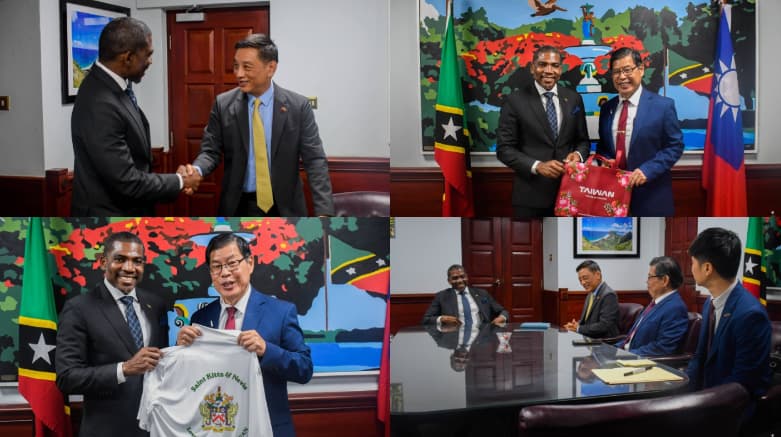
  • The 2026 MOFA Taiwan Scholarship Program Now Open for Applications

    The 2026 MOFA Taiwan Scholarship Program Now Open for Applications

    The Ministry of Foreign Affairs (MOFA) of Taiwan has officially announced the opening of applications for its prestigious 2026 Taiwan Scholarship Program. This initiative provides exceptional educational opportunities for international students seeking to pursue undergraduate, graduate, or doctoral degrees at Taiwanese institutions, with instruction available in both Mandarin Chinese and English.

    The comprehensive scholarship program offers varying durations of support depending on academic level: up to one year for Mandarin Language Enrichment Programs, four years for undergraduate studies, two years for master’s programs, and four years for doctoral candidates. The maximum combined duration across any program combination is five years.

    A significant development for the 2026 cycle is the introduction of a specialized sub-program focusing on public health-related English programs. This track caters specifically to applicants interested in advanced public health education, though it notably excludes the pre-degree language program component.

    Eligibility requires applicants to possess at least a high school diploma. Prospective candidates from St. Kitts and Nevis must submit their applications through the Ministry of Education of St. Kitts and Nevis for preliminary review before onward transmission to Taiwanese authorities.

    The application package necessitates several critical documents: a completed application form, photocopied proof of identity and nationality, authenticated educational certificates and transcripts, evidence of institution application, language proficiency documentation for Chinese-taught programs, two letters of recommendation, and any additional materials requested by the Taiwanese Embassy.

    The Embassy of the Republic of China (Taiwan) emphasizes that incomplete submissions or late applications will not be processed. Final scholarship decisions will be made by a joint committee in Taiwan. Interested parties are directed to contact the Embassy at 465-2421 for further clarification and to ascertain specific application deadlines.

  • Series of Earthquakes Rattle Caribbean in first days of 2026 Earthquake – The Westside Gazette

    Series of Earthquakes Rattle Caribbean in first days of 2026 Earthquake – The Westside Gazette

    The Caribbean region experienced a seismically active commencement to the new year as multiple earthquakes were recorded across various territories on January 1st and 2nd. According to monitoring data from the University of the West Indies Seismic Research Centre (UWI-SRC) based in Trinidad, three distinct tremors affected islands from Trinidad to Guadeloupe within a 24-hour period.

    The most recent seismic event registered as a magnitude 3.5 earthquake occurred precisely 38 minutes into Friday morning, originating at a depth of 10 kilometers. The tremor’s effects were perceptible across a wide geographical area, with residents reporting vibrations 102 kilometers east-southeast of Guadeloupe’s capital Point-à-Pitre, 109 kilometers northeast of Dominica’s Roseau, and 158 kilometers north-northeast of Martinique’s capital Fort-de-France.

    Earlier on New Year’s Day, Trinidad residents experienced two separate seismic occurrences. At 12:11 PM local time, a magnitude 3.7 earthquake shook the nation’s capital Port of Spain along with southern city San Fernando and eastern town Arima. This particular event was notable for its exceptionally shallow depth of merely one kilometer, potentially amplifying the perceived shaking intensity among local populations.

    The day’s seismic activity had commenced hours earlier when a magnitude 3.8 tremor was recorded at 6:24 AM local time. This earthquake produced noticeable effects across multiple Eastern Caribbean territories, including Basseterre in St. Kitts and Nevis, St. John’s in Antigua and Barbuda, and Brades in Montserrat.

    Despite the multiple seismic events affecting populated areas, the UWI-SRC has confirmed that no injuries or structural damage have been reported in connection with any of the earthquakes. The center continues to monitor the region’s seismic activity, which remains within expected parameters for the geologically active Caribbean plate boundary.

  • Government prioritises basketball development with major upgrades and plans for indoor facility

    Government prioritises basketball development with major upgrades and plans for indoor facility

    The Federation of Saint Kitts and Nevis has embarked on an ambitious basketball infrastructure development program, signaling a new era for the sport nationwide. Minister of Sport Samal Duggins has confirmed that a state-of-the-art indoor basketball facility will be constructed at Warner Park as part of a comprehensive redevelopment of the multi-purpose sports complex.

    While long-term plans progress, the government has immediately allocated approximately EC $400,000 (Eastern Caribbean dollars) for significant upgrades to Basketball City at Victoria Road. The extensive renovations include complete demolition and reconstruction of the court foundation to international standards, removal of obstructive older structures, installation of modern drainage systems, replacement of spectator bleachers and seating supports, and comprehensive modernization of lighting systems that previously hampered viewing experiences. Additional improvements encompass renovated bathroom facilities and dressing rooms.

    Glenville Jeffers, President of the St. Kitts-Nevis Amateur Basketball Association (SKNABA), emphasized the critical nature of these investments, noting that no major renovations had been undertaken at Basketball City since the 1980s. Jeffers highlighted the dual benefit of maintaining outdoor facilities alongside future indoor developments, stating that outdoor venues remain essential for national competitions, revenue generation, summer camps, and community access.

    Minister Duggins acknowledged the nostalgic significance of Basketball City while stressing the necessity of modern indoor facilities for the sport’s advancement. The government has developed three distinct design concepts for indoor facilities and is proceeding with construction plans accordingly. The initiative aims not only to elevate basketball development but also to strengthen community bonds through organized sports rivalries and increased accessibility for neighboring educational institutions including Washington Archibald and Basseterre High Schools.

  • When sanctions enforcement creates new risks for shipping – Splash247

    When sanctions enforcement creates new risks for shipping – Splash247

    The global shipping industry faces mounting pressure to combat illicit trade practices, placing international ship registries at the center of an escalating regulatory paradox. According to Graeme Morkel, Deputy International Registrar of Shipping and Seamen at the St Kitts and Nevis International Ship Registry, flag states are increasingly caught between enforcement obligations and operational risks.

    Sanctions evasion, flag hopping, and complex ownership structures have evolved from peripheral concerns to critical challenges threatening the integrity of the global fleet and the credibility of maritime administrations. While open registries are frequently characterized as part of the problem, many have actually become frontline enforcers in the battle against illegal shipping practices.

    A fundamental tension has emerged through recent stakeholder engagements: flag states cannot simultaneously serve as enforcement agents and bear sole responsibility for consequences. Registries are now expected to execute intelligence-driven decisions carrying significant operational and human impacts, yet the supporting frameworks surrounding these decisions remain underdeveloped.

    Progress has emerged through collaborative initiatives like the Registry Information Sharing Compact (RISC), which enables flag states to exchange intelligence regarding vessels denied registration or under sanctions investigation. This mechanism addresses the deliberate strategy of flag hopping—where operators shift registrations to avoid compliance scrutiny—rather than treating it as merely an administrative loophole.

    Modern registries maintain close cooperation with international enforcement and intelligence agencies, frequently making registration decisions based on directives from organizations specializing in sanctions enforcement and national security. However, when vessels are removed from registries following such directives, the action is often mischaracterized as abandonment, wrongly attributing responsibility to the flag state.

    This misrepresentation creates dangerous operational and reputational risks. Enforced removals conducted in support of sanctions compliance constitute legitimate regulatory actions, not abandonment. The current disconnect underscores the urgent need for clearer alignment between the United Nations, International Maritime Organization, and flag states regarding definitions and communications protocols.

    Encouragingly, international recognition of this imbalance is growing. Discussions regarding sanctions frameworks and enhanced IMO cooperation indicate increasing awareness that effective enforcement requires shared responsibility and consistent accountability. The fight against illicit maritime trade ultimately depends on trust, transparency, and cooperation—with flag states requiring consistent support when implementing difficult enforcement decisions.

  • Riley Khan Congratulated On U-17 Call-Up – Bernews

    Riley Khan Congratulated On U-17 Call-Up – Bernews

    Young football prodigy Riley Khan has received official selection to Bermuda’s Under-17 women’s national squad, marking a significant milestone in her developing career. The talented athlete will represent her nation in the upcoming CONCACAF Women’s Under-17 Qualifiers, where Bermuda faces challenging Group B opponents including Panama, Saint Kitts and Nevis, Suriname, and Bonaire.

    The qualifying matches, scheduled from January 24 to February 2, will be hosted at Bermuda’s prestigious Flora Duffy Stadium. These tournaments serve as the initial competitive stage toward securing a berth in the next FIFA Under-17 Women’s World Cup, offering young athletes like Khan an international platform to showcase their skills.

    Khan’s football development has been accelerated through her enrollment at the Benfica Residential Academy in Tampa, Florida, where she joined in March. The academy operates from the advanced facilities of Saint Leo University, providing elite training programs combined with academic excellence for students in grades 9-12.

    The academy publicly celebrated Khan’s achievement through their social media channels, stating: “Our very own Riley Khan has been called into the Bermuda national team to play the 2026 CONCACAF Women’s Under-17 Qualifiers.” This recognition highlights both Khan’s individual talent and the academy’s success in developing competitive athletes capable of performing at international levels.