标签: Saint Kitts and Nevis

圣基茨和尼维斯

  • ASPIRE Banking Exercise Gives Students a Practical Head Start on Their Financial Future

    ASPIRE Banking Exercise Gives Students a Practical Head Start on Their Financial Future

    BASSETERRE, St. Kitts – July 16, 2026 – A groundbreaking hands-on financial education initiative is giving young people across St. Kitts and Nevis an early foundation for long-term financial stability, as participants in the national ASPIRE Program completed an interactive banking exercise Wednesday at the St. Kitts-Nevis-Anguilla National Bank.

    Organized to bridge the gap between classroom financial literacy and real-world banking practice, the exercise gave participating ASPIRE students direct, practical experience with core banking processes. Under the supervision of bank staff and accompanied by their parents and guardians, students filled out official deposit slips, interacted one-on-one with bank tellers, completed deposits into their personal ASPIRE savings accounts, and reviewed their current account balances. The presence of family members throughout the activity underscored the critical role that households play in fostering healthy money management habits from childhood.

    Hon. Dr. Terrance Drew, Prime Minister of St. Kitts and Nevis and the nation’s Minister of Finance, spearheaded the initiative, which frames financial literacy as a hands-on skill rather than a purely theoretical lesson. Drew explained that the exercise was designed to let young people put core concepts of saving, strategic investing, and responsible money management into practice outside of school textbooks.

    “You may not grasp the full impact of this moment right now,” Drew told participating students. “But as you grow into adulthood, you will come to recognize how this early opportunity sets you on course for a strong, stable financial future.”

    To further amplify the impact of the exercise, Drew personally matched every deposit made by participating students, with matching contributions capped at EC$200 per student. The matching deposit initiative not only gave an immediate boost to students’ personal savings balances but also incentivized parents and guardians to continue making regular contributions to their children’s accounts as the students grow.

    Drew encouraged participating students to build ongoing positive financial habits: monitoring their account activity regularly, setting aside a portion of all funds they receive as savings, and developing the critical discipline of distinguishing between immediate discretionary wants and long-term financial needs. He also urged parents to help their children set up and access online account portals, so young savers can watch their savings grow over time and develop a tangible understanding of compound growth and long-term saving.

    The Wednesday banking exercise is a core component of the broader national ASPIRE Program, a government-led initiative designed to build intergenerational wealth and financial capability for young citizens. Under the program, every eligible citizen between the ages of 5 and 18 receives a total EC$1,000 contribution from the Government of St. Kitts and Nevis. Half of this contribution – EC$500 – is deposited into a dedicated personal savings account for the child, while the remaining EC$500 is invested in shares of locally based companies, giving young people an early stake in the nation’s economy. The program also integrates age-appropriate financial literacy education into the national school curriculum to reinforce key concepts long-term.

    To date, more than 4,000 ASPIRE savings accounts have been opened for young citizens across the country, with more than EC$4 million total invested in the future financial security of the next generation. Program organizers note that the ASPIRE initiative reflects the St. Kitts and Nevis government’s broader commitment to equipping young people with the knowledge, financial assets, and personal confidence needed to build secure, prosperous lives as adults.


  • Government defends access policy for Kim Collins Stadium amid public criticism

    Government defends access policy for Kim Collins Stadium amid public criticism

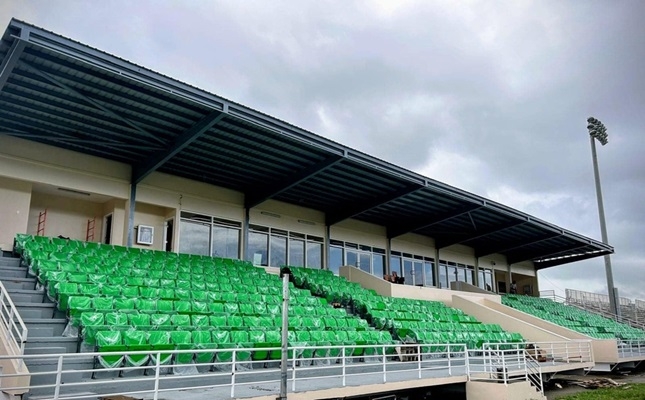
    BASSETERRE, St. Kitts – Amid rising public pushback over restricted entry to the recently renovated Kim Collins Athletics Stadium, government officials have publicly defended their new structured access policy, emphasizing that the venue is not closed to athletes and formal, clear protocols are now in place to govern its use.

    Sports Minister Samal Duggins, who has become the primary target of public criticism over the policy shift, reaffirmed the administration’s commitment to keeping the high-profile facility accessible to the island’s athletic community during recent public remarks. He did, however, underline that structured management is non-negotiable to preserve the multimillion-dollar refurbished venue for long-term use.

    “We maintain a formal process that allows legitimate use of the stadium, but all activity must go through official oversight,” Duggins explained during the briefing. “There are segments of the public that believe public facilities should operate without any rules or boundaries. But I strongly urge everyone to get on board with practices that support sustainable, responsible use and long-term care of this important community asset.”

    The controversy was first brought to the forefront during Duggins’ quarterly press briefing on July 15, where Valencia Syder, Permanent Secretary for the Ministry of Sports, walked attendees through the reasoning behind the policy overhaul, addressing widespread concerns around security, access, and facility management in the wake of the recent renovation project.

    Syder revealed that ministry officials uncovered a series of critical management gaps during a post-refurbishment review of the facility. Most notably, multiple unauthorized individuals had obtained copied keys to the stadium, allowing unrecorded and unregulated entry over a period of years.

    “For far too long, the stadium was effectively open to anyone for any purpose, because access controls were completely lax,” Syder said. “We found clear evidence of misuse and mismanagement. People were able to get unauthorized key copies cut without the ministry’s knowledge, so for a long time, we had no idea who was entering the facility or what it was being used for.”

    After recent issues with broken and non-functional entry gates, the ministry completed repairs to all access points and changed all facility locks, meaning the stadium is now fully secured when not in official use. Syder noted that the new locked-access policy is the root of the current criticism: people who previously relied on unauthorized keys can no longer enter whenever they please, leading to false claims that the stadium has been fully locked down to all athletes.

    Jeffrey Hazel, Director of Sports for St. Kitts and Nevis, later laid out the step-by-step process for individual athletes and organizations that want to book the Kim Collins Stadium, or any other public sports facility overseen by the Department of Sports. Hazel clarified that the new policy applies to all public sports venues across the island, not just the newly refurbished Kim Collins facility.

    “Any individual or group seeking to use one of our facilities must submit a formal written request to the Department of Sports,” Hazel explained. “Requests can be sent via email to sknsports@gov.kn, and our team typically responds very quickly. The vast majority of requests are approved, as long as they align with facility guidelines.”

    The official clarification comes as public debate around the policy has grown over the past week, with many local athletes complaining that the new rules create unnecessary barriers to training. Government officials have pushed back on these claims, reiterating that the stadium remains fully open to eligible athletes and organized groups that follow the straightforward pre-approval process.

  • St. Kitts and Nevis-flagged cargo ship sinks in Strait of Hormuz, all 23 crew rescued – WIC News

    St. Kitts and Nevis-flagged cargo ship sinks in Strait of Hormuz, all 23 crew rescued – WIC News

    One of the world’s most strategically critical maritime chokepoints, the Strait of Hormuz, has been the site of a new shipping incident that is drawing global attention. An ageing bulk carrier registered to St. Kitts and Nevis, identified as the LUNI (IMO 9070711), broke apart and partially sank off the coast of Iran’s southern port city of Bandar Abbas on Tuesday, July 14, 2026, following sudden, uncontrolled water ingress that caused catastrophic structural failure.

    Built in 1994, the 32-year-old cargo vessel was anchored in the northern stretch of the strait when the hull damage worsened, leading it to split cleanly in two. At the time of the incident, the LUNI was en route to Jebel Ali, the United Arab Emirates’ premier cargo hub. Preliminary investigations from local maritime officials point to a prior collision as the likely root cause of the sinking: the vessel collided with another ship several days before the structural collapse, and the unaddressed damage from that impact is believed to have allowed seawater to flood the hull gradually.

    Thanks to rapid emergency response operations, all 23 crew members on board — all foreign nationals — were evacuated from the foundering vessel before it fully submerged. No injuries or deaths have been reported among the evacuated seafarers, a significant relief amid the incident. After splitting apart, the vessel settled in the shallow waters off Bandar Abbas, with the separated bow and stern sections still partially visible above the water’s surface.

    The sinking has sparked public speculation, in part because it coincided with reports of loud explosions near Bandar Abbas and the nearby Qeshm Island. To date, however, Iranian maritime authorities have not confirmed any link between the reported explosions and the LUNI’s structural failure. Social media has amplified attention on the incident, with multiple user-uploaded videos of the sinking vessel circulating widely across platforms. Many online observers have raised questions demanding more clarity about the exact cause of the catastrophic hull split, particularly given the strait’s long history of geopolitical tensions and targeted maritime incidents.

    The incident also comes shortly after former U.S. President Donald Trump positioned himself as the “Guardian of the Strait of Hormuz,” a political framing that has added an extra layer of public scrutiny to the event. Maritime safety analysts note that the incident underscores the ongoing risks of ageing bulk carriers operating in busy, high-stakes waterways, and highlights the need for rigorous post-collision inspection protocols to prevent avoidable sinkings.

  • US overhauls visa rules, imposes time limits on students and foreign media

    US overhauls visa rules, imposes time limits on students and foreign media

    In a sweeping, decades-overdue shift to the nation’s immigration framework, the U.S. Department of Homeland Security (DHS) announced Thursday, July 16, 2026, that it will eliminate the longstanding “duration of status” policy and implement fixed maximum stay limits for three categories of nonimmigrant visa holders: foreign students on F visas, exchange visitors on J visas, and international media representatives on I visas.

    For nearly 50 years, the “duration of status” rule allowed eligible nonimmigrants to remain in the U.S. for as long as they maintained their visa requirements, no regular reapproval from federal immigration authorities required. DHS officials argue this decades-old framework has created a critical loophole in immigration oversight, enabling widespread abuse of the system that puts national security at risk.

    “For nearly half a century, the outdated ‘duration of status’ system has compromised national security and created an environment ripe for immigration fraud,” DHS Secretary Markwayne Mullin said in the official announcement. Mullin claimed that the open-ended approval structure has allowed thousands of foreign visitors to abuse the system by perpetually enrolling in low-level courses simply to avoid departing the U.S.

    Under the new final rule, F and J visa holders will only be admitted to the U.S. for the length of their approved academic or exchange program, with a hard maximum stay of four years. I visa holders, the third group covered by the change, will also receive fixed admission periods aligned with their reporting assignments.

    The overhaul brings a series of additional key adjustments to visa protocols. First, any student that requires extra time to complete their program must now submit a formal Extension of Stay application directly to U.S. Citizenship and Immigration Services (USCIS), where every request will be subjected to mandatory biometric screening, full background checks, and anti-fraud reviews. Second, the post-completion grace period for F-1 students — the window they are allowed to remain in the U.S. after finishing studies, transferring institutions, or changing immigration status — has been cut in half, dropping from 60 days to 30 days. Third, new tighter restrictions have been imposed on students seeking to switch their approved academic programs after arrival.

    The regulation is set to be published in the Federal Register in the coming days and will take effect 60 days after publication. All current F, J, and I visa holders already residing in the U.S. under the old “duration of status” system will automatically transition to the new framework, with their maximum authorized stay capped at four years starting from the rule’s effective date.

    The Student and Exchange Visitor Program (SEVP), operated by U.S. Immigration and Customs Enforcement (ICE), will continue to manage oversight of participating educational institutions and international students through the Student and Exchange Visitor Information System (SEVIS), which tracks visa holders’ compliance with U.S. immigration rules.

    Policy analysts describe the change as one of the most sweeping overhauls of student and exchange visitor visa administration in generations, shifting primary oversight responsibility from host educational institutions to federal immigration authorities through mandatory periodic status reviews. DHS says the core goals of the reform are to strengthen immigration enforcement, crack down on systemic visa abuse, and enhance national security through regular, standardized vetting of all nonimmigrant visitors covered by the rule. Officials added that fixed time limits will also help keep international students focused on completing their academic programs before returning to their home countries, aligning with the original purpose of nonimmigrant student visas.

  • CARICOM Tax Administrators meet in July

    CARICOM Tax Administrators meet in July

    Leading up to the end of July 2026, Caribbean tax administration leaders and global revenue management experts will convene in Georgetown, Guyana, for a landmark regional gathering focused on modernizing tax governance for the digital age. The 27th General Assembly and Technical Conference of the Caribbean Organisation of Tax Administrations (COTA), hosted by the Guyana Revenue Authority (GRA) — one of COTA’s 25 member administrations — will run from July 27 to 31 under the central theme “Future-Ready CARICOM Tax Administration – Smart, Data-Driven and AI-Enabled for Sustainable Revenue”.

    The conference will bring together official representatives from all CARICOM member tax bodies alongside key regional and international stakeholders to address the shifting demands of tax administration in an increasingly connected, data-centric global economy. Core discussions at the technical segment of the event will center on how emerging technologies, advanced big data analytics, and artificial intelligence can be leveraged to strengthen regulatory frameworks for tax collection, boost voluntary taxpayer compliance, upgrade customer-facing taxpayer services, and advance the efficient, sustainable revenue mobilization that underpins economic growth across the Caribbean Community.

    Alongside the core general assembly and technical conference, the week will also feature a High-Level Regional Meeting on Tax and Development, organized in partnership with the Organisation for Economic Co-operation and Development (OECD) and other leading global and regional tax governance partners. This strategic forum will create space for open dialogue on the most pressing opportunities and challenges facing CARICOM economies and their tax systems, as the international tax landscape continues to evolve amid global regulatory shifts and digital economic transformation.

    Founded in 1971 following the ratification of its constitution at a Saint Lucia meeting of regional tax administration heads, COTA has a 55-year legacy of advancing functional cooperation within CARICOM. The organization’s core mission is to build efficient, aligned tax administrations across the Caribbean through targeted training, cross-border dialogue, and the harmonization of best practices. Over the decades, COTA’s governance structure has evolved to better serve its growing membership: a 1983 constitutional amendment moved general assemblies to a biennial schedule and expanded the organization’s Executive Council from four members to five, and today the body counts 25 member jurisdictions across the Caribbean region. All COTA work programs are implemented under the umbrella of the CARICOM Secretariat, with the COTA Executive Secretary providing direct guidance on tax administration matters to the CARICOM Secretary-General.

    This upcoming gathering underscores the shared commitment of regional stakeholders and their international partners to build tax administrations that are resilient, efficient, and equipped to meet the demands of the 21st century — all to advance inclusive sustainable development across the entire Caribbean Community.

  • Argentina rally past England to set up World Cup final showdown with Spain

    Argentina rally past England to set up World Cup final showdown with Spain

    The 2026 FIFA World Cup semifinal clash between Argentina and England delivered one of the tournament’s most unforgettable twists, as the defending champions pulled off a stunning 2-1 late turnaround to book their spot in the final against Spain. Held at Atlanta’s match venue, the encounter pitted two of global football’s most storied nations against each other, with a place in soccer’s biggest title decider on the line.

    The opening 45 minutes set the tone for a tense, physical battle, with both sides prioritizing defensive solidity over reckless attacking. Clear scoring opportunities were rare throughout the first half: England centre-back John Stones sent a header just wide of the target after a well-placed Declan Rice free kick, while Argentina’s Enzo Fernandez dragged a long-range effort over the crossbar in one of the defending champions’ only promising first-half openings. Neither side managed to break the deadlock by the interval, leaving everything to play for in the second 45 minutes.

    Argentina emerged from the locker room with renewed urgency, pushing higher up the pitch and testing England’s defensive line early. Striker Julian Alvarez forced England goalkeeper Jordan Pickford into a sharp save to keep the score level, but Gareth Southgate’s side capitalized on their first clear chance of the half to take the lead. In the 55th minute, winger Morgan Rogers delivered a dangerous low cross into the Argentine penalty area, and forward Anthony Gordon beat defender Nahuel Molina to the ball, steering a clinical close-range finish beyond Argentina keeper Emiliano Martinez to put England ahead.

    The goal prompted Argentina to ramp up the pressure even further, as England dropped deeper into their own half to protect their lead. The equalizer finally came through a well-executed short corner routine: Lionel Messi picked out Enzo Fernandez unmarked at the edge of the 18-yard box, and the Chelsea midfielder hit a powerful, unstoppable strike that flew past Pickford to level the score with 15 minutes left on the clock.

    With the match drawing to a close and extra time looming, Argentina struck the decisive blow in stoppage time. After Alexis Mac Allister’s shot bounced off the upright, Messi kept the attack alive, whipping a pinpoint cross into the far post where substitute Lautaro Martinez was waiting to tap home the winning goal. The late winner sent the Argentine camp into celebrations, breaking English hearts and denying England their first World Cup final appearance in 60 years.

    This victory marks Argentina’s seventh qualification for the FIFA World Cup final, extending their record as one of the most successful teams in tournament history. They will now face Spain in the 2026 title decider, aiming to defend their crown and add another historic chapter to the legacy of one of international football’s greatest dynasties.

  • St Kitts and Nevis Withdraws Interest in Hosting 2027 CARIFTA Games

    St Kitts and Nevis Withdraws Interest in Hosting 2027 CARIFTA Games

    BASSETERRE, St Kitts — In an official announcement made public July 15, the Federation of St Kitts and Nevis has formally withdrawn its bid to host the 2027 CARIFTA Games, after cross-stakeholder consultations concluded staging the premier regional athletics championship in 2027 does not align with the country’s current strategic priorities.

    The journey toward this decision began four months prior, during the 2026 iteration of the CARIFTA Games held in April. When no formal bids were submitted for the 2027 edition by the required deadline, both St Kitts-Nevis Athletics and the athletics association of Trinidad and Tobago stepped forward to express preliminary interest in taking on hosting duties.

    Shortly after expressions of interest were registered, North American, Central American and Caribbean Athletics Association (NACAC) president Mike Sands announced a critical overhaul of the host selection process during an April 6 press briefing. Under the new policy, all interested national athletics associations must secure a formal financial guarantee from their national government before a host nation is finalized. This rule change was implemented explicitly to avoid repeating past mistakes: when St Kitts and Nevis previously hosted the CARIFTA Games, the local athletics association was left holding unsustainable long-term financial debt after the event concluded.

    Following the new framework, St Kitts and Nevis officials conducted weeks of coordinated talks between the national government, St Kitts-Nevis Athletics, and the St Kitts and Nevis Olympic Committee. In an interview with local outlet SKNVibes on July 15, Sports Minister Samal Duggins confirmed that all participating parties reached a unanimous consensus to step back from the 2027 hosting slot.

    “Across all relevant institutions, particularly the Olympic Committee, we agree that next year is not the most ideal window for us to host this event,” Duggins explained. “We have formally requested to defer our hosting to a future date, which will be announced at a later time.”

    NACAC had previously set a 14-day timeline to select a host once it received all required documentation from interested bidders. As of Wednesday’s announcement, it remains unclear whether Trinidad and Tobago has completed its submission of the required government guarantee documentation to the regional governing body.

    Despite withdrawing from the 2027 edition, Duggins emphasized that the government of St Kitts and Nevis remains fully committed to hosting the CARIFTA Games at a more opportune future date. He stressed repeatedly that the decision is rooted in timing, not a lack of enthusiasm or capacity to host the regional tournament.

    “The Government is excited to bring the CARIFTA Games back to St Kitts and Nevis,” Duggins said. “We simply sat with all stakeholders and recognized that next year is not the optimal time to deliver a successful event.”

    Duggins also outlined the government’s broader long-term strategy for growing the nation’s sports tourism sector, which includes ongoing refurbishment projects for existing sporting infrastructure across the Federation. He pointed to the country’s recently successful hosting of the OECS Championships as proof of St Kitts and Nevis’ ability to deliver high-quality regional and international sporting events, noting this track record reinforces the government’s goal to attract more such competitions in the coming years.

    The 2027 CARIFTA Games are currently scheduled to take place over the Easter weekend, running from March 26 to March 29, 2027.

  • St. Kitts and Nevis Restaurant Week 2026 kicks off July 16 with special Carrot and Passionfruit menus – WIC News

    St. Kitts and Nevis Restaurant Week 2026 kicks off July 16 with special Carrot and Passionfruit menus – WIC News

    One of the Caribbean’s most anticipated annual culinary events is almost here: St. Kitts and Nevis Restaurant Week 2026 kicks off tomorrow, July 16, bringing an 11-day celebration of local flavor centered around a surprisingly dynamic ingredient pair: carrot and passionfruit.

    Organized by the Nevis Ministry of Tourism, this year’s event invites both local diners and visiting food enthusiasts to explore more than a dozen participating eateries spread across the island, each crafting unique, themed menus that highlight the versatility of carrot and passionfruit. From casual quick-bite specials to elevated three-course fine dining experiences, the lineup caters to every taste preference and budget, with options ranging from a few Eastern Caribbean dollars to $60 USD per person.

    Most venues are offering full three-course dinner packages priced between $40 and $60 USD, or 108 to 162 Eastern Caribbean dollars. One standout participant, Westbury’s Geothermal Bar & Catering Service, is celebrating its tenth consecutive year taking part in Restaurant Week with an exclusively carrot-and-passionfruit menu priced at $40 USD per guest. For fine dining seekers, Mango Restaurant serves up a $60 USD prix fixe spread featuring creative dishes including a Nevis Peak green salad, Caribbean spice-rubbed roasted lamb loin, and a creative deconstructed carrot cake finished with passionfruit accents. Montpelier Nevis, another premium option also priced at $60 USD, will offer service only on select dates, with a menu that opens with a smoky fire-roasted carrot and passionfruit velouté and closes with a decadent carrot and white chocolate délice.

    For diners looking for more flexible, lower-cost options, many establishments are opting for a la carte or rotating daily specials rather than fixed-price full menus. Boddie’s Restaurant & Pizzeria is running a week-long series of changing daily dishes priced between 3 and 35 Eastern Caribbean dollars. Two spots, The Hook Up Bar & Grill and Level Up Sports Bar and Grill, will exclusively offer their themed specials for one day only on opening day, July 16, with individually priced items. Cocktail lovers can head to Margarita Wheels, where a full special menu of passionfruit-focused drinks is available for $25 USD per cocktail.

    The full roster of participating venues covers every corner of Nevis, ranging from beachfront clubs to hilltop dining spots and casual neighborhood bars. Other confirmed participants include Chrishi Beach Club ($40 USD), Yachtsman Grill ($60 USD), Passion Bar & Grill (a la carte lunch), Sunshine’s Beach Bar & Grill at Pinney’s Beach ($60 USD), Mojo’s Bistro, Bakery & Bar in Belmont Garden (162 Eastern Caribbean dollars), The Grub (passionfruit baked pork chops at $35 USD), Sip on the Square (select dates, $60 USD), 869 Sports Bar & Grill (100 Eastern Caribbean dollars), Queen City Bar & Garden in Charlestown (two-course lunch for $20 USD), The Mount Nevis Hotel ($55 USD), Bananas Tropical Treetop Dining ($60 USD), L’Escale French Caribbean Bistro ($40 USD), Hermitage Nevis ($60 USD), and Buju’s Place ($20 USD).

    To help attendees plan their culinary itineraries ahead of the 11-day event running through July 26, the Nevis Ministry of Tourism has published all participating venues’ themed menus in a public Facebook post, and urges diners to book reservations early to secure spots at their top-choice restaurants. “The wait is over… the menus are HERE! It’s time to start planning your foodie adventure,” the tourism authority shared in its announcement. “Now’s the perfect time to browse the menus, pick your must-visit restaurants, and start making those reservations!”

  • Guyana in talks with Belize, St Kitts & Nevis for e-ID card travel – Guyana Times

    Guyana in talks with Belize, St Kitts & Nevis for e-ID card travel – Guyana Times

    In a major push to deepen regional integration across the Caribbean Community (CARICOM), Guyana has entered formal discussions with Belize and St. Kitts and Nevis to extend its successful electronic identification (e-ID) card travel initiative beyond its existing passport-free travel agreement with Barbados, senior government officials have confirmed.

    Zulfikar Ally, Guyana’s Minister of Public Service, Government Efficiency and Implementation, revealed the new negotiations in an exclusive interview with Guyana Times this week, noting that exploratory talks are also underway with multiple other CARICOM member states interested in joining the cross-border travel framework. The development comes less than six weeks after Guyana and Barbados launched their joint e-ID travel program on July 1, which allows eligible citizens of both nations to cross borders seamlessly without requiring traditional paper passports.

    The bilateral initiative was first announced in May 2026, framed by both governments as a landmark step toward breaking down travel barriers and strengthening people-to-people connections across the Caribbean. Speaking at a ceremony marking the first passport-free trip between the two countries earlier this year, Ally made clear that the Barbados partnership was only the first phase of a broader regional ambition. “We’re not gonna stop here. This card will also be used for travel throughout the Caribbean,” he stated at the time.

    Ally reaffirmed this goal in a social media video posted to his ministry’s official channels over the weekend, following his attendance at the 51st Regular Meeting of the CARICOM Heads of Government Conference in Saint Lucia. He noted that the regional summit generated significant interest from other member states, with multiple nations indicating they want to integrate their own digital identification systems with Guyana’s platform to enable reciprocal e-ID travel.

    As of mid-July 2026, more than 31,000 Guyanese residents have already completed registration for the national e-ID card. Currently, registrations are processed at five permanent Government Service Centres spread across Guyana’s most populous regions: Cotton Field in Region Two, Leonora in Region Three, Fort Wellington in Region Five, Port Mourant in Region Six, and the Region Four Main Office in Georgetown’s Campbellville neighborhood. To expand access, the government is fast-tracking the opening of new centres in Bartica, Kamarang, Linden, and Lethem, which Ally expects to begin operations within the next few weeks. Officials are also developing standalone registration stations across the country, and are exploring a plan to allow e-ID registration at the same time citizens apply for traditional passports to streamline the process.

    Ally urged residents who have not yet registered to take advantage of the existing facilities to obtain their cards ahead of further regional expansion. “I hope to see those of you who have not gone yet to get your e-ID cards that you go out very soon to utilise the centres to get them done,” he said in the Saturday video.

    The government has set a national target of 200,000 total e-ID enrolments by the end of 2026, according to Data Protection Commissioner Aneal Giddings, who spoke to the Department of Public Information in May. Beyond cross-border travel, the digital ID system is designed to streamline access to both government and private sector services, allowing citizens and eligible residents to complete transactions and access information securely using a single, standardized identity document.

    Applicants for the e-ID are required to submit proof of Guyanese citizenship, a photo ID, and proof of address, with acceptable supporting documents including birth certificates, existing national IDs, driver’s licences, utility bills, and Tax Identification Number certificates. Giddings emphasized that the new digital card is not designed to replace existing forms of identification such as passports, driver’s licences, or Guyana Elections Commission ID cards at this stage of the program.

    In addition to facilitating travel and public services, the e-ID program also includes a regulatory component for foreign residents. Vice President Dr. Bharrat Jagdeo explained in 2025 that the card will be mandatory for all non-citizen residents, enabling the government to track and identify foreign nationals living in the country. Under the upcoming rules, foreign residents without a valid e-ID will be barred from opening bank accounts and securing formal employment, as employers will be required to verify possession of the document. “At any given moment, we will know of all of the people who are in our country who are not Guyanese and wherever they’re from. We will have their biometrics too so when we put in the 3,000-4,000 security cameras around the country, we will be able to tell you exactly where they are,” Jagdeo said at the time.

    The e-ID initiative traces its origins back to 2023, when the Guyanese government signed a $35.4 million contract with Germany-based identity solutions provider Veridos Identity Solutions to design and deploy the national digital identification system.

  • Macmillan Education Caribbean Launches Second Edition of “New Branches” Regional Poetry Competition

    Macmillan Education Caribbean Launches Second Edition of “New Branches” Regional Poetry Competition

    Caribbean-based educational publisher Macmillan Education Caribbean has kicked off the second iteration of its signature regional New Branches Poetry Competition, with the contest opening officially to entries on June 8, 2026. Launched first in 2025, the popular creative initiative has returned this year with a revamped, expanded structure designed to draw broader participation from young learners and educators across the Caribbean region. Beyond providing a dedicated space for emerging creators to share their original work, organizers say the competition remains focused on advancing literacy, strengthening regional cultural identity, and nurturing a lasting passion for language arts across Caribbean educational communities.

    The most significant update to the 2026 contest is the introduction of a new Upper Secondary division, extending eligibility beyond the three categories offered during the inaugural 2025 competition: Primary, Lower Secondary, and Teacher. This addition opens new creative opportunities for older secondary students who previously did not have a dedicated division to enter.

    This year, competitors are invited to submit original poetry centered on a curated selection of Caribbean-focused themes, ranging from coastal life, local festivals, and regional cuisine to personal connections to one’s island or community, collective Caribbean voices, and personal explorations of journeys, ancestral roots, and belonging.

    Revised submission guidelines have also been rolled out for the second edition. Primary school participants are required to submit poems between 8 and 20 lines long, while entries from Lower Secondary, Upper Secondary, and teacher participants must fall between 10 and 25 lines to meet eligibility requirements.

    All 2026 entries will be evaluated by a panel of two respected regional literary figures: returning judge Julia Sander, a published author and educational trainer, and Mansha Hunte-Baptiste, a Saint Lucian author and educator who recently took part in Macmillan Education’s Caribbean Author Academy.

    Beyond recognition, top-performing entries will earn a permanent spot in the 2026 New Branches poetry anthology, and all winning creators will receive complimentary printed copies of the collection to celebrate their achievement. The competition is scheduled to close for submissions on September 8, 2026, a date intentionally chosen to align with the observance of World Literacy Day.

    Full contest rules, entry requirements, and submission portals are available for download via a dedicated blog post on the Macmillan Education Caribbean official website. The organization has also shared direct access links through SharePoint with schools and educational stakeholders across the region to simplify entry for interested participants.

    Looking back to the 2025 inaugural competition, top honors went to three creators across the original divisions: Celine Rolle from St. Andrew’s Anglican Primary School in Exuma, The Bahamas took home the Primary prize; Shakeir Thomas of Antigua Grammar School in Antigua & Barbuda won the Secondary division; and Sasha Maynard, a teacher at Charles E. Mills Secondary School in St. Kitts & Nevis, claimed first place in the Teacher category.