标签: Saint Kitts and Nevis

圣基茨和尼维斯

  • Government reinforces commitment to National Security with strong financial support for the financial year 2026

    Government reinforces commitment to National Security with strong financial support for the financial year 2026

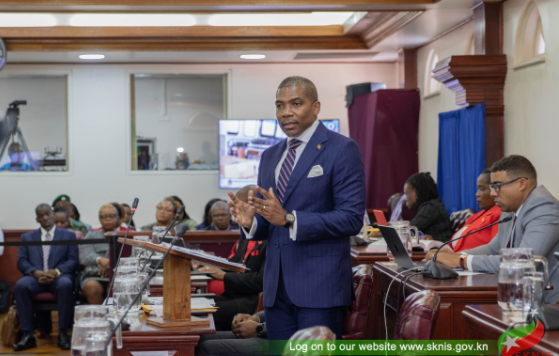
    In a decisive move to strengthen national security capabilities, the Government of Saint Kitts and Nevis has announced substantial financial backing for security enhancements in its 2026 budget. Prime Minister and Finance Minister Dr. Terrance Drew unveiled the allocation during his December 16 budget presentation, emphasizing his administration’s dedication to citizen protection through strategic investments.

    The Ministry of National Security, Citizenship, and Immigration will receive $97.3 million in total funding, with resources directed toward three primary objectives: augmenting law enforcement capabilities, modernizing critical infrastructure, and implementing advanced security technologies. The comprehensive security package includes $84.1 million in recurrent expenditure alongside $3.2 million specifically designated for infrastructure development.

    Key initiatives encompass extensive refurbishment of police facilities, construction and upgrades for fire service operations, and procurement of essential equipment. Technological advancements will feature prominently through enhancements to closed-circuit surveillance networks, traffic management systems, and the National Security Technology Refresh Programme designed to modernize law enforcement infrastructure.

    Significant attention has been given to emergency response capabilities, with plans for demolishing and reconstructing the Basseterre Fire and Rescue facility. Simultaneously, Nevis will benefit from substantial fire service improvements including the acquisition of new firefighting apparatus and establishment of a second fire station to ensure adequate emergency coverage. The government will also implement specialized training programs to enhance the professionalism of Nevis firefighters.

    Prime Minister Drew characterized these measures as fundamental to maintaining public safety and national stability. “The safety and security of our citizens remain a top priority for this government,” he stated. “Through these strategic investments, we are reinforcing our commitment to law and order while ensuring our protective agencies are equipped to address contemporary and future challenges.”

    The administration asserts that these security enhancements will support the nation’s ongoing development while safeguarding community welfare across the federation.

  • Antigua and Barbuda, Dominica respond as partial US travel restrictions set to take effect in the new year

    Antigua and Barbuda, Dominica respond as partial US travel restrictions set to take effect in the new year

    The United States has announced significant visa restrictions targeting multiple nations, including Caribbean counterparts Antigua and Barbuda and Dominica, citing national security concerns related to their Citizenship by Investment (CBI) programs. The policy shift, declared by the White House on December 16, 2025, will take effect January 1, 2026.

    This development represents an expansion of existing travel limitations, now encompassing twenty additional countries across Africa and the Caribbean. The restrictions specifically apply to B1/B2 business/tourist visas, F and M student visas, and J exchange visitor visas for applicants from these nations.

    According to the presidential proclamation, the measures aim to address perceived vulnerabilities in immigration vetting processes. The administration identified several systemic issues including inadequate document verification, unreliable criminal records, and insufficient birth registration systems in affected jurisdictions. Particular concern was directed toward CBI programs that allegedly enable identity concealment and bypass standard vetting protocols through non-residency requirements.

    Caribbean leaders have responded with both surprise and consternation. Antiguan Prime Minister Gaston Browne expressed ‘deep disappointment,’ asserting that recent legislative reforms have already implemented a mandatory 30-day physical residency requirement for citizenship applicants—directly contradicting the US administration’s stated concerns.

    Similarly, Dominican Prime Minister Roosevelt Skerrit highlighted his nation’s comprehensive CBI reforms enacted in October 2025, which established enhanced due diligence procedures, stricter financial transparency mandates, and an independent regulatory authority. Both governments have initiated diplomatic channels, dispatching envoys to Washington for urgent consultations regarding the implementation scope of these restrictions.

    The policy announcement has generated uncertainty among current visa holders and applicants from affected nations, with specific implications for educational exchanges, business travel, and diplomatic relations between the US and Eastern Caribbean states.

  • PM Drew tables EC$1 billion budget addressing government priorities for 2026

    PM Drew tables EC$1 billion budget addressing government priorities for 2026

    In a comprehensive parliamentary address spanning nearly five hours on December 16, 2025, Prime Minister Dr. Terrance Drew presented a transformative EC$1.07 billion national budget for the 2026 fiscal year. The financial blueprint outlines a strategic shift away from dependency on the Citizenship by Investment Programme while addressing critical national priorities including healthcare enhancement, economic expansion, crime reduction, infrastructure modernization, and cost-of-living mitigation measures.

    The budget framework establishes a three-year fiscal strategy emphasizing strengthened public financial management, increased governmental transparency, and improved service delivery mechanisms. Dr. Drew highlighted the necessity of this approach given current economic challenges, particularly declining CBI revenues that have traditionally served as the Federation’s primary economic pillar.

    Financial projections indicate total revenue and grants for 2026 are estimated at $894.8 million, with recurrent revenue expected to reach $855.7 million. The government anticipates recurrent expenditure of $879.8 million for 2026, alongside capital expenditure and net lending projected at $167.2 million. Medium-term forecasts suggest revenue growth to $899.1 million with average annual expenditure of $892.4 million for 2027-2028.

    The budget addresses the 2025 fiscal deficit, where government expenditure reached $1.04 billion (35.6% of GDP) against revenues of $732.7 million. Public debt is projected to rise to $1.7 billion by year-end 2025, underscoring the need for fiscal reforms.

    Notably, the Prime Minister announced that public servants will receive traditional double salary payments, while government officials and their advisers will be excluded from this benefit. The administration has committed to implementing tax policy reforms designed to create a more equitable and modernized tax system supported by enhanced compliance measures.

  • St. Kitts And Nevis Set To Compete In FIFA Series 2026 In Indonesia – SKN PULSE

    St. Kitts And Nevis Set To Compete In FIFA Series 2026 In Indonesia – SKN PULSE

    The Caribbean nation of St. Kitts and Nevis has achieved a significant breakthrough in international football by securing participation in the prestigious FIFA Series 2026 (FS26), scheduled to be hosted in Indonesia. This landmark achievement represents a crucial developmental milestone for the federation’s senior men’s national team program, positioning the Sugar Boyz for unprecedented global exposure.

    The FIFA Series, an innovative global initiative launched by FIFA’s governing body, is specifically designed to provide national teams with enhanced opportunities for high-level international competition outside traditional confederation boundaries. The tournament brings together carefully selected national squads from across FIFA’s diverse continental confederations, creating a unique platform for competitive friendly matches during FIFA’s official international match calendar windows.

    This strategic participation will enable St. Kitts and Nevis to engage with varied international playing styles and tactical approaches from opponents they would rarely encounter in conventional CONCACAF competitions. The Indonesian-hosted matches promise to deliver invaluable competitive experience ahead of crucial regional qualifying tournaments, while simultaneously offering Kittitian and Nevisian players a distinctive opportunity to demonstrate their football prowess before Asian football audiences and international scouts.

    The FIFA Series framework emphasizes cross-confederation development, global competitiveness enhancement, and the promotion of football diversity across emerging regions. For St. Kitts and Nevis, this invitation signals growing recognition of their football development progress and provides a strategic platform for continued improvement against world-class opposition.

  • St Kitts, Haiti get CAF ok as shareholder countries

    St Kitts, Haiti get CAF ok as shareholder countries

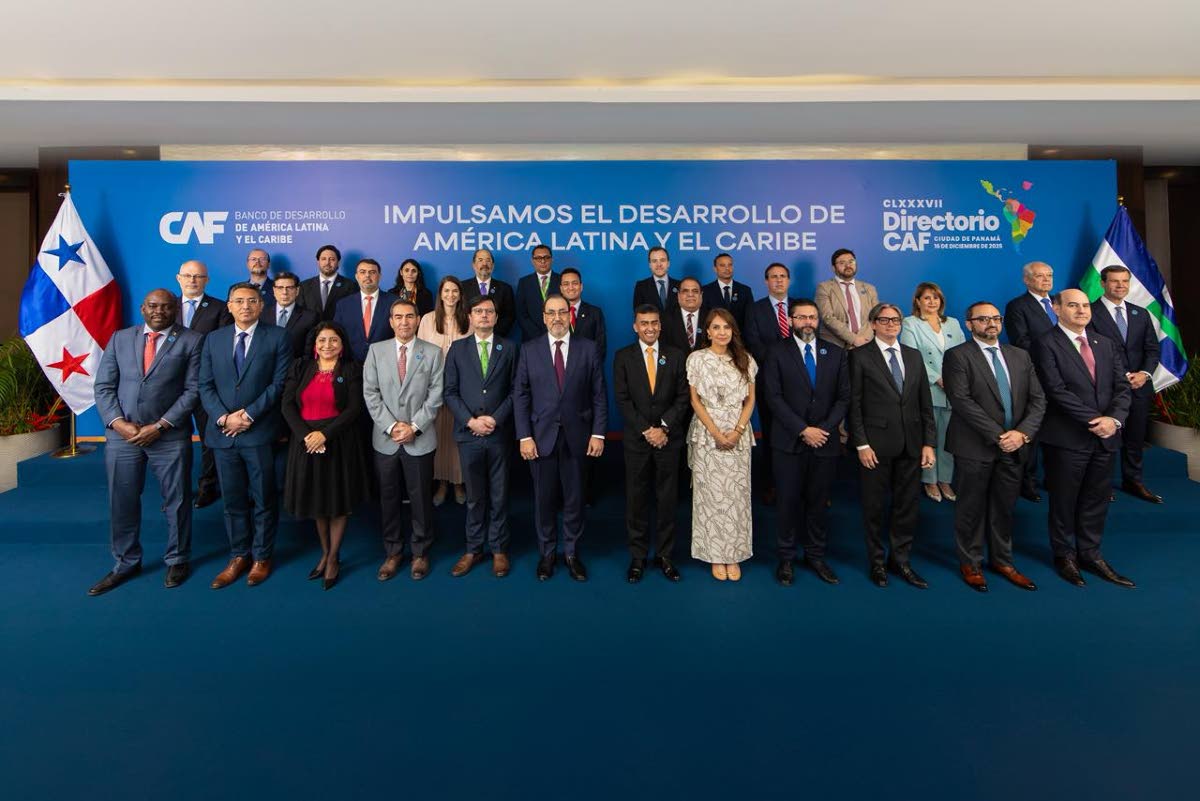
    In a landmark decision signaling expanded regional integration, the Development Bank of Latin America and the Caribbean (CAF) has formally approved St Kitts and Nevis and Haiti as new shareholder countries. The historic move was ratified during the institution’s board of directors meeting convened in Panama City on December 16 under the leadership of Chairman Davendranath Tancoo, who serves as Trinidad and Tobago’s Finance Minister.

    This strategic incorporation will enable both Caribbean nations to access tailored development financing mechanisms, specialized technical assistance programs, and knowledge-sharing initiatives specifically designed for small island developing states facing climate vulnerability challenges. The expansion effectively triples CAF’s Caribbean shareholder base compared to 2023 levels, representing the most significant regional enlargement in the institution’s history.

    Concurrently, CAF’s board authorized substantial financial commitments totaling $3.175 billion for pan-regional operations. These funds will catalyze critical infrastructure projects spanning electricity generation, water security systems, sustainable transportation networks, and support mechanisms for vulnerable communities. Additional financing will target small and medium-sized enterprises alongside productive economic sectors requiring development capital.

    The institution has demonstrated accelerated Caribbean engagement throughout 2025, having incorporated Saint Lucia in June during its Seville board meeting. This follows earlier expansions that welcomed The Bahamas, Antigua and Barbuda, and Grenada into the shareholder framework over preceding twelve months. Currently, six Caribbean nations maintain shareholder status with several others advancing through various incorporation stages.

    CAF Executive President Sergio Diaz-Granados emphasized the institution’s regional philosophy, stating: ‘St Kitts and Nevis and Haiti are joining a home-grown development bank that was established by the region specifically for regional advancement.’ He characterized CAF as ‘more than a financial institution—it constitutes a strategic bridge unifying Latin American and Caribbean development objectives through contextually appropriate solutions.’

    In a parallel development, the board confirmed Barbados’ successful compliance with requirements to transition to full membership status. This elevation positions Barbados alongside Trinidad and Tobago as the second CARICOM nation to achieve full membership standing within the development bank.

    Since establishing its regional headquarters in Trinidad and Tobago in 2022, CAF has deployed extensive programming across climate finance, resilient infrastructure development, public service modernization, and digital transformation initiatives. The institution continues to expand its portfolio encompassing blue and green economy investments, cultural heritage tourism, and educational development programs throughout the Caribbean basin.

  • Coryn, Williams take home Junior Calypso crowns

    Coryn, Williams take home Junior Calypso crowns

    BASSETERRE, St. Kitts — The 2025/2026 Republic Bank Junior Calypso Monarch competition has concluded with remarkable success, generating renewed confidence in the art form’s capacity to cultivate young musical talent. The Sunday evening event (December 14) at Marriott Plaza featured fourteen aspiring calypsonians from primary and secondary schools, culminating in victories for Coryn Clarke and Edward Williams in their respective divisions.

    Clement ‘Monarch’ O’Garro, Director of Carnival, expressed enthusiasm about the program’s expansion in comments to SKNVibes News. “The artform is developing at a rapid pace,” O’Garro stated, highlighting the substantial increase in participation from merely five or six contestants several years ago to nearly sixteen in recent competitions.

    This growth trajectory indicates that many early participants are now preparing to advance to senior competitions as soon as next year—a development that has greatly encouraged the National Carnival Committee. Interest in Junior Calypso continues to strengthen across both St. Kitts and Nevis, reflecting the program’s broadening appeal.

    Despite the competition’s success, O’Garro acknowledged ongoing challenges regarding sustained visibility for young artists beyond the Carnival season. Currently, promotional efforts predominantly focus on competition winners, leaving other talented participants with limited exposure opportunities.

    “Everything involves money, and yes, it’s something that we are concerned about,” O’Garro admitted, emphasizing that this issue affects all Carnival aspects, not just Junior Calypso. He suggested the need for year-round programming rather than seasonal activities, noting that discussions with the Department of the Creative Economy are underway to explore innovative approaches for showcasing young calypsonians throughout the year.

  • Pills, pills, and more pills: CBP seizes Tramadol destined for St. Kitts and Nevis

    Pills, pills, and more pills: CBP seizes Tramadol destined for St. Kitts and Nevis

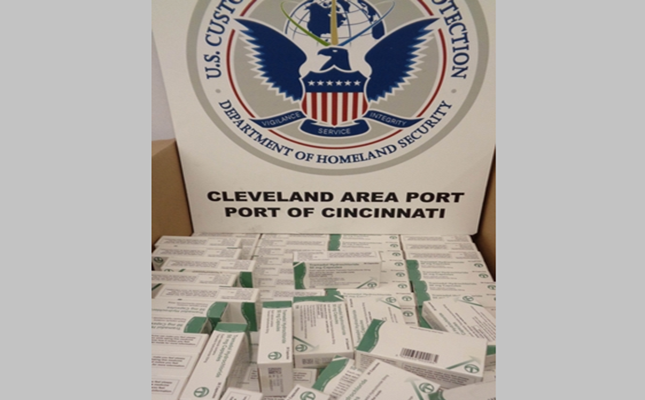
    WASHINGTON, DC — United States Customs and Border Protection (CBP) officials in Cleveland, Ohio have intercepted a substantial shipment of 30,000 tramadol tablets destined for the Federation of St. Kitts and Nevis. The seizure occurred on December 4th, 2025, when inspectors discovered the controlled substance concealed within a parcel originating from Barbados.

    According to official reports, CBP officers conducted routine inspection procedures on the incoming shipment and uncovered multiple small boxes containing push pill tabs. Each container held 30 tablets, culminating in a total seizure of 30,000 pills with an estimated street value of $150,000. The medication was identified as 50mg tramadol tablets, classified as a Schedule IV controlled substance under the U.S. Controlled Substances Act.

    LaFonda D. Sutton-Burke, Director of Field Operations for the Chicago Field Office, emphasized the dangers of unregulated prescription medications. ‘While narcotics seizures receive significant attention, illegal prescription pill shipments present equally serious health risks,’ Sutton-Burke stated. ‘These unregulated pharmaceuticals bypass FDA oversight and may contain hazardous, potentially poisonous chemicals.’

    Tramadol is a prescription pain medication typically administered for moderate to severe pain management, functioning by altering the brain’s pain perception mechanisms. Its classification as Schedule IV reflects recognized abuse potential, particularly among narcotic addicts, chronic pain patients, and certain healthcare professionals.

    Authorities have not disclosed the intended recipient’s identity in St. Kitts and Nevis, though officials noted the substantial quantity suggests possible destination to a medical facility or pharmacy rather than individual use. Local law enforcement agencies in the Federation confirm they have not received formal notification regarding the seizure from U.S. authorities.

    The CBP has reiterated its commitment to intercepting illegal pharmaceutical shipments and reminded consumers that e-commerce purchases must comply with all federal import regulations and admissibility requirements.

  • Crypto Capital Eyes Nevis — But Can Private Governance Work In The Caribbean? | News Americas Now

    Crypto Capital Eyes Nevis — But Can Private Governance Work In The Caribbean? | News Americas Now

    A contentious proposal to establish a semi-autonomous, technology-focused community on the Caribbean island of Nevis has ignited intense debate throughout the federation of St. Kitts and Nevis. Dutch cryptocurrency entrepreneur Olivier Janssens is advancing the ambitious ‘Destiny’ project, which aims to create a self-contained enclave tailored for global entrepreneurs, digital asset investors, and technologists seeking crypto-friendly infrastructure and alternative governance frameworks.

    The initiative operates under the recently enacted Special Sustainability Zones Authorization Act, which permits designated zones for testing innovative approaches to governance, technology, and sustainability. The project has already begun acquiring substantial coastal land parcels along Nevis’s southern coast, with architectural plans including luxury villas, commercial offices, medical facilities, and supporting infrastructure designed by prominent global firm Skidmore, Owings & Merrill.

    At the core of the controversy lies a proposal to implement private arbitration mechanisms for resolving certain legal disputes within the zone, potentially bypassing the nation’s established court system. Proponents argue this represents a forward-thinking approach to attract new capital streams to the Caribbean, particularly from global investors seeking jurisdictions receptive to digital asset innovation and fintech advancement. Janssens maintains the project would provide expedited, predictable dispute resolution for international commercial transactions while remaining compliant with national laws.

    However, the proposal has generated significant apprehension among local residents, legal professionals, and political leaders. Critics express concerns about creating a ‘state within a state,’ questioning the extent of governmental oversight that would remain if dispute resolution shifts to private judicial mechanisms. Additional worries center on land use patterns, environmental consequences, strain on public infrastructure, and the broader implications of privatized governance models in small island nations.

    The Destiny project aligns with the emerging ‘network state’ concept promoting digitally interconnected communities with shared governance frameworks operating alongside traditional nation-states. While gaining traction in technology circles, previous attempts to implement similar models elsewhere have encountered regulatory resistance, legal challenges, and financial instability—particularly during cryptocurrency market volatility.

    Analysts note that the interest from crypto investors highlights a broader trend of global capital seeking alternative development models in the Caribbean, especially in technology, digital services, and infrastructure. The critical challenge for governments involves distinguishing between speculative ventures and projects capable of delivering sustainable economic benefits while respecting legal frameworks and social cohesion.

    The project’s ultimate realization will depend on multiple factors: governmental supervision, community involvement, investor confidence, and successful integration of private governance mechanisms with public legal systems. This development serves as a significant case study examining both the potential benefits and risks of crypto-driven initiatives in small island economies, potentially influencing how Caribbean governments approach unconventional investment and governance proposals in an evolving global landscape.

  • Calypso in good hands, according to Clement “Monarch” Ogarro, following conclusion of FLOW Junior Calypso Monarch Competition

    Calypso in good hands, according to Clement “Monarch” Ogarro, following conclusion of FLOW Junior Calypso Monarch Competition

    The vibrant tradition of calypso music demonstrates a promising future as young talents delivered spectacular performances at the 2025/2026 FLOW Junior Calypso Monarch Competition. The event, held at St. Kitts Marriott Resort on December 14, showcased exceptional musical artistry among primary and secondary school participants from across St. Kitts and Nevis.

    In the primary division, Coryn Clarke (performing as Queen Coryn) claimed victory with an impressive 244 points, securing the championship title and a $2,500 prize. Adiaha followed closely with 236 points ($1,500 prize), while Mighty Zen placed third with 230 points ($1,000 prize).

    The secondary school division witnessed Edward Williams, known as King Mighty J, emerge triumphant with a remarkable 265 points. Nicholas Petty (Star Boy Nicholas) nearly matched this achievement with 263 points, and Dequan Hendrickson completed the top three with 232 points.

    Clement “Monarch” Ogarro, four-time Junior Calypso Monarch and Carnival director, expressed enthusiastic approval of the participants’ development. “The art form is developing at a rapid pace,” Ogarro noted. “Three or four years ago, we had five or six Junior Calypsonians. For the last three years, we’ve had as many as 15 or 16. This expansion represents significant progress for calypso and St. Kitts.”

    This year’s competition introduced a brass band component at the request of participants and parents, which Ogarro described as highly successful. The event also marked the transition of two accomplished performers—reigning champion King Mighty J and newcomer Prodigy—to the senior competition upon reaching age eligibility.

    Despite the celebratory atmosphere, concerns persist regarding limited ongoing opportunities for young artists beyond the competition. Ogarro acknowledged this challenge, stating: “Everything involves money. This is something we’re considering not only for Junior Calypso but every aspect of Carnival—how we can promote this cultural expression year-round rather than seasonally.”

  • Belgian crypto billionaire wants to set up libertarian community in the Caribbean

    Belgian crypto billionaire wants to set up libertarian community in the Caribbean

    Belgian cryptocurrency billionaire Olivier Janssens is spearheading an ambitious initiative to establish a self-governing libertarian community on the Caribbean island of Nevis. According to a Financial Times report, Janssens—who holds dual Belgian and Nevisian citizenship—is acquiring substantial land holdings through his company, South Nevis, for a development project codenamed “Destiny.”

    The project, which represents the first major development under a new law passed in Saint Kitts and Nevis last summer, involves investments totaling several billion dollars on the southern coast of the 93-square-kilometer island. The development plans include luxury villas, medical facilities, green spaces, and recreational amenities, with design work commissioned from renowned architecture firm Skidmore, Owings & Merrill—the creative force behind Dubai’s Burj Khalifa.

    A particularly controversial aspect involves Janssens’ negotiation to implement an autonomous legal framework within the community. The recently enacted legislation permits large-scale developers to establish independent dispute resolution mechanisms, a provision that has raised concerns among local residents about jurisdictional authority and governance.

    During a recent presentation to Nevisians via video link, Janssens criticized the existing judicial system as inefficient and asserted that replicating it would undermine the project’s appeal to potential residents. The billionaire, who expressed skepticism toward traditional political structures, notably referred to Nevis as a “host nation” for his libertarian vision. Adding political complexity to the venture, Janssens’ real estate acquisitions are being facilitated by Sharon Brantley, spouse of Nevis Premier Mark Brantley.