标签: Jamaica

牙买加

  • Maroon community rejects gov’t offer for JDF support in rebuilding efforts

    Maroon community rejects gov’t offer for JDF support in rebuilding efforts

    In a significant decision regarding post-disaster recovery, the Accompong Maroon community in St. Elizabeth, Jamaica, has formally declined the Jamaican government’s offer to deploy military personnel for reconstruction efforts following Hurricane Melissa. Chief Richard Currie, leader of the Accompong Maroons, announced the community’s position through social media channels on Thursday, following deliberations by the Maroon Full Council.

    While expressing gratitude for Prime Minister Andrew Holness’s administration’s willingness to mobilize resources, including those of the Jamaica Defence Force (JDF), the council determined that military presence would not align with the community’s cultural protocols and emotional needs. Currie specifically referenced concerns about armed personnel operating within their territory, noting that many community elders and women had experienced emotional trauma from the hurricane’s devastation.

    The Maroon leadership emphasized their preference for civilian resources from both local and international partners, including technical sponsorships and volunteer engineering assistance coordinated through the Accompong Development Foundation. These established partnerships, developed over years of relationship building, provide what the council considers a culturally appropriate framework for reconstruction that honors their treaty-recognized indigenous status under the 1738 agreement with Britain.

    Notably, the community did accept the government’s offer of materials and equipment necessary for recovery efforts, demonstrating a selective approach to cooperation. Currie stressed that the decision reflects neither a rejection of cooperation nor ingratitude for the humanitarian intent behind the government’s offer, but rather a commitment to maintaining “harmony and inclusiveness” according to Maroon laws and cultural way of life.

    The Accompong Maroons maintain their commitment to peaceful engagement and transparent dialogue while asserting their governance responsibilities within the Cockpit Country territory, highlighting the complex intersection of disaster recovery, cultural preservation, and indigenous self-determination.

  • Seventh-day Adventists reject claims of providing gov’t with people’s personal data

    Seventh-day Adventists reject claims of providing gov’t with people’s personal data

    KINGSTON, Jamaica — The Jamaica Union Conference (JAMU) of Seventh-day Adventists and its humanitarian division, ADRA Jamaica, have formally refuted social media allegations accusing them of sharing personal data with the government. The claims suggested that information gathered during Hurricane Melissa relief operations was being funneled to Jamaica’s National Identification System (NIDS).

    During a press conference held Wednesday, JAMU Treasurer Pastor Adlai Blythe categorically denied these accusations. He explained that all data collected serves exclusively for internal record-keeping and coordinating relief efforts. “We conduct initial damage assessments to determine individual losses and coordinate our response accordingly,” Blythe stated. “As a registered charity, ADRA Jamaica gathers information solely for distributing aid to affected persons. This information is never shared with any external entity, governmental or non-governmental.”

    Blythe emphasized the organization’s compliance with data protection regulations, noting they employ a dedicated data protection officer to ensure protocol adherence.

    JAMU President Pastor Everett Brown provided additional context about their hurricane response preparedness. “Prior to Hurricane Melissa’s landfall, we allocated $500,000 across our five conferences to pre-position food and water supplies in strategic locations,” Brown revealed. Following the hurricane, the church deployed ADRA Jamaica staff and conference workers to assess needs and distribute relief materials.

    Brown clarified the funding sources for these efforts: “All deployed resources originate from international partners, the global Seventh-day Adventist church, and local contributions. We have received no governmental financial support for this initiative.”

    While expressing openness to future government collaboration, Brown stressed the current operation’s independent nature. “As a church embodying Christ’s mission, we respond to human needs wherever they exist. We stand ready to distribute materials through our nationwide network, but our current operations are independently funded through collaborative efforts, not government support.”

    ADRA Jamaica operates as a registered humanitarian agency serving vulnerable populations affected by disasters, poverty, and social changes, with presence in over 118 countries worldwide.

  • Westmoreland residents given until the end of December to vacate Petersfield High School shelter

    Westmoreland residents given until the end of December to vacate Petersfield High School shelter

    WESTMORELAND, Jamaica — A contentious standoff has emerged between displaced hurricane survivors and government authorities in Petersfield, Westmoreland Parish, where residents currently occupying Petersfield High School as a storm shelter must vacate the premises by December’s end. Local Government Minister Desmond McKenzie delivered the ultimatum during a Wednesday site visit, emphasizing the facility must be cleared to allow preparatory work for January’s academic term.

    The crisis stems from October’s devastating Hurricane Melissa, a Category 5 storm that severely impacted Westmoreland and four other parishes. Minister McKenzie outlined a four-phase relocation strategy for shelter occupants, beginning with elderly residents who will be transferred to infirmary care with 24-hour support. The government will additionally facilitate relocation to willing family members or friends for other categories of displaced persons.

    For those previously paying rent who lost their homes, McKenzie promised targeted support programs. As a final measure, the Jamaica Defence Force will establish a temporary tent camp on a playground adjacent to the school, equipped with bedding, bathrooms, and toilet facilities. ‘The same service that is provided here will be provided over on that facility,’ McKenzie stated, while acknowledging limited alternatives: ‘Let me be frank with you, there is no other solution available now.’

    Despite these provisions, several residents expressed vehement opposition to the proposed measures. Trishauna, a mother of three, voiced grave safety concerns regarding the tent camp location: ‘Mi not going ah ball ground fi man come rape off my child over there. When rain falls, over deh suh a swamp.’ She criticized the proposed solution as inadequate and suggested instead that government efforts should focus on helping people rebuild permanent shelter rather than relocating them to temporary, potentially hazardous conditions.

  • Unsure of how to help? 10 ways to give back Christmas

    Unsure of how to help? 10 ways to give back Christmas

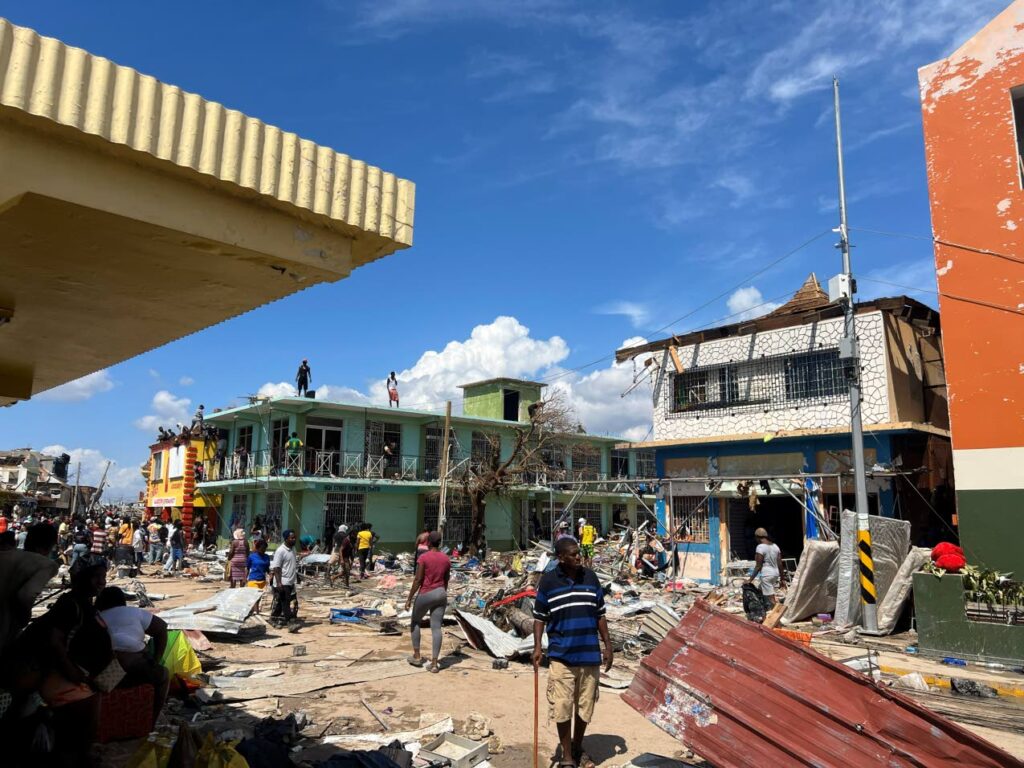
    In the aftermath of Hurricane Melissa’s catastrophic impact on Jamaica’s western regions, a remarkable spirit of communal solidarity has emerged alongside the profound devastation. The storm’s trail of destruction has prompted nationwide mobilization efforts, with Observer Online compiling a comprehensive guide for those seeking to contribute meaningfully during the holiday season.

    The curated list emphasizes practical, impactful assistance methods that address both immediate and long-term recovery needs. Among the most valuable contributions is volunteering at children’s homes, where staffing shortages are particularly acute during holidays. Engaging with young survivors through activities or basic assistance provides crucial emotional support following traumatic displacement.

    Gift initiatives targeting specific necessities represent another vital avenue for support. Families who lost homes and possessions require practical items including hygiene kits, blankets, infant supplies, and children’s toys to restore semblance of normalcy. Organized gift drives through community networks can significantly amplify these efforts.

    Infrastructure rehabilitation requires substantial material support, with rebuilding supplies like plywood, nails, cement, and tools being particularly needed. Collective funding initiatives enable contributors to participate in reconstruction even without direct construction experience. Community clean-up projects also welcome volunteer participation to remove debris and restore access routes.

    Food security has deteriorated dramatically post-hurricane, making soup kitchen volunteering and food bank donations especially valuable. Blood donation remains critically important for medical emergencies and ongoing treatments, while professional skills—particularly in healthcare, counseling, and education—can be volunteered to address specialized needs.

    The guide highlights often-overlooked vulnerable groups, suggesting personal check-ins with elderly or isolated individuals who may require assistance with groceries, medications, or simple companionship. Existing church and community initiatives welcome additional volunteers for coordinated distribution efforts.

    Digital fundraising platforms and traditional relief concerts offer remote contribution opportunities, with social media amplification proving unexpectedly effective in broadening donor reach. The collective response demonstrates how targeted, thoughtful assistance can significantly accelerate recovery while strengthening community resilience.

  • JFF announces coaches for age group teams

    JFF announces coaches for age group teams

    The Jamaica Football Federation (JFF) unveiled a comprehensive restructuring of its youth national team coaching staff on Thursday, headlined by the promotion of former Reggae Boyz captain Rudolph Austin to head coach of the Under-20 men’s squad. This strategic move is part of a broader initiative to bolster the technical leadership across multiple age groups in preparation for upcoming regional tournaments.

    Austin, who currently manages Portmore United in the Jamaica Premier League and served as assistant coach for the U-20 team since 2023, will be supported by veteran tactician Wendell Downswell as his assistant. The federation simultaneously announced that Downswell will additionally assume head coaching responsibilities for the National U-17 Team, assisted by Vassel Reynolds, Carlton Simmonds, and Altimont ‘Freddie’ Butler.

    JFF Acting General Secretary Roy Simpson emphasized that these appointments reflect the growing caliber of local coaching talent. ‘Our quality of coaches continues to grow and improve in Jamaica,’ Simpson stated. ‘We have seen a number of our youth national teams in recent years win silverware and or pick up medals in regional competitions and this is exactly what we want to continue in the years ahead.’

    The federation also confirmed continuity in women’s youth development, with Leacroft Lettman retaining his position as U-20 Women’s head coach. He will be assisted by Tamera Williams, who holds dual roles as Head Coach for both the U-14 Girls and the National Girls U-15 team. Former Reggae Girlz World Cup participant Sashana Campbell joins as Williams’ assistant and will also serve as assistant coach for the U-17 Girlz team under Marlon Hylton.

    Completing the technical overhaul, Andrew Peart will continue leading the U-15 boys team following his successful guidance that secured the CFU Boys U-14 Challenge Series trophy in 2024 and the CONCACAF Boys U-15 Championship League ‘B’ title in 2025. Vassel Reynolds takes helm of the U-14 boys team with Lewin Purser as his assistant, demonstrating the JFF’s commitment to developing coaching talent throughout its youth programs.

  • Leader of notorious Haitian gang sentenced to life in prison

    Leader of notorious Haitian gang sentenced to life in prison

    A Washington court has delivered a life imprisonment sentence to Joly Germine, the notorious leader of Haiti’s violent 400 Mawozo gang, for masterminding the 2021 abduction of 16 American citizens, including five children. The sentencing on Wednesday marks a significant development in a case that exposed the transnational reach of Haitian criminal organizations.

    Operating under the alias “Yonyon,” Germine was found guilty in May of orchestrating the kidnapping operation while remotely directing gang activities from within a Haitian prison facility using smuggled mobile phones. The convicted gang leader commanded a criminal network responsible for the brazen capture of American missionaries visiting an orphanage near Port-au-Prince.

    The victims endured weeks of captivity as their captors initially demanded ransoms of US$1 million per individual, later modifying their demands to seek Germine’s release in exchange for the hostages’ freedom. Criminal proceedings revealed Germine personally authorized ransom demands totaling US$17 million and coordinated decisions regarding hostage releases.

    Following a partial payment of US$350,000 that secured the release of several captives, negotiations reached an impasse as gang members intensified their demands for their leader’s liberation. The remaining hostages ultimately engineered their own escape on December 16, 2021, trekking through hazardous terrain for hours before reaching safety.

    This sentencing adds to Germine’s existing criminal penalties, including a 35-year prison term imposed earlier this year for arms trafficking violations connected to ransom proceeds. The comprehensive prosecution also resulted in a 12.5-year sentence for Eliande Tunis, Germine’s former girlfriend and Florida resident, who pleaded guilty to related charges.

    Germine’s extradition to the United States in 2022 facilitated the judicial proceedings that have culminated in this life sentence, accompanied by a US$1,700 fine. The case demonstrates increasing international judicial cooperation in combating transnational criminal networks operating in the Caribbean region.

  • Strike on alleged drug boat in Pacific kills four: US military

    Strike on alleged drug boat in Pacific kills four: US military

    A United States military operation in the eastern Pacific Ocean resulted in the deaths of four individuals aboard a speedboat suspected of trafficking illicit narcotics. The incident occurred on Thursday and has intensified existing scrutiny over a counter-narcotics campaign that has reportedly claimed over 85 lives.

    The US Southern Command (SOUTHCOM) publicly detailed the strike in a post on the social media platform X. The command stated the targeted vessel was operating in international waters and was ‘operated by a Designated Terrorist Organization.’ According to their intelligence assessment, the boat was confirmed to be carrying illegal drugs and was transiting a known route used for narcotics smuggling.

    The official statement confirmed that ‘four male narco-terrorists aboard the vessel were killed.’ Accompanying the announcement, SOUTHCOM released a video depicting the events. The footage shows a multi-engine boat, often referred to as a ‘go-fast’ vessel, moving at high speed across the water. Subsequently, an explosion strikes the craft, immediately engulfing it in a massive fireball and leaving it completely destroyed.

    This lethal engagement is the latest in a long-running, proactive US military effort to interdict drug shipments, primarily cocaine, traversing maritime routes from South America towards North American markets. The strategy often involves tracking suspect vessels and, after receiving legal authorization, employing lethal force to disable them. However, this aggressive tactic continues to draw significant criticism from human rights organizations and some regional governments. Critics question the legal and ethical justifications for the use of deadly force in circumstances where the alleged criminals pose no direct, imminent threat to US personnel, arguing it circumvents due process and has resulted in a high number of fatalities.

  • Jamaica-bound hurricane relief container robbed in Canada

    Jamaica-bound hurricane relief container robbed in Canada

    Authorities in Toronto have launched a full-scale investigation into a devastating theft that targeted humanitarian aid, with volunteers describing the crime as a profound blow to charitable efforts. The incident, which unfolded at a local storage facility, saw thieves make off with an estimated CA$300,000 to CA$400,000 worth of donated goods meticulously gathered over a three-week period for vulnerable communities in Jamaica.

    According to volunteer Michael Bennett, who provided a emotional account to CTV News, the donations comprised essential supplies including non-perishable food, clothing, and critical power generators. The discovery was made on Wednesday morning when the volunteer team arrived to prepare the items for shipment, only to find the storage unit’s padlock severed and the container completely emptied.

    Toronto Police evidence suggests the burglary was executed overnight. Security camera footage reportedly captured a truck forcefully breaching a secured gate at the container facility, enabling the perpetrators to systematically empty the unit unimpeded. The calculated nature of the operation indicates a premeditated act rather than a crime of opportunity.

    In a poignant television interview, Bennett struggled to contain his emotion, emphasizing the profound human impact of the theft. He articulated the particular cruelty of stealing supplies intended for those in dire need, questioning the motive behind targeting humanitarian aid. ‘The material value is secondary,’ Bennett stated. ‘The food represents sustenance for families. What purpose does this serve the thieves here? None whatsoever.’

    The robbery has not only resulted in a significant material loss but has also delivered a demoralizing setback to the volunteer-driven initiative, casting a shadow over community trust and the security of charitable operations.

  • St Elizabeth farmers plough on despite ‘slow pace of assistance’

    St Elizabeth farmers plough on despite ‘slow pace of assistance’

    In the aftermath of Hurricane Melissa, agricultural communities in St. Elizabeth, Jamaica, are demonstrating remarkable resilience by independently replanting devastated fields, despite expressing profound frustration over delayed and politicized government assistance.

    Farmer Anthony Smith from Ridge Pen recounted the complete destruction of his melon crop and half an acre of plantains. Despite officially reporting losses to the Rural Agricultural Development Authority (RADA) and being promised seeds and support, Smith states he has received no follow-up communication or aid. The 63-year-old farmer alleges systemic bias in agricultural support distribution, describing it as a ‘pick and choose’ system influenced by political affiliations rather than need.

    Similar stories emerge across the parish. Sheldon Dockery of Destiny Goat and Duck Farm suffered catastrophic losses including 200 ducks and 10 goats alongside destroyed corn, pepper, and pumpkin crops. Rather than awaiting government intervention, Dockery immediately commenced replanting using stored seeds, embodying a self-reliant philosophy he believes essential for agricultural survival.

    The economic impact extends beyond immediate crop damage. Shantol Brooks, a mother of two, revealed how nearly-ready cabbage, sweet pepper, and cauliflower crops—destined for crucial Christmas market sales—were completely ruined. Dale Williams from Burnt Savanna described total destruction of his half-acre farm containing corn and cassava, compounded by significant livestock losses and infrastructure damage to chicken coops.

    These farmers universally report facing dual challenges: natural disaster recovery and systemic inadequacies in agricultural support systems. Many emphasize that promised assistance programs—including free tractor services for land preparation—have failed to materialize or been distributed selectively. Despite these obstacles, the farming community continues replanting operations, though many struggle with increased costs for fertilizers, seeds, and limited availability of agricultural labor.

  • Gov’t receives Ethiopian delegation on hurricane recovery assistance mission

    Gov’t receives Ethiopian delegation on hurricane recovery assistance mission

    KINGSTON, Jamaica — In a significant demonstration of international solidarity, a high-level Ethiopian delegation arrived in Jamaica on Thursday to assess damage and explore avenues for supporting the island nation’s recovery from Hurricane Melissa. The delegation, spearheaded by His Excellency Ambassador Berhanu Tsegaye, Ethiopia’s State Minister, was formally received at Jamaica House by Senator Abka Fitz-Henley, State Minister in the Office of the Prime Minister.

    The meeting underscored a mutual commitment to strengthening bilateral relations amidst a crisis. Senator Fitz-Henley publicly acknowledged and commended Ethiopian Prime Minister Abiy Ahmed for initiating this supportive gesture. He emphasized the profound historical and cultural connections between the two nations, rooted in shared ancestry and heritage, which form the foundation for a robust and evolving partnership.

    Key officials, including Permanent Secretary Ambassador Rocky Meade and Director General of the Office of Disaster Preparedness and Emergency Management (ODPEM), Commander Alvin Gayle, contributed to the strategic discussions. The agenda focused on coordinating effective relief efforts and formulating a framework for long-term recovery assistance. Following the high-level talks, Ambassador Tsegaye was scheduled for an observational tour of the severely impacted parishes of St. Elizabeth and Westmoreland to evaluate the devastation firsthand and better direct Ethiopian support.