标签: Jamaica

牙买加

  • Gov’t committed to supporting business, says Seiveright

    Gov’t committed to supporting business, says Seiveright

    Jamaica’s Ministry of Industry, Investment and Commerce has reinforced its commitment to supporting domestic corporations in their expansion efforts, both locally and internationally. Delano Seiveright, Minister of State, conducted an official visit to GraceKennedy’s digital factory located on Belmont Road in St Andrew this Wednesday, underscoring the administration’s dedication to fostering innovation and economic growth.

    During the engagement, Minister Seiveright emphasized the Government’s strategic backing for Jamaican enterprises seeking to enhance global competitiveness. He highlighted the importance of developing robust domestic and international linkages, scaling innovation-driven operations, and accelerating value creation across industries. The Minister’s tour specifically showcased GraceKennedy’s digital transformation initiatives and customer-centric solutions that are being implemented throughout its operational framework.

    GraceKennedy, a premier Jamaican conglomerate with annual group revenues surpassing US$1.1 billion, maintains a workforce of over 2,000 direct employees while supporting thousands more through its extensive value chain. The visit particularly highlighted the development of GK One and the group’s ongoing commitment to innovation, creative problem-solving, and prioritizing customer experience in all business segments.

    The ministerial visit represents part of a broader governmental outreach to major stakeholders in Jamaica’s business sector, aimed at strengthening economic resilience, expanding export capabilities, and generating high-quality employment opportunities nationwide.

  • Opposition cries ‘back-door politics’ as FID Bill passes Senate

    Opposition cries ‘back-door politics’ as FID Bill passes Senate

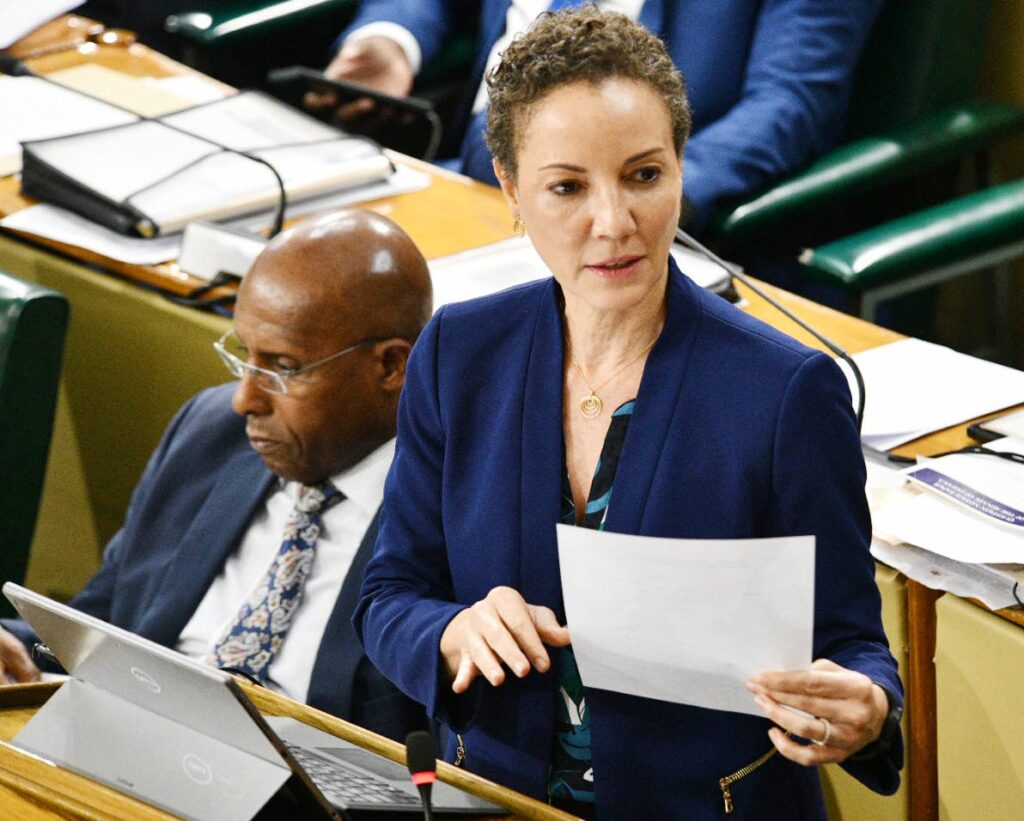
    Jamaica’s Senate has approved contentious amendments to the Financial Investigations Division (FID) Act, eliminating the requirement for ministerial approval of information-sharing agreements while introducing new provisions that have sparked vigorous debate about potential political influence.

    The legislation, passed using the government’s parliamentary majority, removes the long-standing mandate for the FID to obtain direct ministerial authorization before establishing data exchange protocols with both domestic and international agencies. The reform introduces constitutional and policy framework safeguards intended to modernize the agency’s operations.

    Opposition senators mounted substantial resistance to a specific clause requiring information sharing to align with “government policy,” warning this creates a backdoor for political interference. Senator Lambert Brown argued that equating policy with constitutional protections creates ambiguity that could allow future administrations to manipulate sensitive intelligence flows.

    “The removal of the minister’s approval appears progressive but inserting ‘government policy’ essentially replaces direct control with indirect influence,” Brown contended during Senate deliberations. He emphasized that intelligence sharing should be governed strictly by constitutional and parliamentary standards rather than political considerations.

    Government representatives defended the legislation as a necessary modernization. Senator Sherene Golding Campbell asserted that “government policy” operates within established legal boundaries and provides essential guidance for international cooperation, which constitutes a core FID function.

    Foreign Affairs Minister Kamina Johnson Smith closed the debate by emphasizing the amendment’s alignment with global financial security standards set by the Financial Action Task Force and Egmont Group. She stated the changes enhance Jamaica’s compliance with international best practices while maintaining constitutional protections against abuse.

    The legislative overhaul aims to strengthen Jamaica’s financial crime investigation capabilities and harden its financial system against illicit activities, though concerns persist about the practical implementation of policy-guided information sharing.

  • Man Utd make hay after Spurs’ Romero sees red

    Man Utd make hay after Spurs’ Romero sees red

    MANCHESTER, United Kingdom — Manchester United capitalized on a pivotal first-half red card shown to Tottenham Hotspur captain Cristian Romero to secure a decisive 2-0 Premier League victory at Old Trafford on Saturday. The result extends the team’s flawless run under interim manager Michael Carrick to four consecutive matches.

    The match’s trajectory shifted dramatically in the 29th minute when Romero received his marching orders for a reckless challenge on United’s Casemiro. The Argentine center-back, already under scrutiny for recent off-field comments, lunged in dangerously after losing possession near his own box, earning his second dismissal of the season.

    United’s breakthrough came through Bryan Mbeumo, who expertly found the bottom corner for his third goal in four games since Carrick’s appointment. The well-worked set-piece involved a clever short corner between Bruno Fernandes and Kobbie Mainoo that created space for Mbeumo on the edge of the area.

    Despite dominating possession and having two further goals disallowed for offside, United ensured the points were safe only in the 81st minute. Captain Bruno Fernandes sealed the victory by tapping in Diogo Dalot’s cross at the far post, marking his 200th direct goal contribution for the club.

    The victory holds significant implications for the Premier League table. Manchester United now sits comfortably in the top four, moving within two points of third-placed Aston Villa and establishing a five-point buffer over sixth-placed Liverpool. The win also ends an eight-match winless streak against Tottenham for the Red Devils.

    For Tottenham, the defeat compounds a miserable season that sees them languishing in 14th position, with Champions League qualification through league placement mathematically impossible. Romero’s indiscipline—his sixth red card as a Spurs player—raises serious questions about his future as captain and will see him serve a four-match suspension.

    The performance strengthens Carrick’s candidacy for the permanent managerial position as he continues to oversee United’s remarkable resurgence following the departure of Ruben Amorim last month.

  • Senate backs amendment to FAA Act

    Senate backs amendment to FAA Act

    Jamaica’s Senate has enacted significant legislative changes to the Financial Administration and Audit (FAA) Act, fundamentally restructuring the National Natural Disaster Reserve Fund (NNDRF) operations. The Friday vote in the Upper House eliminated both the monetary ceiling on disaster reserve holdings and the requirement for annual transfers from the Consolidated Fund once the NNDRF balance reaches $10 billion.

    Foreign Affairs Minister Senator Kamina Johnson Smith, who spearheaded the legislative amendments, clarified that the revisions remove provisions for mandatory $200 million transfers during the 2023/2024 financial year. She emphasized that the NNDRF was originally established through the FAA Amendment Act 2024 to create a comprehensive financial mechanism for disaster response, drawing from Consolidated Fund allocations, natural disaster instrument triggers, and other designated revenue streams.

    Minister Johnson Smith highlighted the fund’s critical purpose: enabling immediate fiscal response to disasters impacting Jamaica with economic consequences equivalent to or exceeding 1.5% of GDP. The senator reflected that the original $10 billion threshold seemed ambitious when established in 2024, particularly given the unexpected severity of recent events like Hurricane Melissa.

    The government official detailed Jamaica’s innovative multi-layered disaster risk financing framework, noting the country’s pioneering status as the first small nation to sponsor its own catastrophe bond—an achievement magnified by global attention following Hurricane Melissa. Johnson Smith confirmed that the hurricane activated multiple financial instruments, generating resource flows substantially surpassing the $10 billion mark. She clarified that while the amendments remove the $10 billion cap, this figure remains a significant operational threshold.

    During legislative deliberations, Opposition Senators expressed concerns regarding the discontinuation of annual $200 million transfers amid increasing climate-related disasters, questioning the timing and rationale behind these fiscal policy changes.

  • UK supports opening of state-of-the-art Essex Valley Agro‑Processing Facility

    UK supports opening of state-of-the-art Essex Valley Agro‑Processing Facility

    The United Kingdom has significantly bolstered Jamaica’s agricultural infrastructure with a J$7.6 billion (JMD) investment in a cutting-edge agro-processing facility and administrative complex in Essex Valley, St Elizabeth. The project, officially inaugurated on Wednesday, represents a major stride in enhancing the island nation’s food security, climate resilience, and agricultural productivity.

    Executed through the UK Caribbean Infrastructure Fund (UKCIF) and implemented in collaboration with the Caribbean Development Bank (CDB) and the Jamaican Government, this initiative stands as one of Britain’s most substantial agricultural investments in Jamaica. The ceremony gathered high-profile attendees including Prime Minister Andrew Holness, Agriculture Minister Floyd Green, and diplomatic representatives from both nations.

    The newly operational facility will serve farmers across St Elizabeth—renowned as Jamaica’s primary agricultural region—enabling more efficient storage, processing, and marketing of produce. This development directly addresses market access challenges while strengthening defenses against increasingly severe climate impacts.

    Beyond physical infrastructure, the Essex Valley Agricultural Development Project has already delivered substantial community benefits: 810 hectares of irrigated farmland, 62 kilometers of improved agricultural roads, new solar power systems operating the irrigation network with renewable energy, and 30 food safety facilities enhancing compliance with handling standards.

    UK Development Representative Andrew Bowden emphasized the critical importance of resilient infrastructure, noting that despite Hurricane Melissa’s recent impact on St Elizabeth, the new construction withstood the extreme weather. “When storms come – and as climate change makes them stronger – infrastructure that withstands those storms become part of the response, not part of the damage,” Bowden stated.

    The human development component has been equally prioritized, with over 600 farmers receiving training—including significant participation from women, youth, and persons with disabilities—fostering a more inclusive agricultural workforce.

    Prime Minister Holness expressed gratitude for the UK’s targeted support through UKCIF, which has allocated J$11.61 billion to Jamaican agricultural projects to date. CDB Division Chief Dr. Martin Baptiste characterized the initiative as “one of the most ambitious and transformational agricultural investments undertaken in Jamaica in recent years,” highlighting its core vision of establishing sustainable, climate-resilient agriculture as the foundation for rural prosperity.

  • ‘Stop the $11.4 billion annual extraction’

    ‘Stop the $11.4 billion annual extraction’

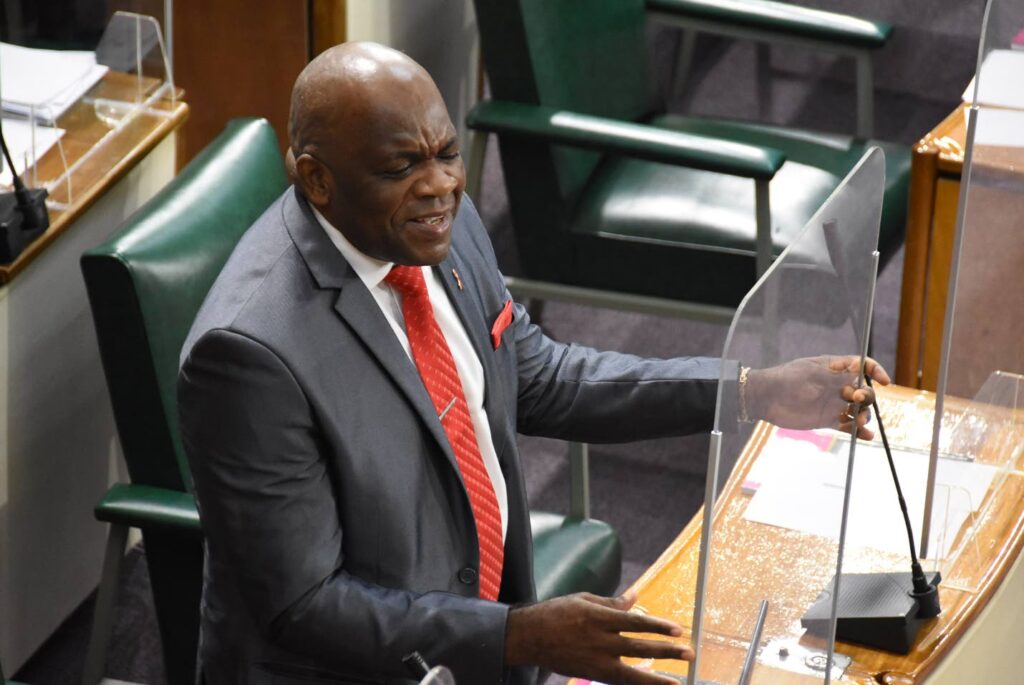
    A significant political motion has been tabled in Jamaica’s Senate, sparking renewed debate over the National Housing Trust’s (NHT) fundamental purpose. Opposition Housing Spokesman Senator Professor Floyd Morris has called for legislative action to redirect the institution back to its original mission of creating affordable housing solutions for Jamaican citizens.

    The motion, presented during Friday’s parliamentary session, specifically demands the cessation of the government’s annual withdrawal of J$11.4 billion from NHT coffers for budgetary support. Senator Morris argues these substantial funds should instead be channeled into constructing homes for contributors who have sustained the institution through their payments.

    Celebrating NHT’s 50th anniversary, the opposition senator highlighted the Trust’s transformative legacy since its 1975 establishment under Michael Manley’s administration. Founded on principles of social justice and the fundamental right to shelter, NHT has profoundly reshaped Jamaica’s housing landscape through direct construction and the build-on-own-land initiative, producing over 300,000 housing solutions that have positively impacted more than one million citizens.

    Morris emphasized NHT’s role in eradicating substandard housing conditions, eliminating wattle-and-daub, thatch, and bamboo structures across the nation. Beyond individual homes, the institution has engineered entire communities and urban developments, most notably contributing to the expansion of Portmore through the San Jose Accord funding mechanism.

    The comprehensive development approach has seen NHT projects consistently incorporate essential infrastructure including educational facilities, healthcare centers, emergency services, and recreational spaces, creating integrated, sustainable communities rather than merely constructing houses.

    Economically, NHT has served as a critical development engine, generating thousands of jobs in the construction sector and injecting billions annually into Jamaica’s economy through supply chains and secondary economic activity that benefits local communities nationwide.

    This parliamentary motion follows Morris’s September commitment to prioritize affordable housing upon joining the Shadow Cabinet. He previously expressed concern about market trends seeing homes priced above J$20 million, placing ownership beyond reach for recent graduates and low-to-middle-income earners.

    The political development comes months after Prime Minister Andrew Holness’s March 2025 budget address, where he announced a policy directive mandating NHT to concentrate exclusively on sub-J$14 million housing projects. Simultaneously, the government raised individual loan limits from J$7.5 million to J$9 million effective July 2025, acknowledging the frustrating correlation between increased loan ceilings and subsequent price inflation in the housing market.

    Holness specifically noted that Jamaica’s most acute housing crisis exists within the affordable and low-income sectors, necessitating targeted intervention rather than luxury development. The Prime Minister’s directive explicitly prohibits NHT from engaging in new housing projects exceeding the J$14 million threshold, though some flexibility around this price point is permitted to address varying construction circumstances.


  • Shepherd takes hat-trick as West Indies beat Scotland in T20 World Cup

    Shepherd takes hat-trick as West Indies beat Scotland in T20 World Cup

    KOLKATA, India — West Indies pace bowler Romario Shepherd delivered a spectacular performance on Saturday, securing the first hat-trick of the 2026 T20 World Cup to dismantle Scotland’s lower order and seal a 35-run victory in their Group C opener at Eden Gardens.

    Shepherd’s extraordinary feat came during the 17th over, where he claimed four wickets in just five deliveries, single-handedly crushing Scotland’s pursuit of a 183-run target. His devastating spell concluded with remarkable figures of 5-20 from three overs, effectively ending Scotland’s resistance at 147 all out in 18.5 overs.

    The foundation for the West Indies’ triumph was laid earlier by Shimron Hetmyer, whose explosive 36-ball 64 featured six sixes and propelled the Caribbean side to 182-5. Hetmyer’s blistering half-century off just 22 balls earned him the Player of the Match honors.

    Scotland, who received a late tournament entry two weeks ago replacing Bangladesh, appeared poised for an upset victory at 114-3 after 13 overs. Captain Richie Berrington (42) and Tom Bruce (35) had built a threatening 78-run partnership that placed the game in the balance. However, the intervention of Jason Holder (3-30) followed by Shepherd’s decisive bowling display abruptly halted their progress.

    West Indies captain Shai Hope praised Shepherd’s commitment, stating: “Sheppie is one of those guys who is willing to learn and improve. He’s always prepared to contribute whether with bat or ball. His versatility in the middle overs is invaluable, and it’s fantastic to see him begin the tournament with such impact.”

    Despite the defeat, Berrington remained optimistic: “It’s been valuable to experience these conditions. We can extract many positives from today’s performance and carry them forward into our next match against Italy here on Monday.”

    The Scottish bowling effort featured disciplined spells from left-arm pacer Brad Currie (2-23) and debutant Oliver Davidson, who claimed his maiden T20 wicket. However, Hetmyer’s aggressive batting ultimately proved decisive in setting up a challenging total that Scotland couldn’t overcome despite their determined effort.

  • Market downturn hits Mayberry Jamaican Equities in 2025

    Market downturn hits Mayberry Jamaican Equities in 2025

    KINGSTON, Jamaica — Mayberry Jamaican Equities Limited experienced a dramatic financial reversal in 2025 as widespread declines on the Jamaica Stock Exchange triggered substantial unrealized losses within its investment portfolio. The market downturn effectively erased previous gains and significantly diminished the company’s net asset value.

    The investment firm reported unaudited results showing a total comprehensive loss of $5.7 billion for the twelve-month period ending December 31, 2025—a stark contrast to the $584 million gain recorded in 2024. Net losses reached $4.9 billion, with loss per share expanding dramatically to $4.10 from just 12 cents the previous year.

    Notably, the losses stemmed not from operational deficiencies but from depreciating market valuations. Operating expenses actually decreased throughout the year, while dividend income from portfolio companies increased. The comprehensive loss primarily reflected declining equity prices across the local exchange, reversing valuation gains achieved in 2024.

    The company’s asset value contracted by 22.4% to $18.3 billion as share prices fell. Shareholders’ equity declined by approximately one-third to $12.2 billion, reducing net asset value per share to $10.12 from $14.89 at the close of 2024.

    Mayberry’s share price mirrored this downward trajectory, closing the year at $8.75—a 26.2% year-on-year decrease. The stock currently trades below its reported underlying value, indicating persistent investor caution toward the sector.

    Portfolio concentration emerged as a critical vulnerability during the market downturn. More than half of Mayberry’s investment value remains concentrated in a single holding, Supreme Ventures Limited, with the remainder distributed across 24 other Jamaica Stock Exchange-listed companies. This concentration strategy, while potentially rewarding during bull markets, amplified losses during the downturn, with declines in a limited number of large holdings—including investments classified as associates—accounting for most of the portfolio’s value reduction.

    The market weakness occurred despite improving macroeconomic conditions. Jamaica’s economy expanded in 2025 following hurricane-related disruptions the previous year, supported by growth in both services and goods-producing industries. However, this recovery failed to translate into equity market gains, with both the Main and Junior Market indices closing lower due to valuation adjustments, elevated inflation in the latter half of the year, and ongoing uncertainty regarding extreme weather risks.

    Additional market pressures included modest weakening of the Jamaican dollar against the US dollar, prompting repeated foreign-exchange interventions by the Bank of Jamaica to stabilize market conditions.

    Despite the substantial losses, Mayberry Jamaican Equities concluded the year with financial stability intact, maintaining positive shareholders’ equity and manageable debt levels without immediate signs of financial distress. However, the erosion of asset values has diminished the company’s capacity to withstand further market volatility in 2026. Future performance will likely depend less on cost control—which remained effective throughout 2025—and more on the recovery of equity prices, particularly among its largest holdings.

  • Violence-ridden Haiti in limbo as transitional council wraps up

    Violence-ridden Haiti in limbo as transitional council wraps up

    PORT-AU-PRINCE, Haiti — Haiti’s Presidential Transitional Council (CPT) is concluding its two-year mandate this Saturday without having achieved its primary objective of restoring stability to the violence-plagued Caribbean nation. The council’s departure leaves the country facing what many describe as a worsening institutional crisis with no clear resolution in sight.

    The transitional body, established with international backing to guide Haiti toward democratic governance, has been plagued by internal divisions, corruption allegations, and political infighting. Multiple council members attempted to oust U.S.-backed Prime Minister Alix Fils-Aime, further complicating the already challenging political landscape.

    Former Prime Minister Jean-Michel Lapin expressed profound disappointment, stating the nation appears to be ‘back to square one.’ Civil society representatives have labeled the CPT a ‘complete failure,’ accusing members of prioritizing personal interests over national recovery.

    The security situation remains catastrophic, with criminal gangs controlling approximately 90% of the capital city. United Nations data reveals nearly 6,000 fatalities and over 2,700 injuries attributed to gang violence in 2025 alone. The violence has displaced approximately 1.4 million Haitians, representing 10% of the population.

    Compounding the crisis, nearly half of Haiti’s population—approximately 6 million people—faces acute food insecurity, including 1.2 million children under five years old.

    International actors, particularly the United States, have reinforced support for Prime Minister Fils-Aime. Secretary of State Marco Rubio emphasized ‘the importance of his continued tenure as Haiti’s Prime Minister to combat terrorist gangs and stabilise the island.’ The U.S. has sanctioned two CPT members and a minister accused of supporting gangs, while deploying three warships to Haitian waters.

    Despite the challenges, Haitian security forces have recently intensified anti-gang operations in central Port-au-Prince, destroying the residence of notorious gang leader Jimmy ‘Barbecue’ Cherizier. These operations receive support from UN forces and private security contractors.

    In a rare positive development, Haiti’s national football team has qualified for the 2026 World Cup, marking their first appearance in the tournament since 1974.

  • Cuba adopts urgent measures to address energy crisis

    Cuba adopts urgent measures to address energy crisis

    HAVANA, Cuba—Confronting a severe energy shortage exacerbated by intensified US sanctions, the Cuban government has unveiled a sweeping package of emergency measures designed to conserve dwindling fuel reserves. The drastic steps include mandating a four-day work week for all state-owned enterprises, imposing stringent restrictions on fuel sales, and scaling back inter-provincial transportation services.

    Deputy Prime Minister Oscar Perez-Oliva Fraga, addressing the nation via state television, attributed the crisis directly to Washington’s policies. He outlined the government’s strategy to prioritize essential services and critical economic operations while maintaining national development objectives. ‘Our primary focus is to safeguard the vitality of our nation and ensure the continuity of fundamental services for our population,’ Fraga stated, emphasizing that available fuel would be allocated to protect indispensable activities.

    The comprehensive contingency plan extends beyond the public sector. Educational institutions will operate on reduced schedules, with universities decreasing mandatory in-person attendance. The tourism industry, a vital source of foreign currency, will see selective closures of establishments. These conservation efforts aim to redirect scarce resources toward sustaining food production, maintaining electricity generation, and preserving foreign exchange-earning sectors.

    This energy emergency unfolds against the backdrop of a six-year economic crisis in the Caribbean nation of 9.6 million people, which has labored under a comprehensive US economic embargo since 1962. Recent weeks have witnessed escalating pressure from Washington, including the cessation of oil deliveries from Venezuela—Havana’s key regional ally—following the US rejection of President Nicolas Maduro’s administration.

    Further compounding the crisis, President Donald Trump recently signed an executive order authorizing tariffs against nations supplying oil to Cuba. This move effectively terminated Mexico’s oil exports to the island, which had commenced in 2023, under threat of US trade penalties. The resulting petroleum deficits have brought Cuba’s power generation infrastructure to the brink of collapse, with electrical plants struggling to maintain basic service.

    The historical tensions between the two nations have reached new heights, with Cuban officials accusing the Trump administration of attempting to ‘strangle’ the island’s economy. While power outages and fuel shortages have been recurrent challenges in recent years, current conditions have deteriorated dramatically. Despite the escalating crisis, Cuban President Miguel Diaz-Canel has expressed willingness to engage in diplomatic dialogue with the United States, but only under conditions of mutual respect and without external pressure on Cuba’s sovereign governance.