标签: Jamaica

牙买加

  • Blue Latte Rio by Léo Moço

    Blue Latte Rio by Léo Moço

    Kingston’s culinary landscape has been transformed with the arrival of Rio by Léo Moço, an establishment redefining specialty coffee standards in Jamaica. Far from ordinary cafés, this intimate venue showcases meticulous craftsmanship and disciplined approach to coffee preparation, demonstrating the extraordinary potential of Jamaican coffee when handled by world-class expertise.

    The visionary behind this venture, Léo Moço, brings unparalleled credentials to Kingston’s coffee scene. As a four-time Brazilian Barista Champion, Brewers Cup Champion, and World Barista Championship competitor, Moço’s expertise extends beyond competition titles. His comprehensive background encompasses coffee farming, academic research, industry consultation, and education, covering the entire spectrum from cultivation and fermentation techniques to roasting and precision extraction.

    At Rio, coffee preparation approaches artistic perfection. Each espresso shot utilizes 20 grams of coffee—double the industry standard—with extractions meticulously calibrated to an exact 1:2 ratio. The deliberate distribution and tamping process reflects an unhurried, precision-focused methodology that transforms coffee preparation into a culinary art form.

    The outcome is remarkably clean and expressive coffee that stands confidently without sugar enhancement. Patrons frequently experience revelations, with one guest noting it was their first time enjoying coffee without sweeteners—considered the ultimate compliment in specialty coffee circles.

    The carefully curated menu balances classic espresso beverages with pour-over options including V60, Aeropress, and Origami methods. Additionally, Rio offers innovative wellness beverages such as Matcha, Ginger Beet Latte, Golden Latte, and the visually striking Blue Latte crafted with blue spirulina and coconut condensed milk.

    As an accredited member of the Specialty Coffee Association (SCA), Rio aligns Kingston with global specialty coffee standards while creating a cultural bridge between Brazil’s Chapada Diamantina and Jamaica’s Blue Mountains—two iconic coffee-growing regions.

    Located at Unit 1, 58 Half-Way-Tree Road, Rio operates Monday through Friday from 7:00 AM to 5:00 PM and weekends from 9:00 AM to 5:00 PM. The establishment’s innovative approach extends to equipment selection, featuring the Mavam under-counter espresso system that provides baristas with complete visibility, control, and temperature stability while maintaining a streamlined aesthetic.

    In a nation celebrated for Blue Mountain coffee, Rio enables Jamaicans to experience their renowned product at its highest possible expression, establishing new standards for coffee excellence in the Caribbean.

  • Joy, scepticism across west Africa after UN vote on slave trade

    Joy, scepticism across west Africa after UN vote on slave trade

    ACCRA, Ghana—A profound sense of historical validation swept through the streets of Ghana’s capital following the United Nations’ landmark designation of the transatlantic slave trade as “the gravest crime against humanity.” The resolution, championed by Ghanaian President John Mahama who personally attended the New York vote, received overwhelming support with 123 member states voting in favor.

    Across West Africa, citizens expressed both pride in this recognition and anticipation for what it might catalyze. “This isn’t merely symbolic for our nation; it authenticates our ancestors’ suffering and potentially unlocks pathways to justice,” remarked Abigail Selikem Teye, a university student in Accra.

    The sentiment resonated strongly in Benin, where officials have similarly embraced this painful history through tourism initiatives and citizenship programs for diaspora descendants. Both nations were epicenters of the brutal transatlantic trade that between the 16th and 19th centuries forcibly transported millions of Africans to the Americas under deplorable conditions.

    Despite being non-binding, the resolution proved contentious. The United States, Israel, and Argentina formally opposed the measure, while 52 countries abstained—a point of concern for many Africans. “I was disturbed by the abstention of nations that profited most from this crime,” noted Lylly Houngnihin, a Beninese art historian.

    The resolution specifically highlighted the transatlantic trade’s unique characteristics: its prolonged duration, systematic racialized enslavement, and enduring consequences including modern racial discrimination and neo-colonial structures. While stopping short of explicitly demanding reparations, the document encourages member states to support “initiatives aimed at reparatory justice.

    This diplomatic development coincides with growing movements for the repatriation of diaspora Africans. Ghana has actively encouraged this “return,” with over 1,000 people reclaiming citizenship in recent years. Benin launched a similar citizenship program last year, leveraging historical connections to foster renewed bonds with descendants of those taken from its shores.

    For many, like African American professor Obadele Bakari Kambon who obtained Ghanaian citizenship in 2016, this represents a healing process. “If enslavement in totality is the wound,” he reflected, “then the healing part comes through repatriation.” Yet practical questions remain, as articulated by Beninese entrepreneur Larissa Adjivon: “Recognition is good, but concrete actions should follow. What does this change for Africa today?”

  • #Champs2026: Shanoya becomes fourth fastest Jamaican junior in 100m

    #Champs2026: Shanoya becomes fourth fastest Jamaican junior in 100m

    The ISSA/GraceKennedy Boys and Girls Athletics Championships witnessed a historic display of speed as Holland High School’s Shanoya Douglas blazed to a stunning victory in the Class 1 100m final. Clocking a phenomenal personal best of 10.98 seconds (0.7m/s) on Wednesday, Douglas not only secured the gold medal but also established a new world-leading time for the season. This monumental achievement etches her name in Jamaican athletics history as the fourth-fastest junior female sprinter of all time, trailing only the legendary marks set by Alana Reid (10.92s), Tina Clayton (10.95s), and Briana Williams (10.97s). Her triumph delivered Holland High its first-ever championship gold medal, a feat she previously accomplished for Muschett High two years prior.

    The event showcased deep talent across multiple age categories. In the Class 1 race, Edwin Allen High secured the runner-up positions with Alexxe Henry (11.21s) and Renecia Edwards (11.45s) claiming silver and bronze, respectively.

    Dominance continued in the Class 2 final as Wolmer’s Girls’ prodigy Natrece East extended her remarkable winning streak. Adding the Class 2 title to her previous victories in Classes 4 and 3, East powered to a personal best of 11.21 seconds (0.9m/s). The race took a dramatic turn when anticipated challenger Kerelle Etienne of Edwin Allen High, who was competitive through 70 meters, suddenly decelerated and finished eighth. The silver medal was awarded jointly to Mt Alvernia High’s Giana Murray and St Jago’s Shannia Campbell, both timed at 11.61 seconds.

    Further demonstrating the championship’s competitive depth, Edwin Allen’s Danelia Clarke captured the Class 3 gold medal with a time of 11.66 seconds (0.9m/s). She was followed by Ferncourt High’s Rihanna Scott (11.74s) and Alpha Academy’s Azaria Harris (11.77s). In the Class 4 final, Excelsior High’s Brianna Gray emerged victorious in 12.01 seconds (0.1m/s), leading a podium that included Edwin Allen’s Monique Bogle (12.30s) and Shantwae Green (12.40s).

  • #Champs2026: Fierce competition expected in girls Class 2 discus

    #Champs2026: Fierce competition expected in girls Class 2 discus

    KINGSTON, Jamaica — The stage is set for an electrifying showdown in the girls’ Class 2 discus throw final this Friday, featuring a quartet of elite throwers all demonstrating championship form during qualifying rounds. Defending champion Brandane Malcolm of Hydel High School headlines the group after launching a formidable 43.71-meter throw on her second attempt, successfully rebounding from an initial foul to comfortably surpass the automatic qualifying standard of 42.00 meters.

    Malcolm finds herself in close pursuit of Excelsior High’s Zoeyann Plummer, last year’s Class 3 champion, who seized the qualifying round lead with a impressive 44.13-meter heave, also delivered on her second attempt. This sets up a compelling narrative between the established champion and the rising star moving up in class.

    The field deepens with two additional serious medal contenders. Clarendon College’s Jamelia Young, fresh from claiming the shot put gold medal, qualified with a strong mark of 43.58 meters, demonstrating her all-around throwing prowess. Meanwhile, St Elizabeth Technical’s Davieka Lewis delivered the most efficient performance of the day, securing her place in the final with a single, decisive throw of 42.88 meters, conserving energy for the championship round.

    This convergence of talent promises one of the most anticipated events of the meet, with all four athletes separated by less than two meters, ensuring a dramatic and unpredictable final where any of the contenders could claim the title.

  • Venezuela’s Maduro back in US court after stunning capture

    Venezuela’s Maduro back in US court after stunning capture

    NEW YORK — Deposed Venezuelan leader Nicolás Maduro is scheduled for a pivotal court appearance in Manhattan on Thursday, marking his second hearing since U.S. special forces captured him during a dramatic nighttime raid in Caracas three months ago.

    The 63-year-old former president and his wife, Cilia Flores, remain detained at Brooklyn’s Metropolitan Detention Center following their extraordinary capture in January. The operation, which involved aerial support and naval deployment, resulted in significant casualties according to Venezuelan authorities, though no U.S. military personnel were lost.

    Maduro faces multiple serious charges including narco-terrorism conspiracy, cocaine importation conspiracy, and weapons violations. The former leader, who maintains his presidential status despite being ousted, has entered not guilty pleas on all counts while declaring himself a ‘prisoner of war.’

    Thursday’s proceedings will focus on legal representation funding complexities arising from U.S. sanctions against Venezuela. Defense attorney Barry Pollack contends that requiring a special license for Venezuela to pay legal fees violates Maduro’s constitutional rights and has moved for case dismissal on procedural grounds.

    Outside the courthouse, polarized demonstrations unfolded with both supporters and critics of the former leader gathering. Some protesters displayed an inflatable effigy depicting Maduro in prison attire, reflecting the deep divisions surrounding his prosecution.

    Current Venezuelan leadership under Delcy Rodríguez, Maduro’s former vice president, faces immense pressure to align with U.S. demands while managing an economy in crisis despite the country’s vast oil reserves. Recent developments suggest warming relations, including a historic amnesty law and the U.S. State Department’s move to restore diplomatic ties.

    Prison authorities have reportedly isolated Maduro without internet or newspaper access, though sources indicate he remains psychologically resilient, spending time reading religious texts and maintaining communication with family through limited phone privileges.

  • Trinidad police rescue abducted woman in late-night sea operation

    Trinidad police rescue abducted woman in late-night sea operation

    PORT OF SPAIN, Trinidad — In a meticulously coordinated late-night maritime operation, Trinidadian law enforcement successfully rescued a 73-year-old kidnapping victim just hours after her abduction, dealing a significant blow to organized criminal networks operating in the region.

    The dramatic rescue unfolded after Tara Poliah was forcibly taken from her San Juan residence on Don Miguel Road by armed assailants at approximately 7:00 PM local time. The incident triggered an immediate intelligence-driven response involving multiple security agencies.

    According to official reports, the breakthrough came when the nation’s advanced radar surveillance system detected suspicious maritime activity. Acting on intelligence from the Radar Centre, security forces intercepted a vessel approximately one nautical mile off the Corozal coast shortly before midnight.

    Onboard the intercepted craft, authorities discovered Poliah unharmed alongside eight suspects—six Venezuelan nationals and two Trinidadians. The operation subsequently led to the apprehension of two additional suspects at Tyrico Bay, bringing the total detainees to ten individuals.

    Commissioner of Police Allister Guevarro highlighted the operation’s success, emphasizing that the rescue demonstrated the effectiveness of inter-agency coordination and intelligence-led policing strategies in combating transnational criminal activities.

    The operation leveraged Trinidad and Tobago’s sophisticated coastal surveillance network, an Israeli-made radar system that received a $7.5 million upgrade in 2018. This advanced technology provides comprehensive maritime monitoring capabilities extending as far north as Grenada, playing a crucial role in detecting illegal activities including drug trafficking and human smuggling.

    Poliah has since been reunited with her family while investigations into the kidnapping continue. The successful operation marks a significant achievement for Trinidadian authorities in their ongoing efforts to enhance border security and combat organized crime.

  • Charles Jr advances Jamaica’s digital social protection agenda at ISSA regional forum in Brazil

    Charles Jr advances Jamaica’s digital social protection agenda at ISSA regional forum in Brazil

    KINGSTON, Jamaica—Jamaica is intensifying its digital governance initiatives through strategic international partnerships, as demonstrated by Minister of Labour and Social Security Pearnel Charles Jr’s recent high-level engagement at the International Social Security Association Regional Forum for the Americas. The minister spearheaded crucial bilateral discussions focusing on technological integration within social protection frameworks.

    During the forum, Minister Charles articulated Jamaica’s vision for creating interconnected, scalable government systems. “Our mandate involves developing integrated systems across governmental agencies while ensuring both public officers and citizens possess the necessary capabilities to effectively utilize these digital platforms,” Charles stated in an official release.

    A significant portion of the forum involved collaborative dialogue with Brazil’s Social Security Technology and Information Agency (Dataprev). Charles and the Director of Management and Governance examined practical implementation challenges, operational realities, and systemic constraints associated with technology-driven social protection programs. Their technical discussions covered critical aspects including system architecture design, institutional implementation barriers, and user experience considerations for beneficiaries accessing digital services.

    The minister detailed Jamaica’s progressive modernization efforts within its social protection infrastructure, emphasizing the nation’s commitment to developing systems that enhance operational efficiency, institutional transparency, and service responsiveness. Charles notably stressed that successful digital transformation requires complementary investments in both institutional capacity building and citizen digital literacy programs.

    This international engagement facilitated substantial knowledge exchange with regional counterparts, allowing Jamaica to benefit from shared experiences across Latin American nations. The collaborative environment enabled comparative analysis of digital transformation strategies within the social protection domain.

    The International Social Security Association Regional Forum serves as a premier gathering for policymakers, social security administrators, and international development partners to formulate strategies enhancing coverage, efficiency, and sustainability of social protection systems throughout the Americas region.

  • Cops find illegal firearm on Kingston gully bank

    Cops find illegal firearm on Kingston gully bank

    KINGSTON, Jamaica — Law enforcement authorities in Kingston have successfully intercepted an illegal firearm and ammunition cache during a targeted operation conducted Thursday afternoon in the Piccadilly Road area of Kingston 5. The operation, which commenced at approximately 12:40 PM, was initiated based on specific intelligence regarding concealed prohibited weapons in the vicinity.

    Police units executed a meticulous search of the targeted area, ultimately locating a clear plastic bag deliberately hidden within an excavated cavity along the bank of a local gully. The concealed package was found to contain one Taurus GX4 9mm pistol equipped with a magazine loaded with fourteen 9mm cartridges. Forensic examination revealed the weapon had been deliberately altered, with its serial number completely removed, and was carefully wrapped in a blue and white cloth.

    While the seizure represents a significant disruption to local illicit arms trafficking, authorities confirmed that no arrests have been made in direct connection with the discovered firearm. The Jamaica Constabulary Force has launched a comprehensive investigation to trace the origin of the weapon and identify potential individuals involved in its possession and concealment. This operation forms part of ongoing efforts to combat gun-related crimes and enhance public safety across Kingston metropolitan areas.

  • Olympic women’s sport to be limited to biological females

    Olympic women’s sport to be limited to biological females

    LAUSANNE, Switzerland—In a landmark policy reversal, the International Olympic Committee (IOC) announced Thursday the reinstatement of mandatory biological gender verification for female category events, effectively excluding transgender women and athletes with Differences in Sexual Development (DSD) from Olympic women’s competitions starting with the 2028 Los Angeles Games.

    The new framework replaces the 2021 policy that delegated eligibility determinations to individual sports federations, establishing instead a universal standard across all Olympic sports. The eligibility protocol will utilize a one-time SRY gene screening—a test that identifies male chromosomal material—administered through saliva, cheek swab, or blood samples.

    IOC President Kirsty Coventry defended the scientifically-grounded policy, stating, “At the Olympic Games, even the smallest margins can determine victory or defeat. It would be fundamentally unfair and potentially unsafe for biological males to compete in the female category.”

    This decisive shift follows the gender controversy that emerged during the women’s boxing competition at the Paris 2024 Olympics, involving Algerian boxer Imane Khelif and Taiwan’s Lin Yu-ting. Both athletes—previously excluded from the 2023 International Boxing Association World Championships due to failed eligibility tests—were permitted to compete in Paris by the IOC, which criticized the IBA’s decision as “sudden and arbitrary.” Both athletes ultimately won gold medals.

    The reintroduction of gender testing marks a return to practices abandoned after the 1996 Atlanta Olympics following widespread criticism from the scientific community. The policy now establishes a clear biological boundary for female competition, prioritizing competitive fairness and safety according to the IOC’s medical advisors.

  • JPS Foundation’s climate conference urges youth to drive Jamaica’s road to resilience

    JPS Foundation’s climate conference urges youth to drive Jamaica’s road to resilience

    KINGSTON, Jamaica — The Jamaica Public Service Foundation convened a critical Climate Action Conference and Expo at the AC Marriott Hotel, transforming postponed plans into a powerful demonstration of climate resilience necessity. Originally scheduled for November 2025, the event was rescheduled after Category 5 Hurricane Melissa’s devastating October passage—a disruption that organizers noted underscored the very urgency of their mission.

    Under the thematic banner “Road to Resilience: Energy, Disaster Preparedness and Food Security,” the gathering united students, stakeholders, and community members with particular emphasis on engaging Jamaica’s youth in climate response strategies. Sophia Lewis, Head of the JPS Foundation, opened proceedings by framing the conference as both timely and essential given the nation’s recent meteorological experiences. “We want you to leave here today not just informed but inspired,” Lewis declared. “Awareness of challenges must translate into motivation for solutions, empowering everyone to contribute toward a more sustainable Jamaica.”

    Lewis emphasized that resilience constitutes a shared commitment rather than any single organization’s responsibility. The Foundation, she noted, proudly serves as an environmental steward dedicated to community empowerment, innovation support, and solution advancement that would help Jamaica not merely withstand climate change but emerge strengthened.

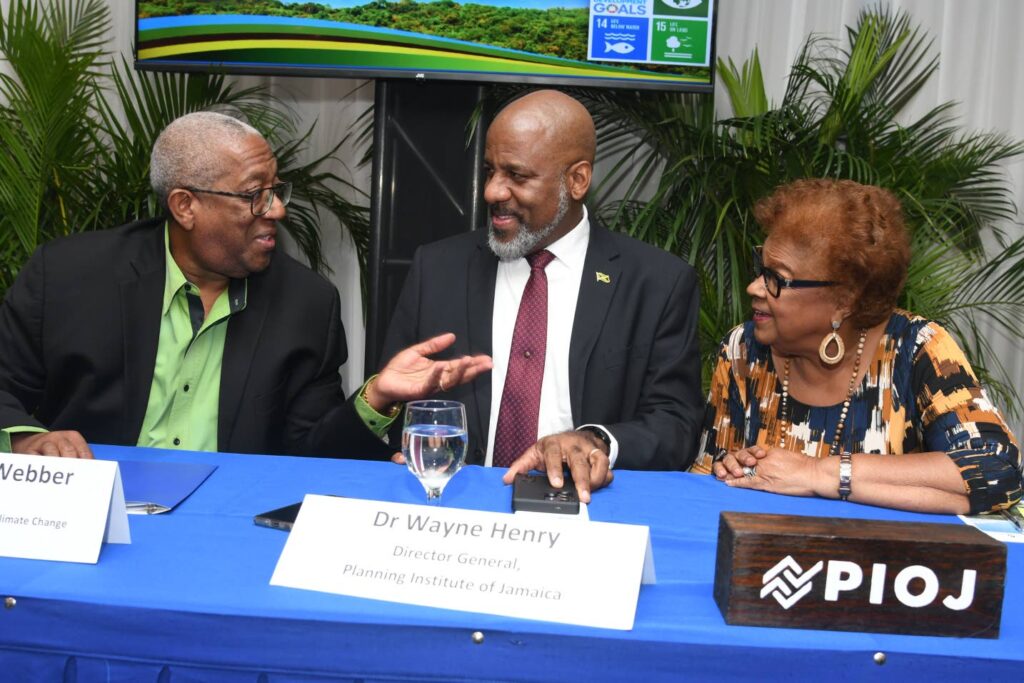
    Winsome Callum, JPS Foundation Director speaking on behalf of Chairman Damian Obiglio, highlighted the organization’s sustained focus on youth engagement and empowerment. “Small actions create significant differences,” Callum observed, detailing how the Foundation fosters learning opportunities, encourages volunteerism, and builds partnerships that transition awareness into concrete action. She outlined priority areas spanning climate resilience, STEM education, and community empowerment, describing the event as the Foundation’s flagship initiative—a convergence point for ideas, innovations, and actionable strategies that position JPS as a climate action thought leader.

    Callum addressed recent extreme weather patterns as indicative of a troubling trend, noting Hurricane Melissa’s impact as part of a escalating pattern that raises stakes considerably. Professor Dale Webber, Special Envoy on Climate Change, Environment, Ocean and Blue Economy, delivered a keynote address expanding on climate change’s multidimensional threat. “Climate change is no longer solely an environmental issue,” Webber asserted. “It represents a developmental, economic, social, and national security challenge.”

    He detailed the catastrophic impacts of recent hurricanes, citing Hurricane Beryl (July 2024) and Hurricane Melissa (October 2025), with the latter causing approximately $1.9 trillion in damages, destroying 200+ buildings, affecting 40,000+ hectares of agricultural land, disrupting electricity distribution networks, and impacting 600+ schools. Webber urged Jamaicans to reconsider critical resource usage and take decisive resilience-building actions, referencing Jamaica’s nationally determined contributions (NDCs) that target 50% renewable energy generation by 2030. This commitment, he explained, aligns with a national energy policy creating a clear pathway toward reduced greenhouse gas emissions and enhanced resilience.